
Lieferung heute & morgen

Qualitätsgarantie

Willkommens-Angebote freischalten: KOSTENLOSE Lieferung | Bis zu 80 % RABATT | Kostenlose 30-Tage-JoyPlus-Testphase
App herunterladen
A slippery mat can not only disrupt your yoga or fitness session but also become a safety hazard. Yet, the market is flooded with products that promise to be non-slip but often fail to deliver. As a Joybuy Product Recommendation Officer, I analyse product information daily to help you distinguish functional, durable equipment from overhyped items. This guide will show you what to look for when choosing a truly non-slip yoga mat and which pitfalls to avoid.
Many mats look great at first glance but quickly reveal themselves as poor investments. Watch out for these three common problems to avoid disappointment:
To make an informed decision, you should examine three core features. These define the functionality and longevity of your future mat.
The material is the foundation of a mat's performance. The two most common options are TPE and PVC.
The right thickness is a compromise between cushioning and stability.
The surface texture is just as important for grip as the material. Textured patterns (e.g., wave or line patterns) on both sides prevent the mat from slipping on the floor and you from slipping on the mat. A large yoga mat (e.g., 190 cm long or 80 cm wide) offers more freedom of movement, which is particularly beneficial for taller individuals or dynamic flows.
Based on the criteria above, we have identified several products suitable for specific user profiles and their requirements.
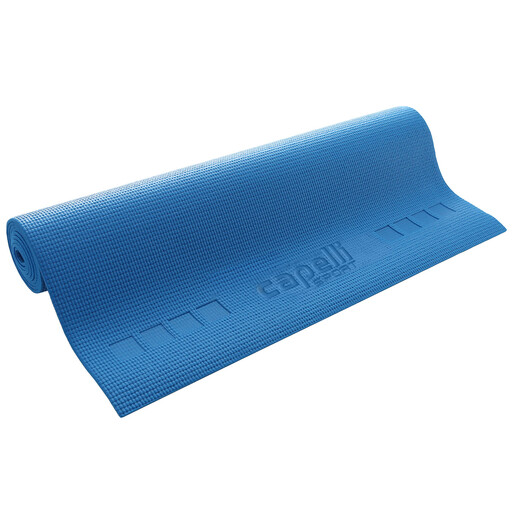
Why This Fits Their Persona: A functional option for anyone starting with yoga or light fitness exercises who wants reliable basic equipment without a high initial investment.
Unlike many smooth PVC mats, this model features an embossed surface. This texture increases mechanical grip and reduces the risk of slipping during simple poses.
The 4 mm thickness offers a good balance between ground connection and basic cushioning. The PVC material is durable and easy to clean.
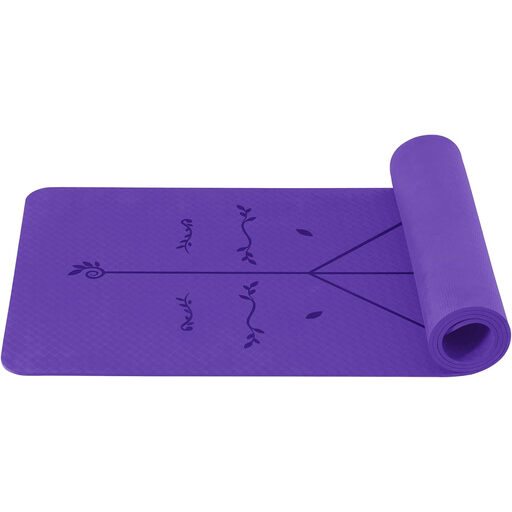
Why This Fits Their Persona: Ideal for users who practice several times a week at home or in the studio and need a durable, grippy, and comfortable home gym mat. The included carrying strap adds to its practicality.
The TPE material inherently offers better grip and durability than standard PVC. The double-sided anti-slip texture is designed for consistent performance and prevents the mat from shifting.
The 6 mm thickness is a versatile standard for stability and cushioning. The printed alignment lines are a practical aid for improving posture.
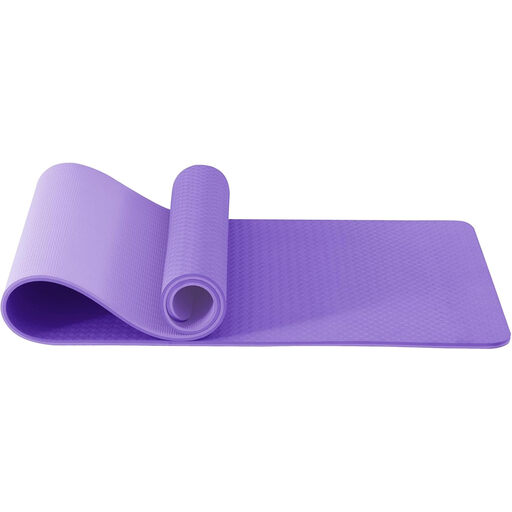
Why This Fits Their Persona: Perfect for users who prioritise maximum joint protection in their Pilates mat or gymnastics mat. The extra thickness provides significant cushioning for knees, elbows, and the spine.
Although the mat is thick, it is made of high-density TPE. This material provides better rebound and stability than soft foam, mitigating the "sinking-in" feeling that can lead to instability.
The 10 mm thickness provides exceptional cushioning, making it a highly joint-friendly yoga mat. The double-sided anti-slip texture ensures safety during exercises.
We have compiled a complete, up-to-date list of products that fully meet these strict selection criteria and German safety regulations.
1. How do I properly clean and care for a non-slip yoga mat? Most TPE and PVC mats can be wiped down with a damp cloth and, if necessary, a mild soap solution. Avoid harsh cleaning agents, as they can damage the material and reduce its grip. Always let the mat air-dry completely before rolling it up. Machine washing is not recommended.
2. Which material is better for sweaty hands, TPE or PVC? In general, high-quality TPE mats maintain good grip even with light moisture. Many PVC mats, on the other hand, can become very slippery when they come into contact with sweat. For intense, sweat-inducing practices like Hot Yoga, special mats made of natural rubber or with a microfiber top layer that absorbs moisture are often recommended.
3. How long does a good yoga mat last? The lifespan heavily depends on the material, frequency of use, and care. A high-quality TPE yoga mat used several times a week can last for several years. A basic PVC mat often shows signs of wear, such as flaking or diminishing grip, after about a year of regular use. Replace your mat as soon as you notice a significant deterioration in cushioning or slip resistance.