
Lieferung heute & morgen

Qualitätsgarantie

Willkommens-Angebote freischalten: KOSTENLOSE Lieferung | Bis zu 80 % RABATT | Kostenlose 30-Tage-JoyPlus-Testphase
App herunterladen
A slipping mat can disrupt your concentration during yoga practice and increase the risk of injury. Finding a suitable, non-slip yoga mat is therefore crucial for performing exercises safely and effectively. As a Joybuy Product Recommendation Officer, my goal is to provide you with objective information and clear criteria to help you make an informed decision. This guide will help you understand the features of different mats and choose one that meets your needs.
Before you decide on a model, several key factors should be considered. These criteria will help you objectively evaluate a mat's functionality.
The material is the most critical factor for a mat's non-slip quality and feel.
The dimensions of a sports mat affect both comfort and functionality.
Some features can make handling and practice easier.
Based on the criteria mentioned, we have compiled a selection of mats that are suited for different purposes due to their specific features.
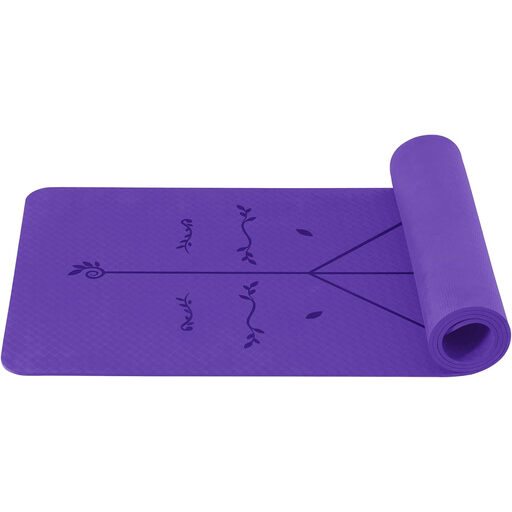
Why It Stands Out: This mat combines a standard 6 mm thickness with integrated alignment lines, making it a practical tool for improving your practice.
Pros:
Who It's For: Ideal for yoga beginners and practitioners who want to specifically improve their alignment in poses and are looking for a lightweight mat for home or the studio.

Why It Stands Out: With its XXL dimensions of 190 x 100 cm, this mat offers exceptional space, making it suitable for a variety of exercises beyond traditional yoga.
Pros:
Who It's For: Perfect for taller individuals, couples working out together, or users who need a multifunctional fitness mat for workouts that require ample space.
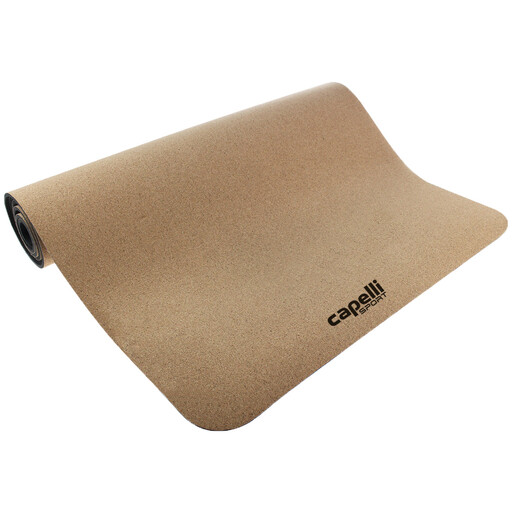
Why It Stands Out: This mat leverages the natural properties of cork to achieve superior grip with increasing moisture, making it ideal for sweat-inducing workouts.
Pros:
Who It's For: An excellent choice for anyone who practices intensely, does Hot Yoga or Bikram Yoga, or values sustainable materials.
If our recommendations don't include the perfect mat for your individual needs, you can find a wider selection of models with different features in our category.
Discover more non-slip TPE yoga mats
The non-slip quality is primarily determined by two factors: the material and the surface texture. Materials like TPE, cork, or natural rubber naturally offer good grip. An additional texture, such as wave, dot, or leaf patterns, increases the surface area and can mechanically enhance the grip on both the floor and under your hands and feet.
Most TPE and cork mats should only be cleaned by hand. Use a damp cloth to wipe the surface after use. Avoid harsh cleaning agents, as they can damage the material. Allow the mat to air dry completely in a cool, well-ventilated area. Direct sunlight and high heat should be avoided to ensure the material's longevity.
Not necessarily. The optimal thickness depends on the intended use. A thicker mat (over 6 mm) offers more cushioning and is comfortable for floor exercises like those in Pilates or physical therapy. For yoga practices that include many standing balance poses, a thinner mat (3–5 mm) may be more advantageous as it provides better ground contact and thus more stability. A thickness of 5–6 mm often represents a good all-around compromise.