
Lieferung heute & morgen

Qualitätsgarantie

Willkommens-Angebote freischalten: KOSTENLOSE Lieferung | Bis zu 80 % RABATT | Kostenlose 30-Tage-JoyPlus-Testphase
App herunterladen
By Joybuy, Your Product Recommendation OfficerDate: July 16, 2026
An exercise mat that slips during your workout not only disrupts your flow but also poses a safety risk. Finding a suitable non-slip yoga mat is crucial for a safe and effective practice, whether for yoga, Pilates, or home fitness training. This article serves as a practical guide to help you understand the essential features of a quality mat and make an informed decision. We will focus on objective criteria such as material, thickness, and surface texture.
With so many options available, a few key factors are decisive for comfort and safety. Here are three central points to simplify your choice.
The material is a key determinant of a mat's grip, durability, and cushioning properties.
The thickness of a fitness mat affects both balance and comfort.
A non-slip surface is the core feature. Look for a pronounced texture, such as wave or rib patterns, that provides grip on both sides. If you plan to take your mat to the studio or outdoors, a yoga mat with a carrying strap is a practical feature that makes transport much easier.
Based on the criteria above, we have curated a selection of mats that stand out for their specific features, making them suitable for various applications.
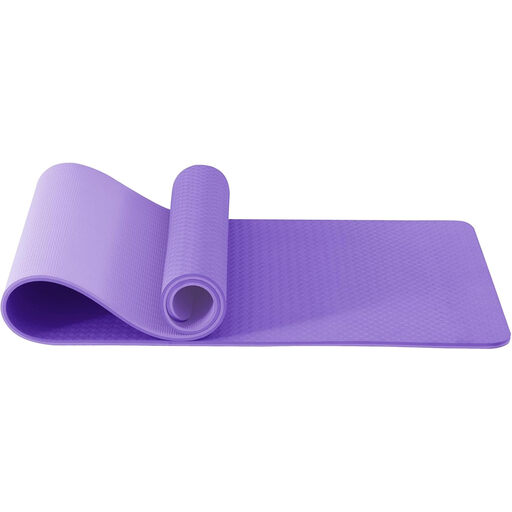
Miss Lulu Good Nite Yoga Mat, 10 mm TPE
Why It Stands Out: This mat combines a comfortable 10 mm thickness with the benefits of TPE material and a dual-sided non-slip texture.
Pros:
Best For: Users looking for a highly cushioned exercise mat for yoga, Pilates, or gymnastics for home use who prioritise high comfort.
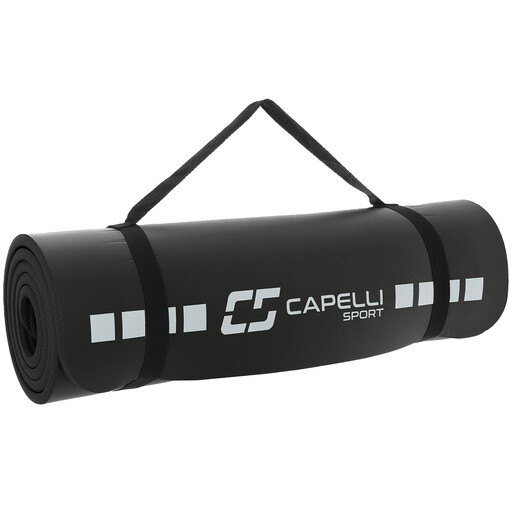
Capelli Sport Exercise Mat, 12 mm NBR
Why It Stands Out: With a 12 mm thickness made of NBR foam, this mat offers maximum shock absorption for demanding floor exercises.
Pros:
Best For: Individuals who need an especially joint-friendlyPilates mat or gymnastics mat for intensive floor workouts.

MISS LULU Good Nite Yoga Mat, 6 mm TPE
Why It Stands Out: At 6 mm thick, this mat offers a balanced combination of cushioning and stability, ideal for dynamic yoga styles.
Pros:
Best For: Yoga practitioners looking for a versatile mat for the studio or home who prefer a good balance between stability and comfort.
A good mat is the foundation for a safe workout. To further enhance your practice, additional accessories like sturdy straps for stretching or strength exercises can be helpful.
? Discover our selection of gym straps and other training accessories here
Most TPE and NBR mats can be simply wiped down with a damp cloth. For deeper cleaning, a mild soap solution can be used. It is important to let the mat air-dry completely before rolling it up again. Machine washing is generally not recommended as it can damage the material.
Although the terms are often used interchangeably, there are functional differences. A classic yoga mat focuses on grip and stability to support holding poses and is often thinner. A fitness mat or gymnastics mat is often thicker and softer to provide better cushioning for higher-impact exercises or floor work.
For beginners, a mat with a thickness between 6 mm and 10 mm is often a good choice. A 6 mm mat offers more stability when learning balancing poses. A 10 mm mat provides more comfort and is easier on the knees and joints, which can be particularly comfortable when you're just starting out. The decision depends on personal preference and the type of exercises planned.