
Lieferung heute & morgen

Qualitätsgarantie

Willkommens-Angebote freischalten: KOSTENLOSE Lieferung | Bis zu 80 % RABATT | Kostenlose 30-Tage-JoyPlus-Testphase
App herunterladen
A slipping mat can seriously disrupt your concentration during a yoga asana or Pilates exercise and increase the risk of injury. Finding a truly non-slip yoga mat that meets your personal requirements for material, cushioning, and portability is therefore crucial for a safe and effective practice.
As a Joybuy Product Recommendation Officer, my mission is to provide you with objective information and clear guidance. This guide analyses the key features of a high-quality exercise mat and presents a selection of models tailored to specific needs.
The choice of the right mat depends on several factors. Three criteria are particularly crucial for stability, comfort, and durability.
The material is a key determinant of the mat's grip, weight, and ease of care.
The thickness of a fitness mat affects both balance and comfort.
For anyone who takes their mat to the studio, the park, or on their travels, portability is a key factor. A yoga mat with a carrying strap is easy to roll up, secure, and carry over your shoulder. This not only simplifies transport but also allows for space-saving storage at home.
Based on the criteria mentioned, we have compiled a selection of mats suitable for various applications.

Why it stands out: This mat combines the most important features for versatile use: a reliable, dual-sided anti-slip texture and balanced cushioning. The TPE material is lightweight and low-odour.
Benefits:
Who it's for: Ideal for yoga beginners and advanced practitioners looking for a reliable all-round mat for training at home or in the studio. Its light weight and included strap make it a practical training mat for on-the-go use.

Why it stands out: The natural cork surface offers a unique property: it absorbs moisture, which increases its grip. An integrated polyester mesh provides additional tear resistance.
Benefits:
Who it's for: Perfect for users who tend to sweat during intense workouts or Hot Yoga. Eco-conscious buyers who prefer a natural material will also find this gym mat to be an excellent choice.
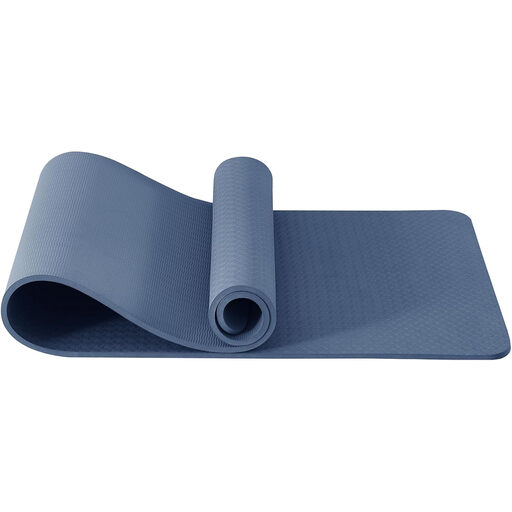
Why it stands out: With a thickness of 10 mm, this thick yoga mat provides exceptional cushioning, protecting the spine, hips, knees, and elbows during floor exercises.
Benefits:
Who it's for: This mat is the right choice for individuals with sensitive joints, as well as for exercise forms like Pilates, stretching, or gymnastics that require a soft surface. It serves as an excellent Pilates mat.
Haven't found the right mat for your needs yet? Discover a wider selection of materials, thicknesses, and designs in our full collection.
1. What is the best material for a non-slip yoga mat? Both TPE and cork offer high slip resistance, but under different conditions. TPE is a great all-rounder with a textured, grippy surface. Cork is distinguished by its grip increasing upon contact with sweat or moisture, making it ideal for more intensive yoga styles.
2. How can I make my yoga mat more non-slip? A new mat may initially have a smooth film from the manufacturing process. Gently cleaning it with a damp cloth and a mild soap solution can help remove this. For cork mats, lightly spraying them with water before practice can instantly increase grip. Regular cleaning removes sweat and oils that can compromise slip resistance.
3. Can I use a fitness mat for yoga? Yes, a fitness mat or gym mat can generally be used for yoga, especially models with good slip resistance. However, very thick mats (over 8 mm) can compromise stability during balancing poses, as the connection to the floor is less direct. For a dynamic yoga practice, a thickness of 4 to 6 mm is often preferable.