
Lieferung heute & morgen

Qualitätsgarantie

Willkommens-Angebote freischalten: KOSTENLOSE Lieferung | Bis zu 80 % RABATT | Kostenlose 30-Tage-JoyPlus-Testphase
App herunterladen
Finding a non-slip yoga mat might sound simple at first. In practice, however, mats vary considerably in their surface texture, material, dimensions and care requirements. A mat that looks stable in a product photo may slip on a smooth floor, leave you short of space for movement or stretch out at the edges after frequent use.
This doesn’t just apply to yoga. Whether you’re looking for a fitness mat, gym mat, workout mat or Pilates mat, the model should suit the activity and the surface you’ll be using it on.
A textured surface can improve grip, but it can’t make up for an uneven or damp floor. Dust, moisture and smooth tiles can all affect stability. Even an embossed surface can become slippery during particularly sweaty workouts. Before each use, unroll the mat and check it on a clean, dry floor.
An extra-thick yoga mat or an NBR foam mat can feel more comfortable for exercises done lying down. However, a very soft surface may give you less direct contact with the floor during balance exercises and standing poses. The key is to consider whether the mat is mainly for stretching, yoga, Pilates, HIIT or general floor exercises.
A standard mat around 61 cm wide is suitable for many exercises. If you need more room to move or often exercise lying down, a large yoga mat measuring 100 cm wide may be more practical. Before buying, check that you can fully unroll the mat where you plan to use it and that there’s enough clearance around it.
Yoga mats measuring 4 to 6 mm thick offer a good balance of portability, stability and cushioning. Thinner models are easier to store and carry. Thicker foam mats are more comfortable for exercises on your knees, back or elbows, but take up more storage space.
If you’re taking your mat to the studio or using it on the go, its rolled-up size and weight matter. A fitness mat with a carrying strap is easier to secure and carry after your workout. If you exercise at home regularly, you could opt for a larger mat or several interlocking mats instead, without needing to roll them up after every session.
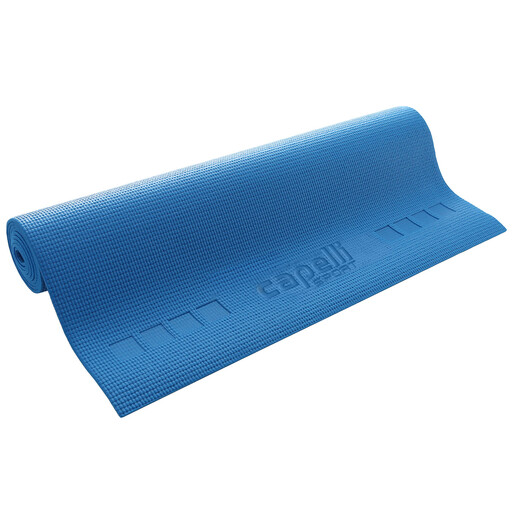
Why this product suits this profile: This 68 × 24-inch PVC mat is designed for yoga, Pilates, fitness and floor exercises at home or in the studio. At 4 mm thick, it’s relatively easy to store.
The embossed surface is described as having a slip-resistant texture. Even so, use the mat only when it’s dry and on an even surface.
PVC material, 4 mm thickness, wipe-clean surface and compact dimensions for regular floor exercises.

Why this product suits this profile: This TPE mat measures 190 × 100 cm, giving you more room to move than many standard models. It’s designed for yoga, Pilates and general floor exercises.
The double-sided texture is described as a leaf pattern on the front and a wave pattern on the back. This lets you position the mat to suit different floor surfaces.
190 × 100 cm surface, 6 mm thickness, TPE material and a carrying strap included.
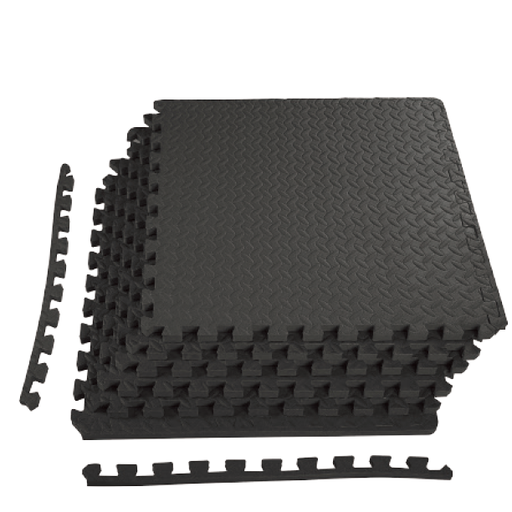
Why this product suits this profile: The six PE foam tiles, each measuring 60 × 60 × 1.2 cm, are suitable for workout areas, fitness equipment and flexible floor coverage.
The interlocking system lets you customise the area. Fully connected tiles on an even floor help minimise gaps and prevent individual pieces from slipping.
1.2 cm thickness, six tiles that can be combined, water-resistant surface and cleaning with a cloth, water or soap, according to the product description.
After your workout, wipe away sweat with a damp cloth. PVC and TPE mats should be completely dry before you roll them up. For interlocking mats, check the connections and edges. Avoid sharp objects, high temperatures and naked flames with the materials mentioned.
Don’t continue using a mat if it has cracks, permanent deformation or a badly worn surface texture. Yoga mats are generally not designed to be used as the sole protective layer beneath heavy fitness equipment; check the relevant product description for guidance.
We’ve put together a complete, regularly updated list of products that meet these strict selection criteria and fully comply with the safety regulations in force in the EU.
For many exercises, 4 to 6 mm offers a good balance of floor contact, portability and cushioning. If you mainly exercise lying down or need a softer surface, consider a thicker workout mat. For balance exercises, the mat shouldn’t be too soft.
The floor should be clean, dry and even, and the mat should be fully unrolled. With interlocking mats, make sure all the pieces fit together flush. Moisture can reduce grip, so wipe it away before use.
Its lifespan depends on the material, how often you exercise, the weight placed on it and how well you care for it. Regular cleaning, dry storage and protection from direct heat can help it last longer. Visible cracks, heavy wear or deformation are signs that it’s time for a replacement.