
Lieferung heute & morgen

Qualitätsgarantie

Willkommens-Angebote freischalten: KOSTENLOSE Lieferung | Bis zu 80 % RABATT | Kostenlose 30-Tage-JoyPlus-Testphase
App herunterladen
A non-slip yoga mat should do more than just feel soft – it needs to stay stable on the floor during different exercises. For yoga, Pilates, gymnastics and home workouts, the key factors are a suitable surface, enough space and a sensible balance between cushioning and stability.
That’s why the Joybuy Product Recommendation Officer focuses on verifiable product data rather than generic marketing claims. This helps you avoid common buying mistakes – whether you plan to use the mat in your living room, at the gym, in a class or on the go.
A slip-resistant mat isn’t automatically equally stable on every floor. What matters is the texture of the top side, the grip of the underside and the floor itself. Smooth tiles, laminate and wood can all offer different levels of adhesion. A mat with dual texture – for example, lines on the top and a wave pattern on the bottom – gives you a clearer idea of its actual construction.
Before your first session, unroll the mat on a clean, flat, dry surface. Dust, moisture or unevenness can affect how well it stays in place.
A thicker mat can feel more comfortable for knee, elbow or floor-based exercises. However, for standing yoga poses or balance work, a very soft surface may reduce direct contact with the floor. A 6 mm fitness mat is often a well-balanced starting point for yoga, Pilates and general training.
With a 10 mm thickness, the focus shifts more towards extra cushioning. Your choice should depend on the type of exercise, the floor surface and your personal comfort needs – not just on maximum thickness.
The standard size of around 183 × 61 cm is sufficient for many exercises. If you want more room to move during Pilates, stretching or floor workouts, look for a wider or longer format. For travelling to class, weight, carry strap and packed size also matter.
A foldable yoga mat often fits more easily into a rucksack or suitcase. A rolled mat with a strap, on the other hand, can be practical for daily use at home or in the studio.
A TPE yoga mat is made from thermoplastic elastomers. In the models featured here, TPE mats are described as flexible, shape-retaining and low-odour. TPE can be a good choice if you’re looking for a lightweight exercise mat with a textured surface.
PVC mats are also widely available for yoga and fitness. The Capelli Sport model is listed as PVC, with an embossed surface texture. When choosing, consider the material, care instructions and the specific surface structure together.
Regardless of the material, always check the mat for damage before use. If you notice tears, peeling or a noticeably reduced grip, it’s time to replace it.
A joint-friendly yoga mat should not be seen as a medical aid. The thickness can simply affect how much you feel the floor during normal exercises. If you have existing health concerns, consult a medical professional before choosing.
For regular training, the following details are especially useful:
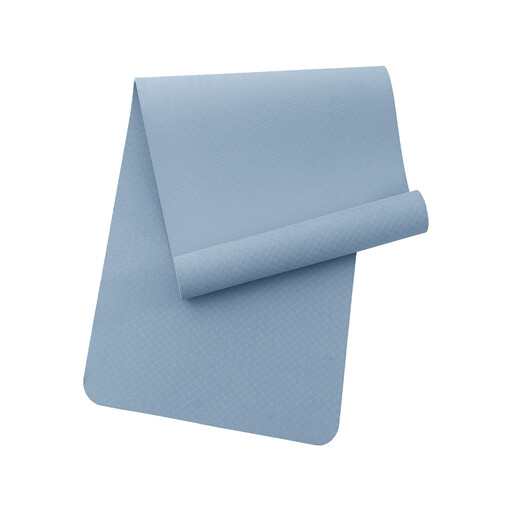
Why this product fits the profile: The size works well for many basic exercises, while the 6 mm thickness offers a sensible compromise between comfort and floor contact. The carry strap makes it easy to move between home and class.
Material, dimensions, thickness and surface texture are all clearly stated. The dual texture helps you assess both the top and bottom sides before buying.
TPE, 183 × 61 cm, 6 mm thickness and carry strap; a 10 mm version is also available according to the product details.
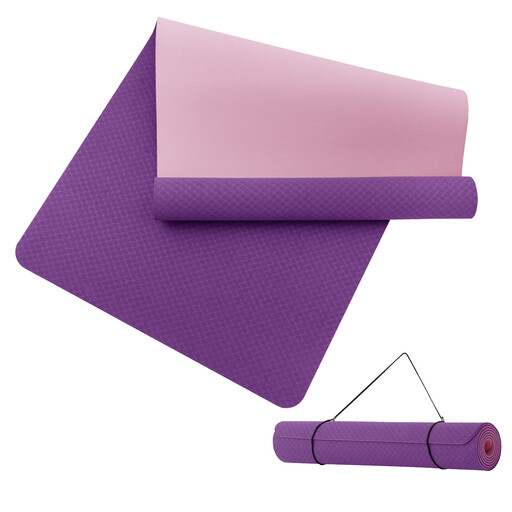
Why this product fits the profile: The wider size of 190 × 80 cm gives you more lateral space for Pilates, stretching and floor workouts.
The product details list width, length, thickness, material and weight. This makes it easier to assess the space you need compared to a vague comfort claim.
190 × 80 cm, 6 mm thickness, TPE and dual-sided texture; a carry strap is included according to the product description.
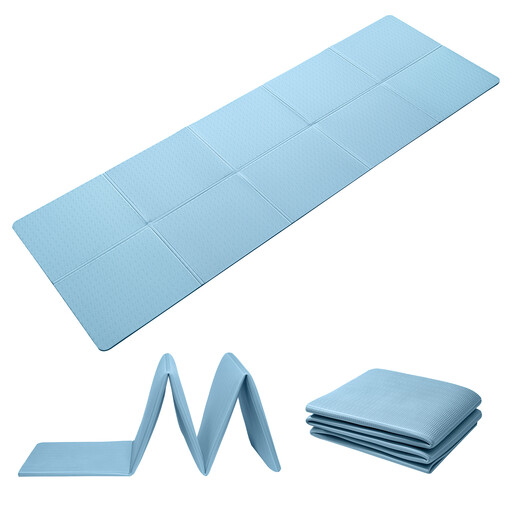
Why this product fits the profile: The foldable design is made for commuters, travellers and those with limited storage space. When folded, the mat measures 37 × 30 × 6 cm according to the product details.
The packed size is clearly stated, removing any doubt about whether the mat will fit in your bag or suitcase. Both sides have a textured surface.
183 × 61 cm when unfolded, 6 mm thickness, TPE and foldable format; suitable for yoga, Pilates, gymnastics and travel.
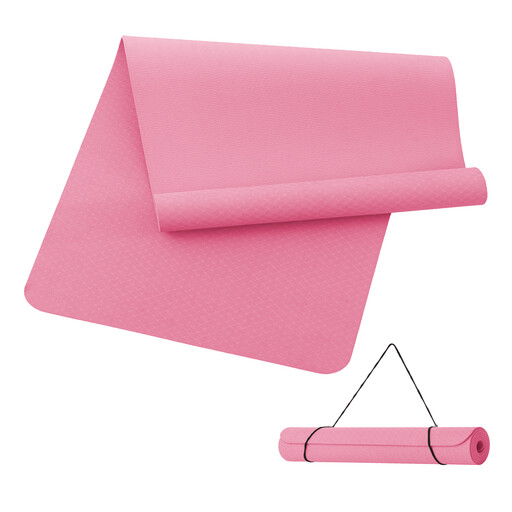
Why this product fits the profile: The large size gives you more space for dynamic movements, Pilates and general fitness exercises, though it does need more room at home.
The dimensions make the extra space requirement clear. The dual-sided texture and carry strap are listed in the product details.
190 × 100 cm, 6 mm thickness, TPE and a stated weight of 1.2 kg; suitable for larger ranges of movement.
We’ve put together a full, regularly updated list of products that meet these strict selection criteria and comply with EU safety regulations.
A yoga mat will generally last longer if stored and cleaned properly:
For many people, a 6 mm mat offers a practical middle ground between cushioning and stability. 4 mm gives you more floor contact, while 10 mm is designed for softer cushioning. The right thickness depends on the type of exercise, the floor surface and your personal comfort.
Tiles should be clean and dry. The underside of the mat needs to be fully in contact with the floor; folds or dirt can reduce stability. A textured underside, such as a wave pattern, can help with grip. Take extra care on very smooth or uneven floors.
There’s no fixed lifespan – it depends on how often you train, your body weight, friction, cleaning and storage. Visible cracks, sticky patches, peeling layers or a noticeably reduced grip are clear signs it’s time to replace your exercise mat.