
Lieferung heute & morgen

Qualitätsgarantie

Willkommens-Angebote freischalten: KOSTENLOSE Lieferung | Bis zu 80 % RABATT | Kostenlose 30-Tage-JoyPlus-Testphase
App herunterladen
A good non-stick frying pan is the foundation of many dishes, from a quick fried egg in the morning to a perfectly seared fish fillet for dinner. But the market is crowded, and many manufacturer promises turn out to be a disappointment in daily use. Before you make a decision, it's crucial to know the typical pitfalls that often lead to a bad buy.
As your Joybuy Product Recommendation Officer, I'll help you distinguish essential features from marketing slogans. This guide focuses on the facts, so you can find a pan that truly fits your needs and your stovetop.
To avoid these pitfalls, you should focus on three verifiable criteria. These determine the performance, durability, and user-friendliness of your new pan.
The body material is crucial for heat distribution and weight.
The coating is the heart of any non-stick pan. It allows for low-fat cooking and easy cleaning.
The right size and a suitable base are crucial for daily use.
Instead of making a blanket recommendation, we have selected products that fit specific user profiles.
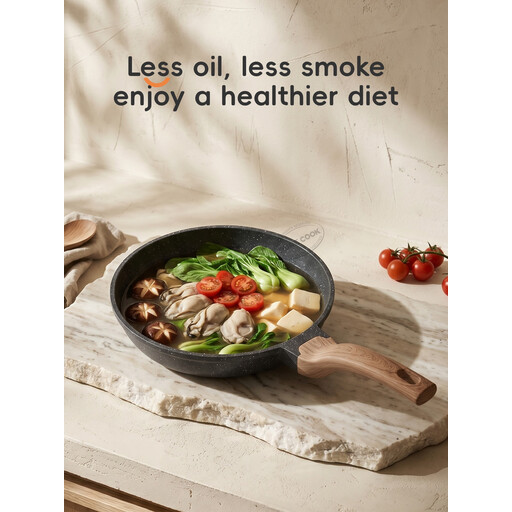
Why This Fits Their Persona: Ideal for daily use in small to medium-sized households. The lightweight aluminium body and heat-insulating wooden handle make it easy and safe to handle. The 24 cm size is perfect for preparing meals for one to two people.
The pan is explicitly designated for all common hob types, including induction, thus avoiding the incompatibility problem. The aluminium body ensures fast, even heating and reduces the risk of hot spots that could damage the coating.
Lightweight body for easy handling; universal hob suitability; stone-look coating for good non-stick performance and easy cleaning.
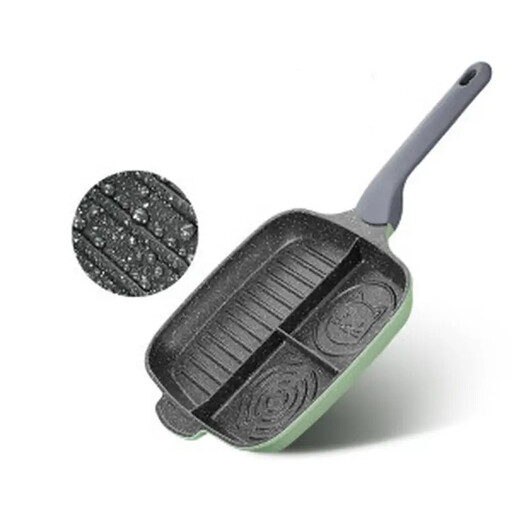
Why This Fits Their Persona: Perfect for anyone who wants to save time in the morning and cook a complete breakfast in just one pan. The three compartments allow for simultaneous cooking of eggs, bacon, and small pancakes without the ingredients mixing.
This pan is a specialised tool and doesn't try to be an all-rounder. Its non-stick coating is specifically designed for typical breakfast ingredients like eggs, ensuring its effectiveness for this particular use case and promoting longevity with proper care.
Time-saving 3-compartment design; good non-stick performance for typical breakfast foods; suitable for all hob types.
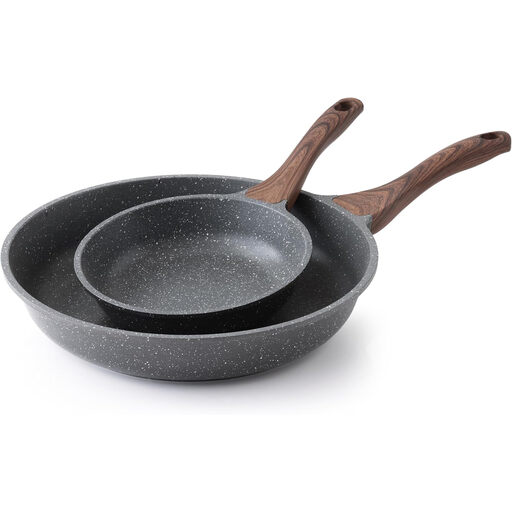
Why This Fits Their Persona: This set offers two different sizes (approx. 20 cm and 32 cm) for maximum flexibility. The Swiss granite coating suggests higher durability, which is important for frequent cooks. Its suitability for all hob types and the explicit "free of intentionally added PFOA" claim meet high standards.
The reinforced granite coating is designed for greater durability than simple standard coatings. The clear PFOA-free declaration directly addresses concerns about misleading health claims and builds trust.
Set with two versatile sizes; robust Swiss ILAG granite coating; suitable for all hob types including induction.
We have compiled a complete, real-time list of products that fully satisfy these strict selection criteria and UK safety regulations.
1. How long does a non-stick frying pan last on average? The lifespan of a non-stick pan depends heavily on the quality of the coating and its care. With daily use and proper handling (avoiding metal utensils, hand washing, not overheating), a good pan can last two to five years. As soon as the non-stick effect noticeably diminishes or the coating shows scratches, it should be replaced.
2. How can I identify a pan suitable for induction? The surest way is to look for the induction symbol (a stylised coil) on the product packaging or the pan's base. Alternatively, you can hold a magnet to the bottom of the pan. If the magnet sticks firmly, the base is ferromagnetic and therefore suitable for induction hobs.
3. Is the "PFOA-free" label important for pans? Yes, this label is an important quality feature. Perfluorooctanoic acid (PFOA) is a chemical substance that was used in the past to manufacture PTFE coatings and has been linked to health concerns. Within the EU, the use of PFOA has been severely restricted since 2020. Buying a pan declared as PFOA-free ensures you are purchasing a product that meets current safety standards.