
Lieferung heute & morgen

Qualitätsgarantie

Willkommens-Angebote freischalten: KOSTENLOSE Lieferung | Bis zu 80 % RABATT | Kostenlose 30-Tage-JoyPlus-Testphase
App herunterladen
A non-stick induction frying pan needs to offer more than the words ‘non-stick’ and ‘suitable for all hob types’ on the packaging. The key factors are the right diameter, a stable induction base, the coating’s temperature limits and the actual care requirements. Checking these details before buying helps you avoid unnecessary follow-up costs and a pan that no longer suits your cooking routine after a short time.
An induction pan needs a magnetically conductive base. This is why affordable aluminium models usually require an additional steel layer. Check that induction is explicitly mentioned and that the base sits flat on the hob. A base that is too small or uneven can impair heat transfer.
A coated pan is not automatically suitable for very high temperatures or oven use. Statements such as ‘heat-resistant up to 260 °C’ do not necessarily refer to oven use. For example, the stated oven temperature for the Silit Belluna is only 70 °C, even though the material is heat-resistant up to 260 °C. The respective limits should therefore be considered separately.
A dishwasher-safe frying pan can be cleaned in the dishwasher, but harsh detergents and high temperatures can still affect the service life of a non-stick coating. Many manufacturers therefore recommend washing by hand with a soft sponge despite the dishwasher-safe label. For uncoated cast iron, the dishwasher is generally unsuitable, as it can damage the seasoned protective layer and encourage rust.
The external dimensions may be larger than the actual usable cooking surface because of the raised sides.
An aluminium frying pan is usually relatively light and responds quickly to changes in hob power. A coating makes it easier to release delicate foods and supports low-fat cooking. Cast iron retains heat for longer, but is heavier, requires care and should be dried immediately after washing and lightly oiled.
For everyday cooking of eggs, pancakes or delicate fish, a non-stick frying pan is practical. For searing and slow cooking, a cast-iron pan may be better suited to your preferred cooking style. Do not overlook the handle’s stated oven suitability.
PTFE coatings belong to the PFAS group of substances. A description such as ‘without intentionally added PFOA’ therefore does not automatically mean that a product can be advertised as a PFAS-free pan. Buyers should check the manufacturer’s specific information about the coating and avoid treating different terms as equivalent.
For coated models, wooden, silicone or plastic utensils are suitable. Metal utensils, sharp objects and abrasive cleaning products can damage the surface. Do not heat an empty pan at a high setting. This is particularly important on induction hobs, which transfer heat quickly.
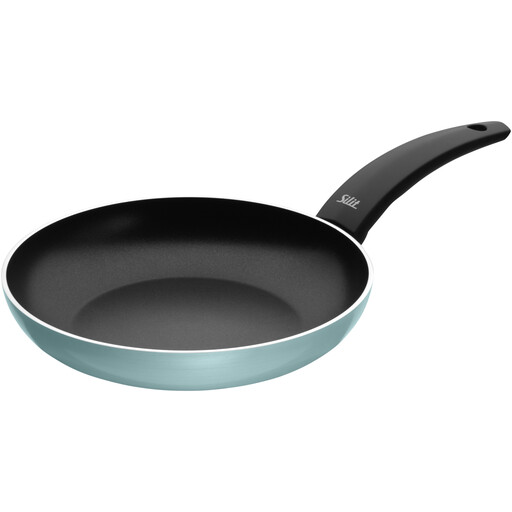
Why this product suits this profile: This 24 cm aluminium pan is designed for gas, electric, ceramic and induction hobs, and is suitable for everyday portions. The Bakelite handle and low weight make it easy to handle.
The specifications state both induction compatibility and separate values for heat resistance and oven suitability. This helps prevent the coating from being used outside its intended limits.
Coated aluminium, 24 cm diameter, stated heat resistance up to 260 °C and a five-year manufacturer’s warranty according to the product details.
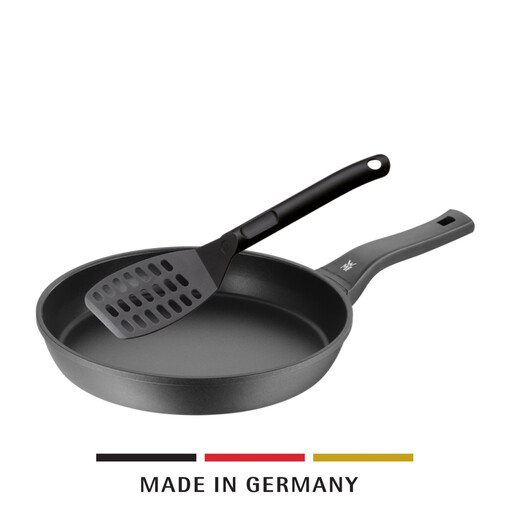
Why this product suits this profile: The 28 cm diameter is designed for larger portions. The pan features a coated cast-aluminium body, an ergonomic plastic handle and comes with a turner.
The product details distinguish between the three-layer PermaDur coating, heat resistance up to 260 °C and oven use up to 70 °C. This sets clear limits for use.
28 cm diameter, induction compatibility, three-layer PTFE coating, high rim and additional turner according to the manufacturer’s specifications.
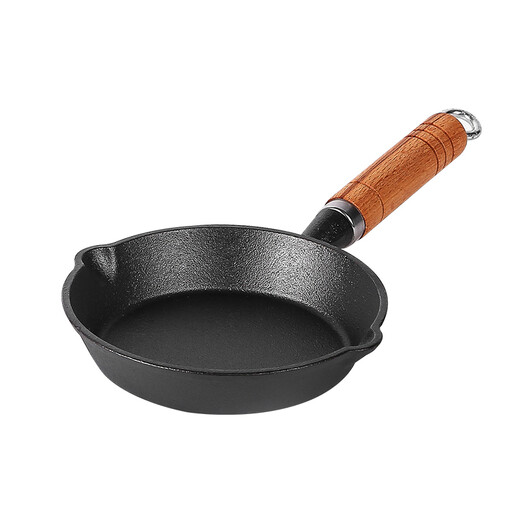
Why this product suits this profile: This small, uncoated cast-iron pan is designed for individual portions, butter, sauces, eggs or serving small side dishes. According to the product details, it works on induction, gas, electric and ceramic hobs.
No non-stick coating is promised here. Instead, seasoning, hand washing, immediate drying and a thin layer of oil are expressly part of the care routine.
Uncoated cast iron, 10 cm diameter, heat retention and compatibility with several hob types. The wooden handle requires particular care when using the pan in the oven.
We have put together a complete, regularly updated list of products that fully meet these strict selection criteria and the safety regulations applicable in the EU.
A rectangular omelette pan such as the Tamago Egg Pan made from iron is a specialist solution for rolled omelettes. It also requires seasoning and hand washing, and should not be confused with a traditional round coated frying pan.
A 24 cm frying pan is a well-balanced size for many two-person households. For larger meals or several ingredients, a 28 cm frying pan provides more cooking surface. A 20 cm frying pan is often sufficient for individual eggs and small portions.
The service life depends on the coating, temperature, utensils and cleaning method. Binding information can only be provided by the relevant warranty or manufacturer’s terms and conditions. Overheating, metal utensils and abrasive cleaning can damage the surface prematurely.
No. ‘PFAS-free’ and ‘without intentionally added PFOA’ are different claims. The material, induction compatibility, care requirements and temperature limits should also suit your own cooking habits. An uncoated cast-iron pan can work without a chemical non-stick coating, but it requires seasoning and regular care.