Buying a new non-stick induction frying pan seems simple. But disappointment often follows quickly: the fried egg sticks after just a few weeks, the base of the pan warps, or the handle comes loose. As a Joybuy Product Recommendation Officer, I analyse product data to provide you with objective criteria that will help you avoid these bad purchases and find a durable, high-performance pan for your induction hob.
This guide focuses on the technical pitfalls and exaggerated marketing claims that often lead to frustration in the kitchen.
The 3 Most Common Pitfalls When Buying an Induction Pan
Many pans promise more than they can deliver. Pay close attention to these three weak points to make an informed decision:
- The "Induction Bluff": A pan can be labelled "induction-compatible" yet still perform poorly. The reason is often a base that is too thin or only magnetic in spots. The result: the pan heats up slowly and unevenly, leading to unsatisfactory cooking results and wasted energy.
- Misleading "Toxin-Free" Claims: Terms like PFOA-free are standard today, but the quality of a non-stick pan depends on the entire coating and its durability. A low-quality coating can wear out quickly, causing it to lose its non-stick properties and exposing the material underneath.
- Structural Flaws: A common annoyance is a poorly attached or non-heat-resistant handle. A loose handle poses a safety risk, while a handle that gets hot makes handling unnecessarily difficult.
What Really Matters: The Key Features of a Good Induction Pan
To avoid the pitfalls mentioned above, you should check three core parameters before buying. These are crucial in determining the performance, safety, and longevity of your new pan.
1. The Pan Base: The Foundation for Even Cooking
For an induction pan, the quality of the base is critical. A high-performance base must meet two criteria:
- Full Ferromagnetic Plate: The base should have a continuous, thick plate of magnetic stainless steel. This ensures fast and, most importantly, even heat absorption and distribution across the entire cooking surface. Pans with thin, bonded magnetic dots should be avoided.
- Warp Resistance: A solid, multi-layered base (often made of cast aluminium and stainless steel) prevents the pan from warping at high temperatures. A flat base is essential for efficient energy transfer on induction and glass-ceramic hobs.
2. The Non-Stick Coating: Balancing Performance and Safety
A toxin-free pan is a major consideration. There are primarily two types of materials with different properties:
- PTFE-Based Coatings (e.g., granite or titanium look): These classic non-stick coatings offer excellent release properties. Modern versions are always PFOA-free. Their durability heavily depends on the number of layers applied and the overall construction quality.
- Ceramic Pan: A ceramic pan is naturally free of PTFE and PFAS. It is often heat-resistant to higher temperatures. The non-stick effect on some models may diminish slightly faster over time than on high-quality PTFE pans, which is why material quality is especially important here.
Regardless of the material, proper care is crucial: only use wooden or silicone utensils and avoid cleaning with abrasive sponges.
3. Material and Extra Features: From Oven Safety to Lids
Besides the base and coating, other features determine the pan's versatility and convenience:
- Body Material: Cast aluminium is a great choice as it conducts and retains heat very well, contributing to even cooking results.
- Oven-Safe: A pan designated as oven-safe offers more flexibility, for example, to finish dishes in the oven. Pay attention to the maximum temperature resistance of both the pan body and the handle.
- Pan with Lid: A matching glass lid is practical for monitoring the cooking process, retaining moisture in the food, and saving energy. It is indispensable for many dishes.
- Pan Set: A pan set of two or three different sizes can be an economical and practical solution for getting started or replacing old equipment.
Our Selection: The Right Pans for Different Cooking Needs
Based on the objective criteria above, we have identified several products that represent a considered choice for specific user profiles.
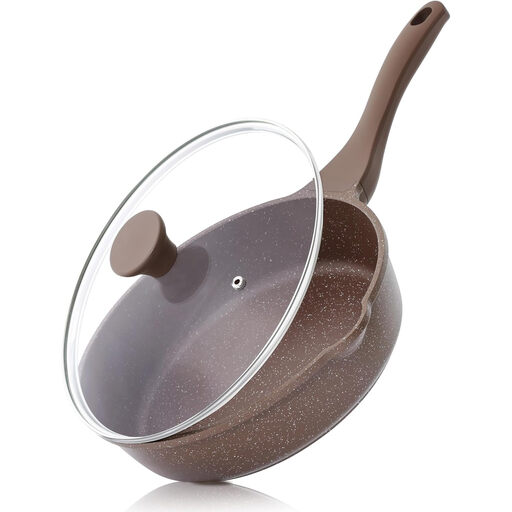
MATCH FOR: Everyday Family Use
Why This Fits Their Persona: Ideal for families who need a versatile and spacious pan for daily use. The high sides and included lid make it perfect for braises, sauces, or larger portions of fried potatoes.
How It Avoids the Trap
The solid aluminium body and magnetic stainless steel base ensure dimensional stability and even heat distribution, avoiding the "induction bluff."
Key Advantage & Pros
Highly versatile thanks to its deep design and lid; heat-resistant Bakelite handle for safe handling.
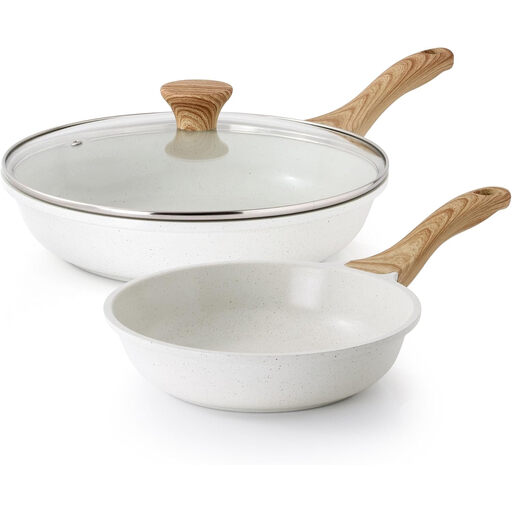
MATCH FOR: The Health-Conscious Beginner
Why This Fits Their Persona: This pan set is a great choice for anyone who values a ceramic coating explicitly declared to be free of PFAS and PTFE. The two sizes offer flexibility for various dishes, from omelettes to sautéed vegetables.
How It Avoids the Trap
Addresses the pitfall of misleading "toxin-free" claims with a clear specification that the ceramic coating is free of PFAS, PTFE, and PFOA.
Key Advantage & Pros
A practical pan set with two popular sizes; the ceramic coating allows for cooking with minimal oil.
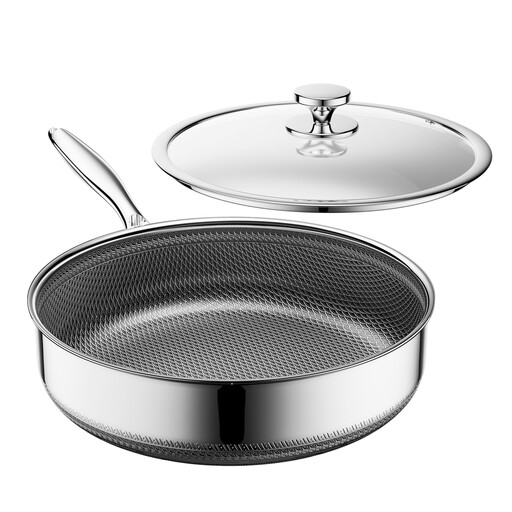
MATCH FOR: The Ambitious Home Chef
Why This Fits Their Persona: For cooks who want to combine the durability of stainless steel with the benefits of a non-stick coating. Its high oven-safe temperature (up to 260°C / 500°F) allows for advanced cooking techniques like searing on the stovetop and finishing in the oven.
How It Avoids the Trap
The hybrid technology, with its etched stainless steel and ceramic coating, is designed for durability and is more resistant to wear and tear than simple coatings.
Key Advantage & Pros
Very high heat resistance (oven-safe up to 260°C / 500°F); tri-ply construction for fast, even heat distribution.
Looking for more options?
We have compiled a complete, up-to-date list of products that fully meet these strict selection criteria and safety standards.
Frequently Asked Questions (FAQ)
How can I tell if a pan is induction-compatible?
The easiest way is the magnet test. Hold a standard magnet to the outer base of the pan. If the magnet sticks firmly, the base is ferromagnetic and therefore suitable for induction hobs. Additionally, the induction symbol (a stylised coil) should be printed on the pan's base or packaging.
How do I properly care for a non-stick pan to extend its lifespan?
- Avoid Overheating: Never heat the pan while empty on the highest setting.
- Use Proper Utensils: Only use cooking utensils made of wood, silicone, or heat-resistant plastic.
- Clean by Hand: Even if some pans are labelled dishwasher-safe, gentle hand washing with a soft sponge and warm, soapy water protects the coating and significantly extends its lifespan.
- Let the Pan Cool Down: Never rinse a hot pan with cold water. The thermal shock can cause the material to warp.
Are ceramic pans a better choice than PTFE-coated pans?
There is no single "better" choice; it depends on your personal priorities.
- Ceramic pans are free of plastics like PTFE/PFAS and can often withstand higher temperatures. They are a great choice for health-conscious users who want to avoid these substances.
- High-quality PTFE pans (often marketed as granite or titanium pans) typically offer slightly longer-lasting and more robust non-stick performance with proper care. Modern PTFE coatings are always PFOA-free and are safe for use up to approx. 260°C (500°F) when used correctly.
Both types require careful handling to maintain their non-stick properties over the long term.