
Lieferung heute & morgen

Qualitätsgarantie

Willkommens-Angebote freischalten: KOSTENLOSE Lieferung | Bis zu 80 % RABATT | Kostenlose 30-Tage-JoyPlus-Testphase
App herunterladen
A non-stick pan should let you prepare food with little oil, heat evenly and clean easily. In practice, however, unclear coating specifications, unsuitable hob types or incorrect care often lead to disappointment. This is particularly true of a coated frying pan, so it is worth comparing the technical details rather than relying on marketing promises before you buy.
Many models described as a ceramic pan consist of an aluminium or stainless steel body with a ceramic coating. This is perfectly normal, but it should be clearly stated in the product description. A ceramic-coated aluminium pan can heat up quickly, while a stainless steel pan with an aluminium core distributes heat differently and is often heavier.
Terms such as “granite”, “titanium” or “hybrid” do not always describe a completely new material. The key information is the substrate material, coating, temperature limit and care instructions.
A pan for induction requires a magnetic base. Not every aluminium or stainless steel pan is automatically suitable for induction. With gas and electric hobs, the base size and stability are also important. A 28-cm pan with a large base may be impractical on a small cooking zone, while a 24-cm model may be a better fit for one or two people.
For halogen or infrared hobs, check the manufacturer’s information explicitly. The same applies to oven use.
A dishwasher-safe pan may be approved for use in a dishwasher according to the supplier. However, manufacturers often still recommend hand washing, as aggressive detergents, high temperatures and contact with other dishes can put greater strain on the coating. If you want to use a ceramic- or PTFE-coated pan for as long as possible, use warm water, mild washing-up liquid and a soft sponge.
With a PTFE-coated pan, look for information such as PFOA-free. Some models also state that they are PFAS-free or PTFE-free. These terms do not mean the same thing:
For an objective choice, you should review the manufacturer’s specific declaration. A statement such as “free from harmful chemicals” is much less meaningful without precise information about substances and testing. If the coating is damaged, the pan should be replaced regardless of the material.
24 cm pans are often suitable for smaller portions, eggs, pancakes or side dishes. 28 cm pans offer more space for vegetables, meat or several portions. A sauté pan or braising pan with a higher rim is useful if you plan to prepare not only fried dishes but also liquids, sauces or braised meals.
A wok pan with a diameter of 30 to 32 cm offers plenty of capacity for stir-fries. However, it may heat unevenly on small cooking zones. Before buying, compare the base diameter with the size of your cooking zone.
A heat-resistant handle makes a pan easier to handle, but it will not stay cool in every situation. In the oven, even a handle described as “Stay-Cool” will become hot. With a pan with lid, you should also check whether the lid has a separate, lower temperature limit.
Look for specific information such as “oven-safe up to 230 °C” or “lid up to 148 °C”. A metal pan must not be put in a microwave. With removable handles, check the fastening and maximum temperature before use.
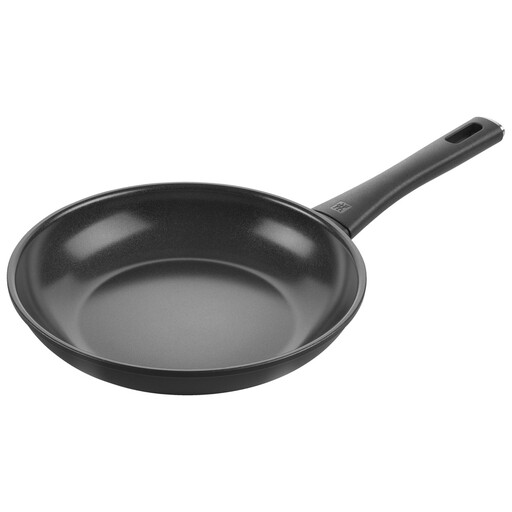
Why this product suits this profile: This 24-cm forged aluminium pan is designed for smaller households and everyday meals. According to the product information, it is suitable for gas, induction, ceramic, halogen and oven use up to 250 °C.
The product data specifies the coating type, diameter, hob compatibility and temperature limit. The recommendation to wash by hand makes the care requirements clear.
CeraForce ceramic coating, described by the supplier as PTFE- and PFOA-free; aluminium body with a net weight of 0,95 kg.
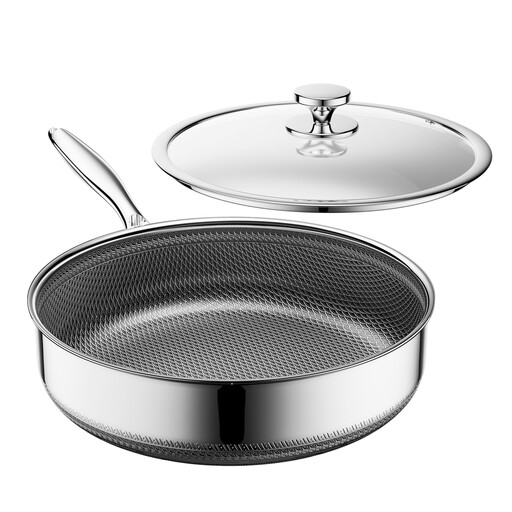
Why this product suits this profile: This deep stainless steel pan combines a ceramic coating with an aluminium core and a glass lid. It is specified as suitable for induction, gas, electric, ceramic and halogen hobs.
The product description gives separate temperature limits for the pan and lid. It also explicitly states that the product is PFAS-, PTFE- and PFOA-free.
Oven-safe up to 260 °C, lid up to 148 °C; described by the supplier as dishwasher-safe and supplied with a heat-resistant glass lid.
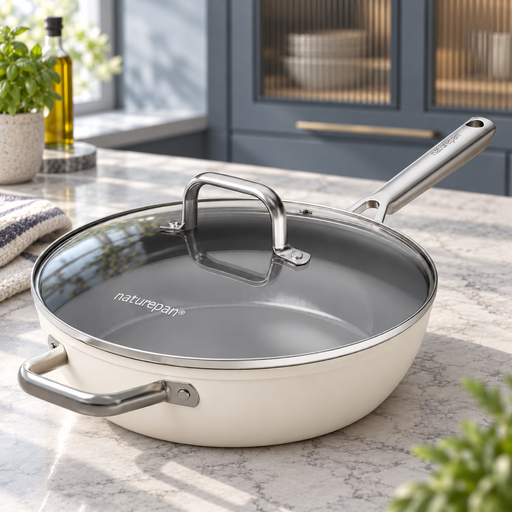
Why this product suits this profile: The higher 7,5-cm rim is suitable for sauces, braised dishes and larger portions. According to the specification sheet, the pan is designed for induction, gas, electric and ceramic hobs.
The information makes it clear that this is coated metal rather than solid ceramic. The lid must be removed when using the pan in the oven.
28 cm diameter, lid included and oven-safe up to 230 °C without the lid; described by the supplier as dishwasher-safe.
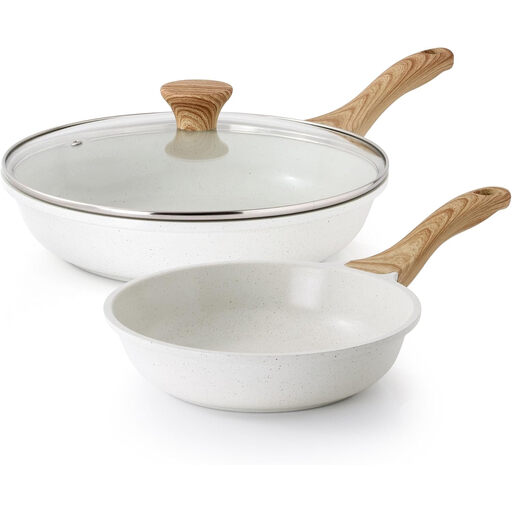
Why this product suits this profile: The two sizes cover everything from small omelettes to sautéed, fried and braised dishes. According to the product information, the pans are suitable for induction, gas and electric hobs.
The coating is described as free from intentionally added PFAS, PTFE and PFOA. At the same time, hand washing is recommended instead of using a dishwasher.
Two pans and a tempered glass lid; ceramic coating according to the supplier, oven-safe up to 550 °F.
We have put together a complete, regularly updated list of products that fully meet these strict selection criteria and the safety regulations applicable in the EU.
A pan for induction requires a magnetic base. The product description should explicitly state that it is “suitable for induction”. Coated aluminium pans usually have an integrated magnetic stainless steel base. A magnet test can provide an initial indication, but it does not replace the manufacturer’s information.
Its lifespan depends on the coating, temperature, cooking utensils and cleaning method. Frequently heating the pan empty or overheating it, using metal utensils and abrasive cleaners can shorten its service life. A fixed timeframe would therefore be unreliable; the condition of the coating is the decisive criterion.
Not necessarily. These claims may be relevant to buyers who want to avoid certain coating materials. You must also ensure that the hob compatibility, size, rim height, handle, temperature limit and care instructions suit your kitchen. The complete product declaration from the relevant supplier is what matters.