
Lieferung heute & morgen

Qualitätsgarantie

Willkommens-Angebote freischalten: KOSTENLOSE Lieferung | Bis zu 80 % RABATT | Kostenlose 30-Tage-JoyPlus-Testphase
App herunterladen
As a Joybuy Product Recommendation Officer, my role is to provide you with clear and objective information. The goal of this article is to help you choose finger paints for kids that not only foster creativity but are also tailored to the needs of toddlers. We will focus on product features like safety, ingredients, and ease of use, so you can make an informed decision.
Creativity is a vital part of a child's development. Painting with their hands is a direct and sensory experience that promotes fine motor skills and sensory perception. However, when selecting the right paints, parents often face questions: Are the ingredients safe? Can the paints be easily washed off? Which products are suitable for which age? This guide is designed to offer you clarity.
To find the right paints for your child, a few objective criteria are essential. Here are three key points to consider in your decision.
Toddlers' skin is sensitive, so product safety should be the top priority. Look for non-toxic paints for toddlers that are water-based. Many manufacturers explicitly label their products with notes like "dermatologically tested."
Additionally, information on allergens is relevant. Formulations that are paraben-free, gluten-free, lactose-free, and vegan offer extra security for children with corresponding sensitivities. A look at the packaging or product description usually provides this information.
Finger paints for ages 2 and up are specially developed for the motor skills of young children. They typically have a creamy, drip-resistant consistency that makes it easier for little hands to pick up and spread the paint without it running immediately. This makes creative painting a clean and frustration-free experience. Always check the manufacturer's age recommendation to ensure the product is suitable for your child.
A practical aspect that makes daily life easier is washability. Washable finger paints can usually be removed from hands, smooth surfaces, and most textiles without any trouble.
However, there are differences depending on the application. While standard finger paints are intended for paper, cardboard, or glass, there are also special fabric paints for kids. These allow for creating artwork on T-shirts, bags, or other textiles that become permanently wash-resistant after being set (e.g., by ironing).
Based on the criteria mentioned above, we have compiled a selection of products that stand out for their specific properties.
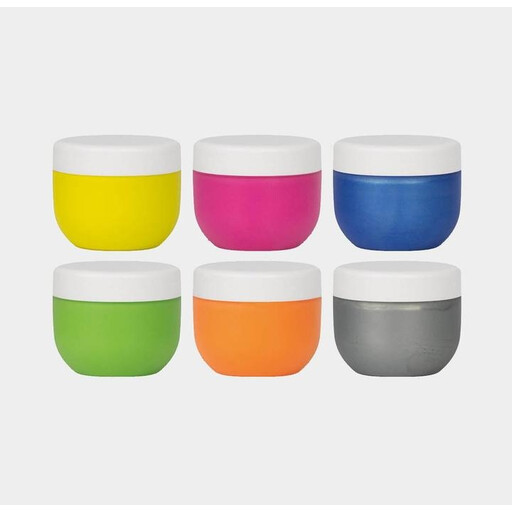
Why It Stands Out This set of Mucki finger paints offers a great introduction to the world of painting. The water-based paints have a creamy consistency that is easy for little hands to handle. The six included shades, including metallic colours, provide an appealing palette for first works of art on paper or cardboard.
Advantages
Who Is It For? This set is suitable for parents and educators looking for an educationally valuable toy for children aged 2 and up. It is ideal for creative afternoons spent painting on paper, cardboard, or canvases.
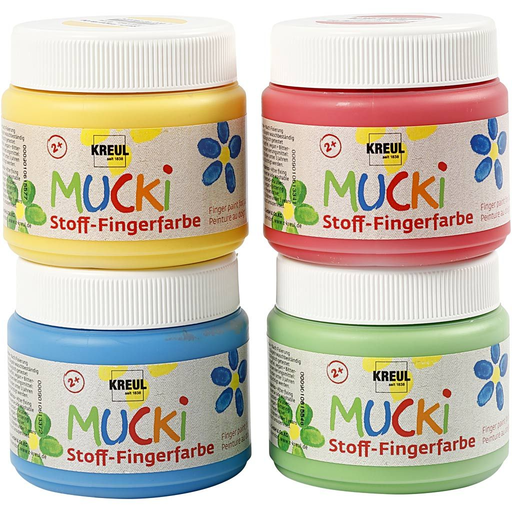
Why It Stands Out These fabric paints for kids open up a new dimension of creative expression. Instead of just painting on paper, children can use these paints to design textiles like T-shirts, tote bags, or cushion covers. After setting, the artwork becomes permanent and wash-resistant.
Advantages
Who Is It For? Ideal for families and educational institutions that want to create long-lasting and personal gifts or keepsakes. It is an excellent choice for projects where the result is not only to be looked at but also worn or used.
Sometimes, creative projects require different tools. For older children or to complement finger-painting artwork, fibre-tip pens can also be a useful option.
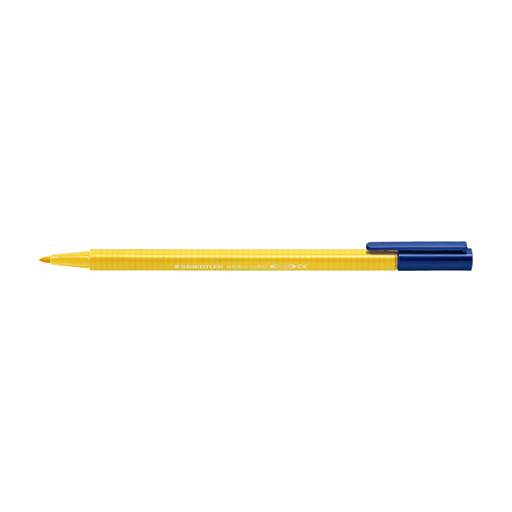
Why It Stands Out This is not a finger paint but a fibre-tip pen, which is well-suited for adding details or for more structured drawing activities. Its ergonomic triangular shape supports a relaxed grip.
Advantages
Who Is It For? This pen is a great addition to the craft cabinet and is suitable for older children who can already draw with more precision, or for adults for activities like journaling or colouring mandalas.
Looking for a specific colour for your next art project? Discover our selection of yellow paint and find the perfect shade for your creative ideas.
1. At what age are finger paints suitable? Most manufacturers recommend their finger paints for ages 2 and up. It is important that they are always used under adult supervision to prevent ingestion of the paint. Always check the specific age recommendation on the product packaging.
2. Are finger paints really non-toxic? Reputable brands that sell their products in the EU must meet strict safety standards. Look for non-toxic paints for toddlers that are water-based. Labels like "dermatologically tested" or information on allergens (e.g., paraben-free, gluten-free) provide additional guidance on the composition.
3. How do you get finger paints out of clothing? Most washable finger paints can be easily removed from textiles with immediate treatment using cold water and soap. For dried-in stains, a pre-treatment can be helpful. Special fabric paints, on the other hand, become permanent and wash-resistant after being set with heat. Always read the manufacturer's instructions for this.