
Lieferung heute & morgen

Qualitätsgarantie

Willkommens-Angebote freischalten: KOSTENLOSE Lieferung | Bis zu 80 % RABATT | Kostenlose 30-Tage-JoyPlus-Testphase
App herunterladen
An interlocking floor mat is a modular flooring solution composed of interlocking tiles. Its primary functions are to protect the underlying floor, enhance safety through cushioning, and create a customisable usable surface. Applications range from children's play areas and fitness zones to workshops. Selecting the right product depends on specific requirements for material, thickness, and surface texture. Common materials like EVA foam provide shock absorption, while specialised versions such as sensory floor tiles are designed to promote perceptual development.
The decision for a suitable mat should be based on an analysis of technical parameters. The following criteria are relevant for making an informed choice.
The most commonly used material for interlocking mats is EVA foam (ethylene-vinyl acetate). This material is characterised by its light weight, flexibility, and shock-absorbing properties. For use in children's areas, such as a crawling mat or play mat, compliance with European safety standards like EN 71 (Safety of toys) is a key indicator. This standard regulates, among other things, the limits for migratable elements and ensures the material is free from harmful plasticisers (phthalates) and other potentially hazardous substances.
For special applications like sensory tiles, a combination of durable PVC (polyvinyl chloride) for the shell and a non-toxic, cosmetic-grade liquid for the filling is often used. In this case, the seal's integrity and the non-slip nature of the underside are crucial.
The thickness of the mat, usually specified in millimetres or centimetres, directly correlates with its ability to absorb impact.
The surface of an interlocking mat should be non-slip to ensure safety during movement. Textured surfaces generally offer better grip than smooth ones. At the same time, a closed-cell material structure is advantageous as it is water-resistant and easy to clean.
The interlocking mechanism of the individual tiles determines the stability of the entire surface. A precisely cut interlocking edge ensures that the mats stay firmly connected, preventing hazardous gaps or edges from forming. Modularity allows the surface area to be flexibly adapted to the room's geometry and expanded as needed.
Based on the technical criteria mentioned, we present two products with different primary applications.
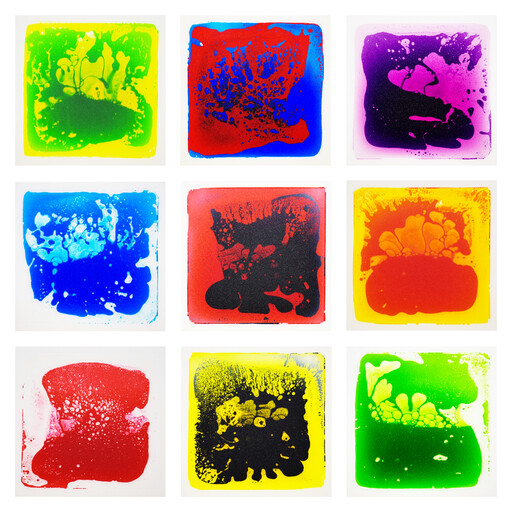
Why We Recommend This Product The Art3d floor tiles are not a classic interlocking mat, but rather specialised sensory floor tiles. Their core feature is a filling of cosmetic-grade, non-toxic liquid that reacts to pressure. Every step or jump creates dynamic colour patterns, stimulating visual and tactile perception. The construction of reinforced PVC with a non-slip backing is designed for durability and safety indoors.
Advantages
Best Suited For This product is primarily suitable for educational institutions like nurseries and preschools, therapy practices, and for parents wanting to create an interactive play area in a child's room. It serves less for fall protection and more for the targeted promotion of perception and movement.

Why We Recommend This Product The floor mat set from Black + Decker is a functional and versatile solution made of EVA foam. With a thickness of 1 cm, it offers a solid balance of cushioning and stability. The mats are designed as a classic floor protection mat, shielding the underlying surface from scratches, impacts, and moisture. The interlocking design allows for flexible adjustment of the surface area to meet specific needs.
Advantages
Best Suited For This product is ideal for users looking for a practical protective surface for home gyms, workshops, garages, or basements. It is also suitable as a durable and low-maintenance play mat in a child's room or as a surface for pet areas.
While modular mats offer a high degree of flexibility and functionality, some users may seek a more permanent and aesthetically specific flooring solution. For areas where a fixed installation and a distinct design are priorities, decorative tiles can be an option. For example, gold tiles offer a striking look for design-oriented spaces and represent an alternative for permanent flooring.
1. Are interlocking mats safe for babies? For use as a crawling mat, interlocking mats should be explicitly designated as suitable for babies. Look for products certified according to the European standard EN 71. This ensures that the materials are free from harmful substances such as phthalates, lead, or formaldehyde. Additionally, the mat should have sufficient thickness (at least 1 cm) to cushion falls.
2. How do you clean an EVA foam mat? EVA foam is a closed-cell material, making it water-resistant and easy to maintain. For cleaning, a damp cloth with a mild soap solution is usually sufficient. Avoid aggressive chemical cleaners, as they can damage the material. After cleaning, the mat should be left to air dry and not be exposed to direct sunlight for extended periods.
3. Can you cut an interlocking mat? Yes, most interlocking mats made of EVA foam can be cut to fit around corners, door frames, or other obstacles. A sharp utility knife or box cutter is best suited for this task. For a precise result, it is recommended to cut along a straight edge (e.g., a metal ruler).