
Lieferung heute & morgen

Qualitätsgarantie

Willkommens-Angebote freischalten: KOSTENLOSE Lieferung | Bis zu 80 % RABATT | Kostenlose 30-Tage-JoyPlus-Testphase
App herunterladen
The right baking pan is the foundation for every perfect cake, crusty loaf of bread, and delicate torte. But the market can be overwhelming, and not every pan lives up to its promises. Before you make a purchase, it's crucial to understand the common pitfalls that often only become apparent after a few uses, leading to frustration in the kitchen.
Many home bakers invest in a new cake pan or loaf pan only to be disappointed when the quality doesn't meet their expectations. Watch out for these three widespread defects to avoid a bad purchase:
square pan or springform pan is therefore essential.non-stick surface that quickly bubbles, scratches, or peels isn't just an inconvenience—it's a quality defect. Particles from the coating can flake into your food, and the pan becomes unusable.cake pan is crucial, especially for cheesecakes or thinner batters. A poorly designed latch or imprecisely fitting rims will cause batter to leak out, drip onto the oven floor, and burn.To avoid these problems, you should check three core aspects before buying. These define the functionality and durability of your new bakeware.
The material is the heart of any baking pan. Most high-quality pans are made of carbon steel. This material is known for its excellent and even heat conduction, which ensures consistent browning without burnt edges or raw spots. Look for terms like "heavy-gauge carbon steel" or a high material thickness. This is an indicator of dimensional stability and prevents warping at high temperatures. While stainless steel is rust-proof, it conducts heat less efficiently, which can lead to more uneven baking results.
A good non-stick coating not only makes releasing the cake easier but also simplifies cleanup. Look for PFOA-free coatings. Some manufacturers, such as Kaiser Bakeware, use ceramic-reinforced coatings (e.g., KAIRAMIC) that offer greater scratch resistance. For ambitious bakers, other features are also relevant:
removable bottom in a quiche pan or as a fixed base in a loaf pan, allows you to cut directly in the pan without damaging the surface.Depending on your baking project, the construction is critical.
bread pan should have stable, straight walls for a uniform loaf shape. Rounded corners make for easier cleaning.bakeware set can be a smart choice. It's important that all pieces in the set meet the same quality standards for material and coating.Based on these objective criteria, we have identified some products that are suitable for specific user profiles.
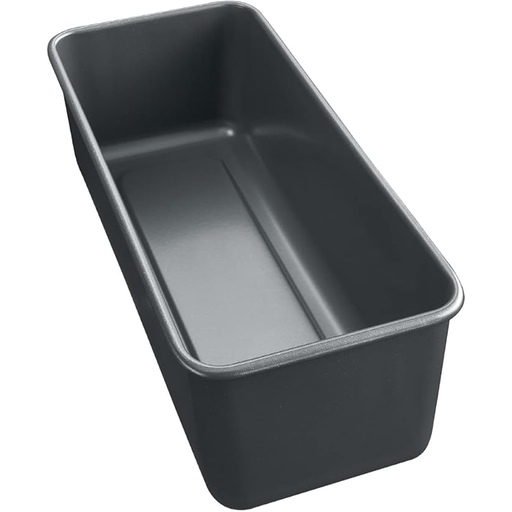
Why It's a Match: Ideal for those who regularly bake challenging breads (including sourdough) and loaf cakes and who value maximum durability and functionality.
The glass-hard enamel base is cut-resistant and sourdough-safe, bypassing the problem of a peeling coating. The heavy-gauge steel prevents warping.
The KAIRAMIC non-stick coating on the sides ensures an easy release, while the robust enamel base guarantees durability. Heat-resistant up to 250°C.
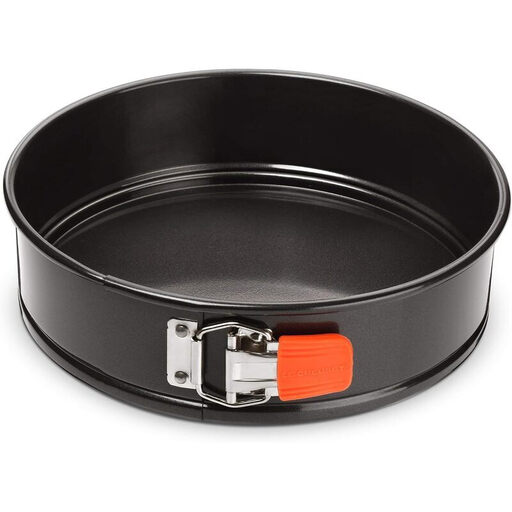
Why It's a Match: Perfect for anyone who regularly bakes delicate sponge cakes, cheesecakes, or multi-layered tortes and values reliable handling and even baking results.
The heavy-gauge carbon steel construction resists warping. The solid side clip and removable base are precision-engineered to minimise batter leakage.
Even heat distribution for consistent baking results. The PFOA-free non-stick coating ensures effortless cake release. Heat-resistant up to 240°C.
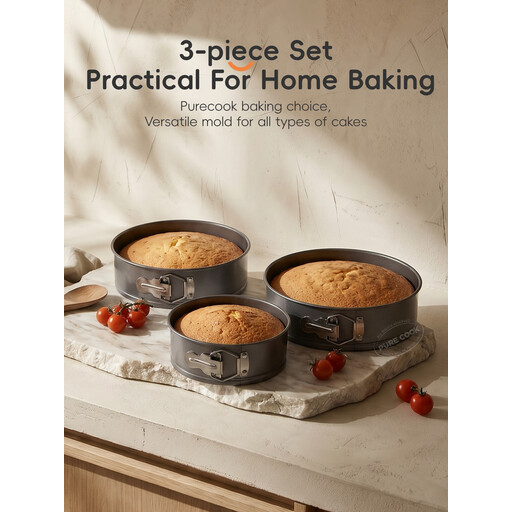
Why It's a Match: This set offers a flexible and cost-effective solution for bakers who need various cake sizes without having to invest in multiple individual pans.
The quick-release latch mechanism ensures a tight seal and makes demolding easy, which is especially helpful for beginners and prevents batter from leaking.
The set includes three common sizes (18, 20, 24 cm), offering great flexibility. The carbon steel construction provides good heat conduction.
We have compiled a complete, up-to-date list of products that fully meet these strict selection criteria and safety standards.
1. How do you properly clean a non-stick baking pan to extend its lifespan? After the pan has cooled, clean it by hand with warm water, a mild dish soap, and a soft sponge. Avoid abrasive cleaners, steel wool, or washing it in the dishwasher (unless expressly permitted by the manufacturer), as this can damage the non-stick coating.
2. Are carbon steel baking pans suitable for sourdough bread? Standard carbon steel pans with a basic non-stick coating can be damaged over time by the acidity of sourdough. For regular sourdough baking, pans with a special, acid-resistant coating or an enamel-coated base, like those found on some Kaiser Bakeware models, are the better choice.
3. What does "leak-proof" mean for a springform pan, and what should you look for? "Leak-proof" means that the pan's ring seals so precisely and tightly against the base that even thin batters won't leak out. Look for a sturdy, wide latch mechanism (e.g., a "SafeClick" design) and a base that fits slightly raised into the ring to create an extra barrier. High-quality materials and manufacturing precision are crucial here.