
Lieferung heute & morgen

Qualitätsgarantie

Willkommens-Angebote freischalten: KOSTENLOSE Lieferung | Bis zu 80 % RABATT | Kostenlose 30-Tage-JoyPlus-Testphase
App herunterladen
A quality baking pan is the foundation for any successful bake. But the market is overwhelming, and many products fail to live up to their promises. Instead of a perfectly browned cake or a crusty loaf of bread, the wrong choice often leads to frustration: the dough sticks, the bake is uneven, or the pan warps after just a few uses. As your Joybuy Product Recommendation Officer, I'll help you identify the common traps and make an informed decision.
Marketing terms can be misleading. Instead, focus on concrete product features to prevent disappointment. Three problems are especially common:
To avoid these pitfalls, you should check three core aspects before buying. These define the quality, durability, and functionality of your new baking pan.
The material determines how efficiently and evenly heat is transferred from the oven to the dough.
A non-stick baking pan is standard today, but the quality differences are enormous. Look for multi-layer, PFOA-free coatings designed for high temperatures. High-quality coatings not only ensure an effortless release of baked goods but also simplify hand washing—because most premium pans are not dishwasher-safe, as harsh detergents can damage the coating.
The pan must suit the project. A basic set covers most needs, while specialty pans deliver unique results.
Instead of an overwhelming list, we present specific product recommendations tailored to typical user profiles.
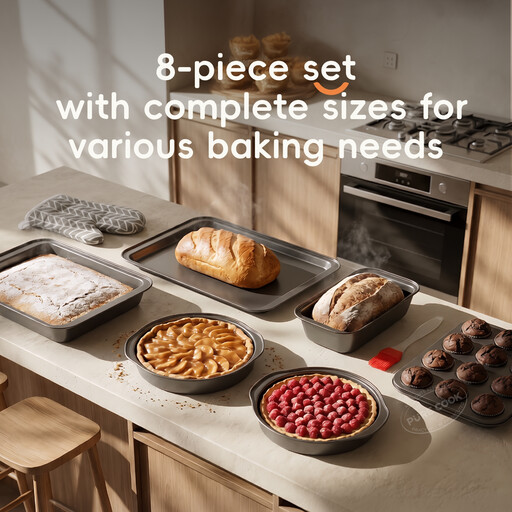
Why This Fits Their Persona: Ideal for hobby bakers who want to try various bakes from cakes and brownies to casseroles without immediately investing in expensive individual pans. This set offers a wide range of possibilities.
The set is made of carbon steel, which ensures better heat distribution than simple sheet metal (avoids Trap 3). The non-stick coating makes release and cleanup easier for beginners (avoids Trap 1).
A comprehensive bakeware set with various sizes and shapes. Good value for a versatile starter kit.
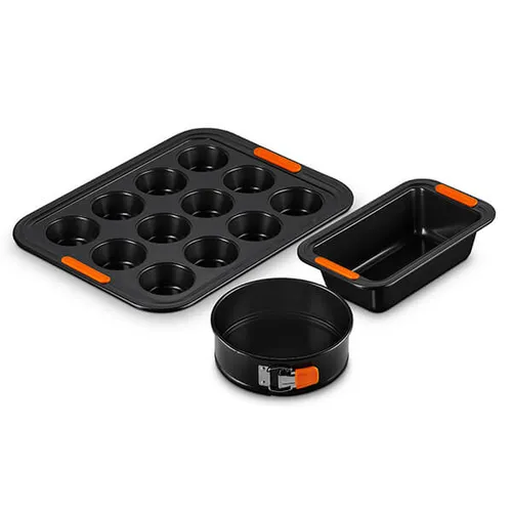
Why This Fits Their Persona: For ambitious bakers who bake regularly and value durability, reliability, and perfect results. An investment in quality that pays off for years.
Made from heavy-gauge carbon steel that is completely warp-resistant (avoids Trap 2). The premium non-stick coating is exceptionally robust and durable according to the manufacturer (avoids Trap 1).
Excellent and even heat distribution. The set includes the three most essential pans: a muffin pan, a loaf pan, and a springform pan.
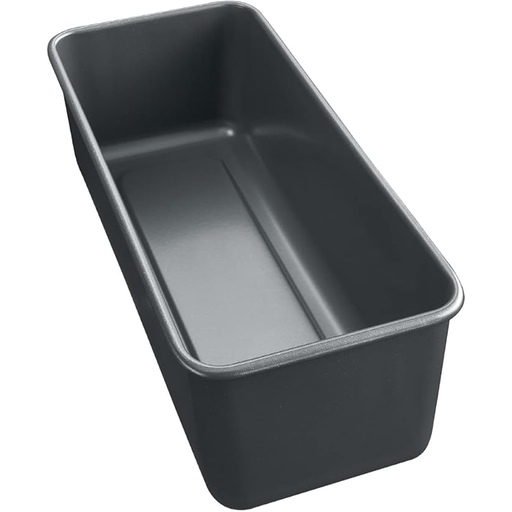
Why This Fits Their Persona: Perfect for anyone who regularly bakes bread, especially sourdough. This pan is specifically designed to meet the demanding requirements of bread doughs.
The glass-hard enamel base is cut-resistant and impervious to fruit acids and sourdough. This prevents the coating from being destroyed, a common problem with standard pans (avoids Trap 1).
Explicitly designated as a sourdough-safe baking pan. The KAIRAMIC non-stick coating on the sides ensures easy release, while the base is extremely durable.
We have compiled a complete, up-to-date list of products that fully meet these strict selection criteria and safety standards.
Proper care is crucial. Always clean the pan by hand with warm water, a mild dish soap, and a soft sponge. Absolutely avoid metal or abrasive cleaning tools and harsh scouring agents. Even if some manufacturers permit it, the dishwasher is damaging to almost any coating in the long run. Dry the pan thoroughly after cleaning to prevent rust from forming on any uncoated edges.
No, this is not recommended. The acid in sourdough can attack and damage conventional non-stick coatings. For regular sourdough baking, you should use a pan explicitly labeled as a sourdough-safe baking pan. These often have a base made of enamel or a special ceramic seal that is resistant to the acid.
A good indicator is the material and its gauge. Pans made of heavy-gauge carbon steel generally conduct heat much better and more evenly than those made of thin, lightweight metal. A dark-colored pan can also promote browning, as dark surfaces absorb radiant heat in the oven more effectively. An evenly browned cake without burnt edges or a raw center is the best sign of good heat conduction.