
Lieferung heute & morgen

Qualitätsgarantie

Willkommens-Angebote freischalten: KOSTENLOSE Lieferung | Bis zu 80 % RABATT | Kostenlose 30-Tage-JoyPlus-Testphase
App herunterladen
A high-quality frying pan is the cornerstone of any well-equipped kitchen. However, the market is overwhelming and filled with marketing claims that often fail to deliver. Many buyers discover after just a few months that their expensive purchase has warped, the coating is degrading, or food cooks unevenly. Before you make a decision, it's crucial to understand the common pitfalls to find a durable, functional pan that truly suits your cooking habits.
Investing in a new pan can be frustrating when the product doesn't meet expectations. Pay close attention to these three widespread issues:
To avoid a bad purchase, focus on the technical fundamentals rather than marketing slogans. Three parameters are crucial.
The choice of material determines your pan's cooking performance, durability, and maintenance requirements.
The base is the heart of any good frying pan. A thick, multi-layered base, often called a sandwich or encapsulated base, is crucial for even heat distribution and retention. This prevents food from burning in some spots while remaining raw in others.
For induction hob users, a ferromagnetic base is mandatory. A high-quality pan for induction has a solid, warp-resistant base that won't deform even under high heat, ensuring efficient energy transfer.
The right size depends on your household size and cooking habits. A 28 cm pan is a versatile all-rounder for most families. Smaller pans are suitable for single households or side dishes.
Also, look for practical features:
Here are some models that represent a considered choice for specific user profiles based on their objective features.
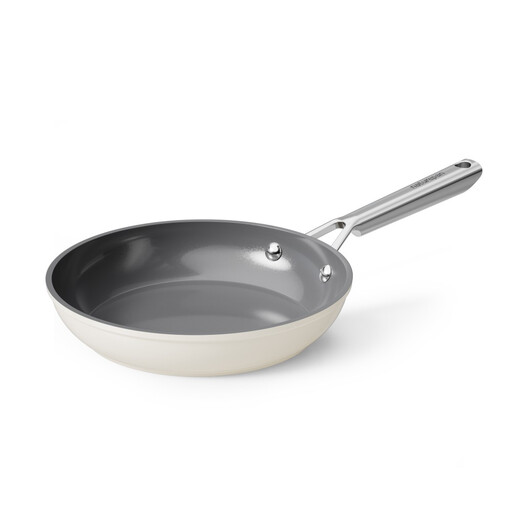
Why This Fits Their Persona: Ideal for users who prioritise toxin-free cooking. The compact size is perfect for small portions, egg dishes, or side dishes in daily use.
The coating is explicitly declared as PTFE/PFOA/PFAS-free, directly addressing concerns about unclear material specifications.
The ceramic coating, reinforced with diamond and titanium particles, promises high durability. Additionally, the pan is oven-safe up to 260°C and suitable for all hob types.
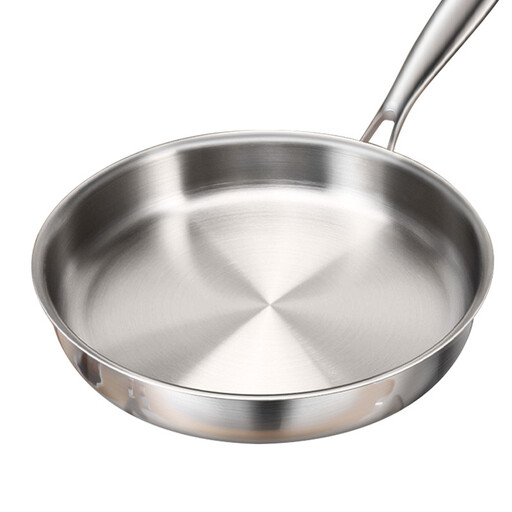
Why This Fits Their Persona: Perfect for chefs seeking maximum control and durability. This uncoated pan is ideal for searing steaks and for techniques requiring high temperatures.
As an uncoated stainless steel pan, it completely bypasses the problem of short-lived non-stick coatings. The triple-ply construction ensures dimensional stability and prevents the base from warping.
The stainless steel construction with an aluminium core provides optimal heat conductivity. The pan is extremely scratch-resistant, acid-resistant, and suitable for all hob types.
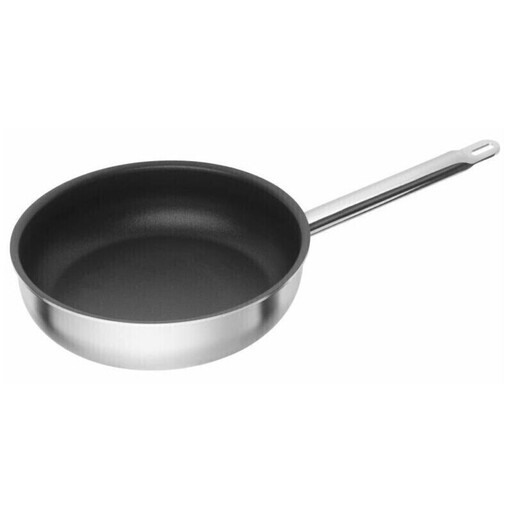
Why This Fits Their Persona: For users who rely on proven brand quality and thoughtful engineering. The Zwilling pan is a reliable all-rounder for demanding daily use.
The SIGMA Clad 3-layer base with an aluminium core ensures fast, even heat distribution and high dimensional stability. The durable Duraslide Ultra PTFE coating is PFOA-free.
Excellent heat conduction right up to the rim, oven-safe up to 230°C, and suitable for all hob types, including induction. The riveted stainless steel handle stays cool for longer.
We have compiled a complete, up-to-date list of products that fully meet these strict selection criteria and safety standards.
1. How do I properly care for a coated pan to extend its lifespan? Avoid overheating (especially when empty) and use wooden, silicone, or plastic utensils. Clean the pan by hand with a soft sponge and mild washing-up liquid, even if it is labelled as dishwasher-safe. This significantly preserves the coating.
2. How can I identify a good pan for induction? A good induction pan has a thick, perfectly flat base that is magnetic. You can easily test this with a magnet. High-quality models feature a multi-layered base (e.g., stainless steel-aluminium-stainless steel) that distributes heat evenly and keeps the pan warp-resistant.
3. Is an uncoated stainless steel pan suitable for beginners? Yes, but it requires a short learning curve. The key is proper preheating: heat the pan over medium heat, then add the oil. Once the oil shimmers slightly, you can add your food. With a little practice, you'll achieve excellent cooking results, and the pan is a purchase for life.