
Lieferung heute & morgen

Qualitätsgarantie

Willkommens-Angebote freischalten: KOSTENLOSE Lieferung | Bis zu 80 % RABATT | Kostenlose 30-Tage-JoyPlus-Testphase
App herunterladen
The search for the right frying pan can quickly become overwhelming. The ceramic pan, in particular, is often promoted as the healthy and low-maintenance alternative to conventional models. But not every pan marketed as such delivers on its promises in daily kitchen use. Many buyers find that the non-stick effect fades after a short time or that the pan warps.
As your Joybuy Product Recommendation Officer, I'll help you recognise the typical marketing traps and make an informed decision. We'll focus on the facts so you can find a pan that truly fits your needs.
The 3 Most Common Pitfalls When Buying a Ceramic Pan:
To avoid a bad purchase, you should check three core technical aspects. These determine the longevity, functionality, and safety of your new pan.
The material beneath the coating is crucial for heat conduction and retention.
The quality of a non-stick ceramic pan depends directly on its coating. A high-quality ceramic-coated pan is distinguished by several features:
A pan's functionality doesn't end on the stovetop.
Based on the criteria above, we have selected a few models from our range for different user profiles.
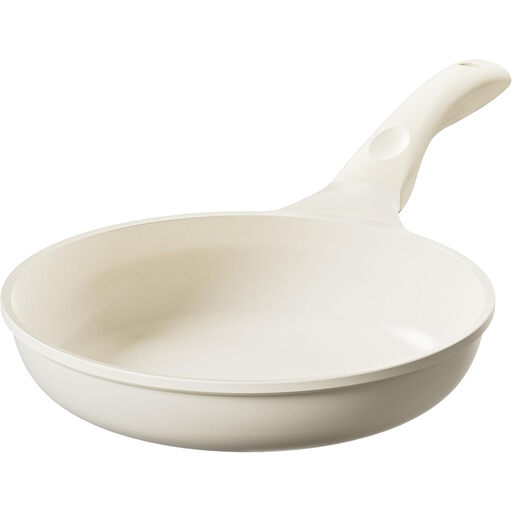
Why This Fits Their Persona: Ideal for singles or couples looking for a reliable, toxin-free pan for daily use without a large budget. The 24 cm size is perfect for fried eggs, pancakes, or searing smaller portions.
The product description explicitly states a PTFE/PFOA/PFAS-free coating, thus avoiding the trap of unclear toxin claims. The thickened base ensures more even heating than simple, thin pans.
Induction-Ready: The base is designed for all stovetops, including induction. Ergonomic Handle: The Bakelite handle stays cool and is suitable for both left- and right-handed users.

Why This Fits Their Persona: Perfect for families or home cooks who need a deep, multifunctional pan with a lid for braises, sauces, or larger portions. The square shape offers more cooking surface than a round pan of the same diameter.
The cast aluminium body ensures solid heat distribution, avoiding the typical hot spots of cheaper pans. The Ti-Ceramic coating is explicitly declared as PFAS-free and non-toxic.
High Capacity: With 3.8 quarts and high sides, it's ideal for stews and one-pot meals. Thoughtful Design: Includes a lid, dual pouring spouts, and practical accessories (wooden spatula, scrubber).
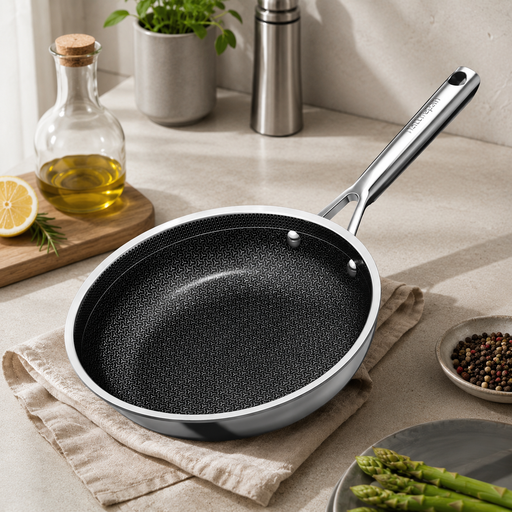
Why This Fits Their Persona: For cooks who value maximum performance, durability, and versatility. This pan combines the benefits of stainless steel (high-heat searing) with those of a ceramic non-stick coating. Ideal for steaks, but also for delicate foods.
The hybrid structure with raised stainless steel ridges physically protects the recessed ceramic coating from scratches by utensils. This directly addresses the weak point of scratch resistance in many pure ceramic pans.
Hybrid Technology: The laser-etched hexagonal pattern allows for high-heat searing on stainless steel and effortless food release thanks to the ceramic. Oven-Safe to 260°C (500°F): The stainless steel handle makes the pan extremely versatile for stovetop-to-oven recipes.
We have compiled a complete, up-to-date list of products that fully meet these strict selection criteria and German safety regulations.
The lifespan of a ceramic coating heavily depends on its care. To maximise it, you should follow these points:
No. A pan for induction needs a base with magnetisable properties. Whether a ceramic pan is induction-compatible depends on its body, not its coating. When buying, look for the manufacturer's explicit label for induction suitability.
Yes, cooking with little to no fat is one of the main features of a good ceramic non-stick coating and supports a healthy pan-based cuisine. For delicate foods like eggs or fish, this generally works very well. However, a small drop of oil can improve browning and help extend the life of the coating.