
Lieferung heute & morgen

Qualitätsgarantie

Willkommens-Angebote freischalten: KOSTENLOSE Lieferung | Bis zu 80 % RABATT | Kostenlose 30-Tage-JoyPlus-Testphase
App herunterladen
A high-quality coated frying pan is a cornerstone of any kitchen. But the search for the right model, especially for an induction hob, can quickly become overwhelming. Promises of durability and health safety often contradict the reality after just a few months of use. Before you make a decision, it's crucial to understand the most common pitfalls that lead to disappointment and wasted money.
The 3 Most Common Pitfalls When Buying a Pan:
To avoid a bad purchase, focus on three objective criteria. These will help you factually assess the performance and longevity of a coated induction frying pan.
The non-stick coating is the heart of the pan. There are significant differences that go beyond just the non-stick effect.
For users of induction hobs, the quality of the base is critical. Optimal heat transfer is only guaranteed with a fully magnetised base. Look for a thick, warp-resistant stainless steel base that is seamlessly integrated into the pan's aluminium body. This ensures:
The shape of the pan should match your cooking habits.
Based on these objective criteria, we have identified some models that represent a considered choice for specific user profiles.
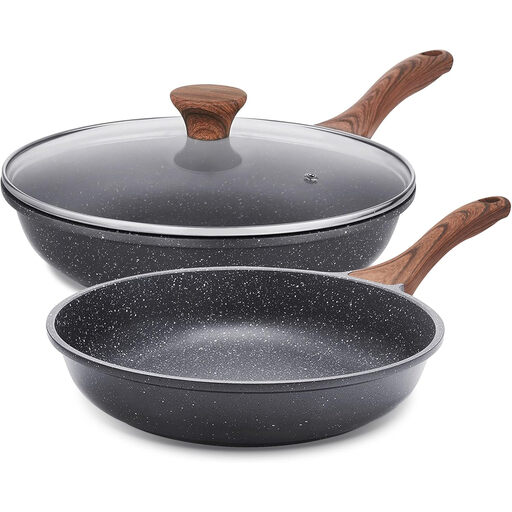
Why this set is a good fit: This induction pan set covers most daily cooking needs with two common sizes (approx. 8-inch and 11-inch) — from a small omelette pan to a larger pan for meat or vegetables. Ideal for families who need a functional starter set.
The highly magnetic stainless steel base ensures even and efficient heat distribution on induction hobs, avoiding the problem of uneven cooking. According to the manufacturer, the coating is made without intentionally added PFOA/PFOS.
The set includes a matching tempered glass lid for the larger pan, making it versatile for both frying and sautéing. The Bakelite handles stay cool-to-the-touch on the stovetop.
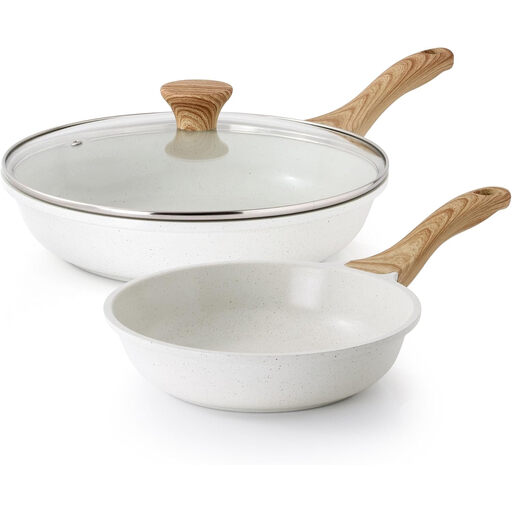
Why this set is a good fit: For anyone who wants to consciously avoid fluorochemicals. Those looking to buy a ceramic pan will find an option here that explicitly states it is free of PFAS and PTFE and is well-suited for low-fat cooking.
This set directly addresses the "PFOA-free" pitfall by being, according to the manufacturer, completely free of intentionally added PFAS and PTFE. This offers a clear material choice for health-conscious buyers.
According to the manufacturer, the ceramic coating is oven-safe up to a high temperature of approx. 287°C (550°F). The die-cast aluminium body ensures a stable shape and good heat conduction on all hob types.
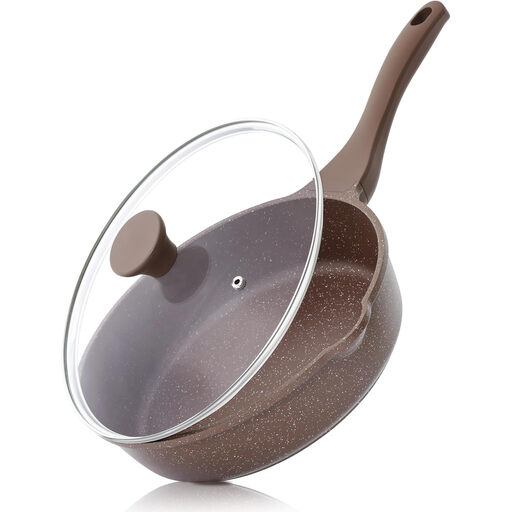
Why this pan is a good fit: Anyone looking for a single, versatile pan for a compact kitchen has found it here. With its high sides and large diameter (approx. 12-inch), it functions as both a classic frying pan and a sauté pan with lid.
It avoids the trap of buying a pan that's too shallow and unsuitable for sauces or larger portions. Its multifunctionality saves you from buying a second, deeper pan. The induction base is designed for all hob types.
The large capacity and high sides allow you to cook dishes with a lot of liquid without spills. The non-stick coating makes cleanup easy after simmering or braising.
We have compiled a complete, up-to-date list of products that fully meet these strict selection criteria and relevant safety standards.
To maximise the lifespan of the non-stick coating, you should follow a few basic rules. Clean the pan by hand with a soft sponge and mild washing-up liquid; the harsh salts in dishwasher tablets can damage the coating. Use only wooden, silicone, or plastic cooking utensils. Heat the pan on low to medium heat and avoid placing a hot pan directly under cold water (thermal shock).
Ceramic coatings are a good choice for users who specifically want to avoid fluoropolymers like PTFE and PFAS. According to manufacturers, they do not release harmful fumes even when accidentally overheated. However, health safety also depends on the integrity of the coating. As soon as deep scratches appear, the pan should be replaced, regardless of the material.