
Lieferung heute & morgen

Qualitätsgarantie

Willkommens-Angebote freischalten: KOSTENLOSE Lieferung | Bis zu 80 % RABATT | Kostenlose 30-Tage-JoyPlus-Testphase
App herunterladen
A high-quality coated induction frying pan is the heart of many kitchens. However, the search for the right model can quickly become overwhelming. Promises of durability and perfect non-stick performance often clash with the reality after just a few months of use. As a Joybuy Product Recommendation Officer, I'll help you identify the crucial features and avoid common purchasing pitfalls.
Many product features sound convincing on paper but prove problematic in daily use. Pay close attention to these three points to avoid disappointment:
To make an informed decision, you should focus on objective criteria. The following three aspects are crucial for the performance and longevity of your pan.
The type of non-stick pan is largely determined by its coating.
For induction hobs, the construction of the base is critical. A good pan for all stovetops has a fully ferromagnetic base.
Depending on your cooking habits, certain features can significantly enhance convenience.
Instead of making a one-size-fits-all recommendation, we have identified products that meet specific user profiles.
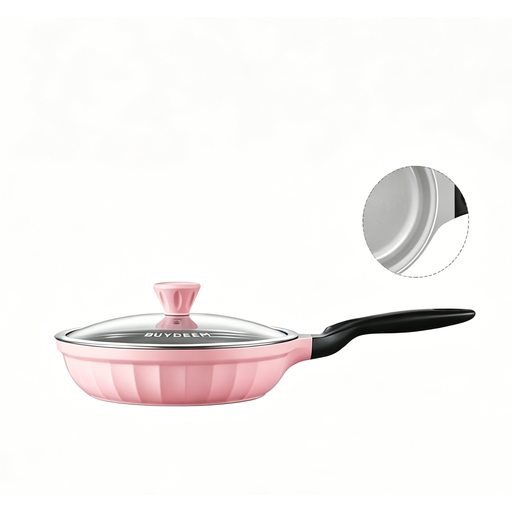
Why This Fits Their Persona: Ideal for preparing meals for 3–4 people. The focus is on safety and health without compromising on performance.
The Swiss ceramic coating is free of PFAS, PFOS, and PFOA according to the manufacturer, thus avoiding the "PFOA-free" loophole. The cast aluminium body ensures even heat distribution and prevents induction hot spots.
Verified non-toxic coating. Fast and even heating on all stovetops, including induction. Includes a matching glass lid.
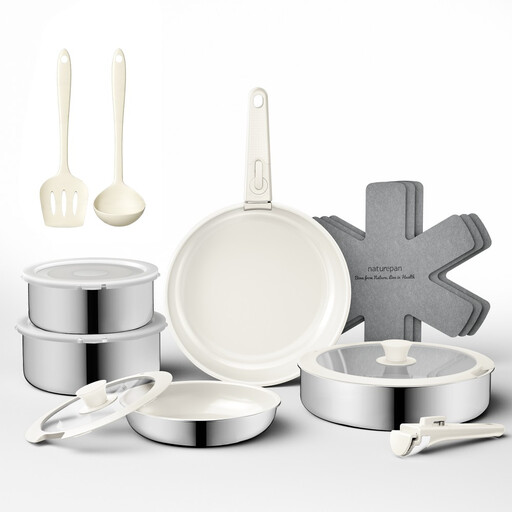
Why This Fits Their Persona: Perfect for anyone who values organisation and maximum flexibility in their kitchen. Ideal for smaller apartments, RVs, or for space-saving stacking in the cupboard.
The detachable handle is a concrete, functional solution, not an empty promise. Being oven-safe extends its utility beyond just frying, making the set a true all-rounder.
Saves up to 70% cupboard space, according to the manufacturer. The pans are oven-safe up to 250°C and suitable for all stovetops, including induction.

Why This Fits Their Persona: A straightforward and reliable pan for daily use. It's lightweight, easy to clean, and meets all the basic requirements for quickly frying eggs, vegetables, or meat.
This model focuses on core functionality without exaggerated promises. The aluminium alloy ensures good heat conduction on induction, and the food-grade non-stick coating serves its purpose in everyday use.
Very lightweight body for easy handling. Heats up quickly and evenly. Cleaning is straightforward thanks to the smooth surface.
We have compiled a complete, up-to-date list of products that fully meet these strict selection criteria and all relevant safety regulations.
Avoid using metal utensils; opt for wood, silicone, or plastic instead. Allow the pan to cool down after use before cleaning it with warm water, a mild detergent, and a soft sponge. Dishwasher cleaning is often not recommended, as harsh detergents can damage the coating. Never overheat the pan when it's empty.
In general, a ceramic pan is harder and more resistant to scratches than a conventional PTFE coating. However, no non-stick coating is completely immune to damage. Even with ceramic pans, it is recommended to avoid metal cutlery to ensure the longevity of the non-stick properties.
A good induction pan has a thick, heavy, and completely flat base that is fully magnetic. You can easily test this with a magnet: if it sticks to the entire underside, good heat distribution is likely. A solid base made from materials like cast aluminium with an integrated stainless steel plate is another sign of quality.