
Lieferung heute & morgen

Qualitätsgarantie

Willkommens-Angebote freischalten: KOSTENLOSE Lieferung | Bis zu 80 % RABATT | Kostenlose 30-Tage-JoyPlus-Testphase
App herunterladen
A good coated pan is the cornerstone of many kitchens. But the market is overwhelming and full of promises that often prove baseless after just a few months. A coating that wears out quickly, a wobbly handle, or an uneven base that doesn't heat properly on an induction cooktop—these problems lead to frustration and unnecessary expense.
As your Joybuy Product Recommendation Officer, I'll help you recognise the common pitfalls and make an informed decision. This guide focuses on the objective criteria that define a durable and functional pan, so you can find a product that truly fits your cooking habits.
Before we dive into the important features, let's highlight the three most common problems buyers experience:
To avoid these traps, you should focus on three verifiable product features. These determine the pan's longevity, safety, and cooking results.
The type of coating is crucial for performance and lifespan. The most common types have clear pros and cons:
A good pan base is thick, warp-resistant, and perfectly flat. This is the only way it will sit flush on the cooktop and distribute heat evenly.
The right shape makes the difference between good and impractical cookware.
Here are three recommendations tailored to different cooking profiles that meet the quality criteria mentioned above.
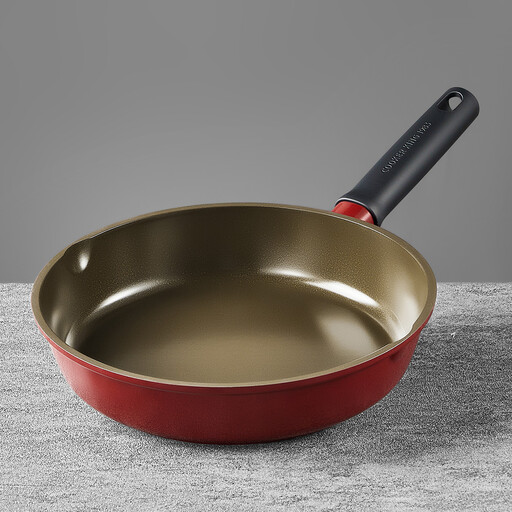
Why This Fits Their Persona: Ideal for daily use, from fried eggs in the morning to sautéed vegetables in the evening. The 28 cm size is a versatile standard for most households, offering enough space for 2-4 people.
The titanium ceramic coating is explicitly declared as PTFE- and PFOA-free, directly addressing concerns about durability and health. The induction-compatible base is designed for even heating, bypassing the "hidden incompatibility" trap.
Offers a balanced combination of modern coating technology, a universal size, and excellent value for money. Suitable for all cooktop types.
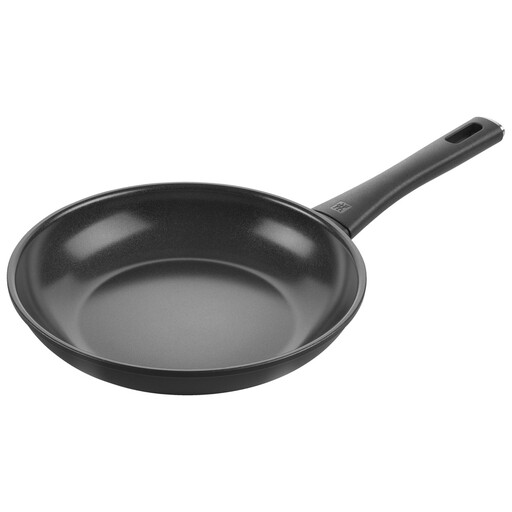
Why This Fits Their Persona: For users who value brand quality, premium materials, and PTFE-free cooking. Perfect for searing meat or vegetables where precise temperature control is essential.
The CeraForce Granite ceramic pan is explicitly listed as PFOA- and PTFE-free. The forged aluminium body and solid stainless steel handle signal a high-quality, durable construction, avoiding the trap of short-lived performance.
High heat resistance and declared as oven-safe up to 250°C. The robust, mineral-based coating is designed for health-conscious cooking. Made in Italy.
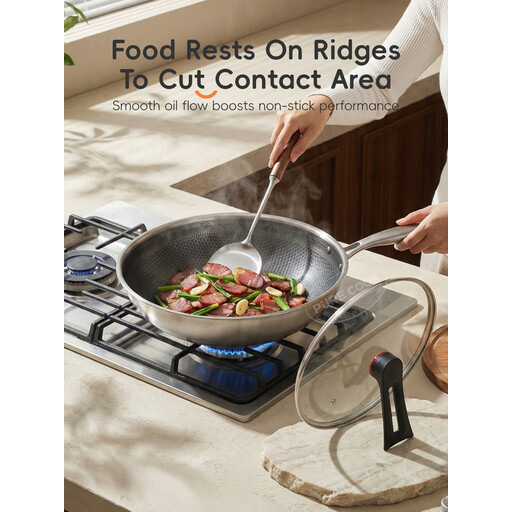
Why This Fits Their Persona: Perfect for fans of Asian cuisine, large families, or cooks looking for a versatile and extremely durable tool. The 32 cm size and high sides are ideal for stir-frying, braising, and deep-frying.
Instead of a delicate chemical coating, this wok pan uses a physical non-stick honeycomb structure on 304 stainless steel. This is extremely durable, even against metal utensils, completely bypassing the "short-lived coating" trap.
Exceptional durability and versatility. Functions as a wok, frying pan, and sauté pan all in one. Comes as a set with a matching pan with a lid.
We've compiled a complete, up-to-date list of products that fully meet these strict selection criteria and safety standards.
1. How do I properly care for a coated pan to extend its lifespan? Durability heavily depends on care. Clean the pan by hand with a soft sponge and mild dish soap instead of putting it in the dishwasher. Avoid using metal utensils and never overheat the pan when empty. Let the pan cool completely before washing to prevent thermal shock.
2. How can I tell if a pan is truly suitable for my induction cooktop? Look for the official induction symbol (a stylised coil) on the packaging or the pan's base. A crucial quality indicator is a thick, perfectly flat, and fully ferromagnetic base. A simple test: if a magnet holds firmly to the entire base, its induction suitability is generally good.
3. Is a ceramic pan always the better choice? Not necessarily. A ceramic pan is an excellent choice for searing at high temperatures and for health-conscious cooks who want to avoid PTFE. However, its non-stick effect can diminish faster with improper handling than that of a high-quality PTFE pan. For delicate foods at low to medium heat, a modern, PFOA-free PTFE coating often provides more reliable non-stick performance.