Hosts with a large soup pot
If you’re using a full pot to feed several people, the pot base needs to match the cooking zone. For heavy pots, it’s also important to check that the appliance specifies a suitable maximum load.


For a shared meal with noodle broth, first check that the pot’s base, base diameter and weight when full are compatible with the cooking zone and the appliance’s specifications. Induction only works with a suitable pot base; radiant ceramic glass or cast iron may be an option if you want to keep using a pot that isn’t suitable for induction. If you want to heat a second pot alongside the broth, you’ll need two suitable cooking zones and enough space for the appliance.
If you’re using a full pot to feed several people, the pot base needs to match the cooking zone. For heavy pots, it’s also important to check that the appliance specifies a suitable maximum load.
If you want to keep using your existing pot, first check whether its base is suitable for induction. If it isn’t, other heating technologies may be an option.
If you want to heat the broth and another dish at the same time, you’ll need two suitable cooking zones and enough space for the appliance.
A good fit if: You’re using an induction-compatible pot and one cooking zone is enough. Check that the pot base falls within the size range specified for the model you’re considering.
Bear in mind: The pot base must be suitable for induction; a power setting doesn’t tell you the actual temperature of the broth.
A good fit if: You want to keep using a pot that isn’t suitable for induction and prefer a smooth cooking surface. The heating zone on the ROMMELSBACHER CT 2200/E can be set to 140 or 210 mm.
Bear in mind: The cooking surface stays warm after the hob is switched off; ROMMELSBACHER says the CT 2200/E has a residual heat indicator.
A good fit if: You want to use a pot that isn’t suitable for induction and are happy with a cast-iron heating surface. According to the manufacturer, the ROMMELSBACHER THS 2022/E has a cast-iron zone with a diameter of 220 mm.
Bear in mind: ROMMELSBACHER describes cast iron as slow to heat up and good at retaining heat, so allow time for it to cool down too.
A good fit if: You want to heat a second pot alongside the broth. The SEVERIN DK 1031 is one example, with two induction zones.
Bear in mind: Two zones need more space. SEVERIN gives the DK 1031’s power rating as 3400 W and its overall dimensions as 59 × 35.5 cm; check that you have enough space and a suitable connection.
| What matters | What to check before buying | Who it matters most to |
|---|---|---|
| Pot compatibility and load capacity | Check the base material, base diameter and, where applicable, the maximum load specified for the model. CASO gives a pot size of 12–24 cm and a maximum weight of 6 kg for the ProMenu 2100; these specifications apply to this model only. | If I’m using a large, full soup pot, I check the base, diameter and weight first. Around 33% of consumers put pot compatibility first. |
| Controlled simmering | Compare the controls, power settings and, where applicable, the timer on the model you’re considering. The German Federal Institute for Risk Assessment recommends keeping heated food at a temperature of at least 60 °C throughout until it is eaten. | If I want the broth to keep cooking after it comes to the boil, I want heat that’s easy to adjust. Around 27% of consumers prioritise controlled simmering. |
| Available space | Check the overall dimensions and the manufacturer’s guidance for the intended location; the diameter of the cooking zone alone doesn’t tell you how much space the appliance needs. | I want to set up the appliance safely where I plan to cook, with enough room to use it. Around 20% of consumers prioritise available space. |
| Second cooking zone | Check the number and size of the zones, as well as the overall dimensions and connection requirements of the double model. | If I want to heat another dish alongside the broth, I need a second suitable zone. Around 20% of consumers prioritise being able to cook two things at once. |
With induction, the pot base must also be suitable. For a heavy soup pot, you should also check the maximum load specified for the model you’re considering.
Check the weight of the full pot against the specifications for the appliance itself, rather than relying on its advertised power rating alone.
An appliance setting doesn’t prove that the food reaches a particular temperature throughout. In its guidance dated 19 March 2024, the German Federal Institute for Risk Assessment recommends keeping heated food at a temperature of at least 60 °C throughout until it is eaten.
If you’re keeping food hot for a while, check its temperature rather than relying on a hob setting alone.
ROMMELSBACHER describes cast iron as retaining heat; the radiant CT 2200/E has an indicator that shows residual heat. The surface may therefore still be hot after the appliance has been switched off.
Allow for the cooling time of your chosen heating technology when serving food and putting the appliance away.
These notes relate to the specific model ranges mentioned and aren’t a general assessment of each brand as a whole.
The models mentioned illustrate the differences between induction, radiant ceramic glass and cast iron.
The ProMenu 2100 is a portable single induction hob, and you can check pot size and weight against its specifications before buying.
The KP 1071 and DK 1031 are useful points of reference when deciding between one and two portable induction zones.
The Kult X Mono is a portable single induction hob which WMF also describes as suitable for serving food at the table.
The Joybuy products featured here range from single induction hobs to hobs with multiple zones, including ceramic glass models.
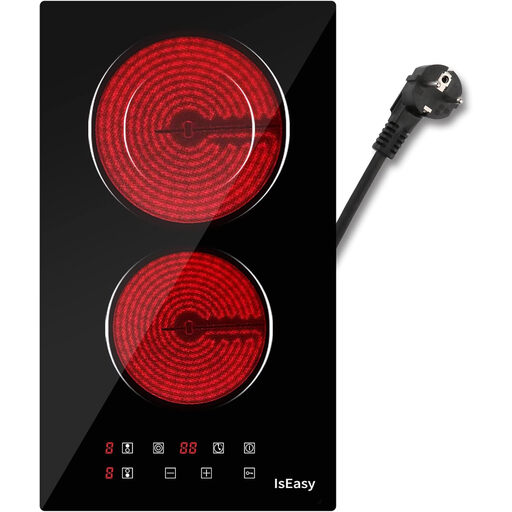 No image available
The two zones may suit you if you want to heat another pot alongside the broth.
3200 W total power. Check that the specified cut-out size of 49 × 27 cm works for your planned installation.
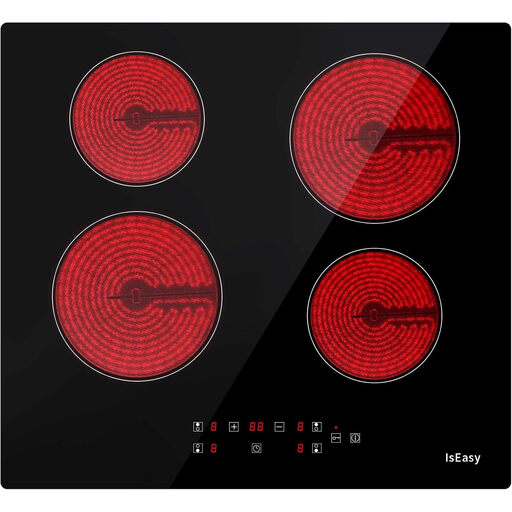 No image available
This four-zone built-in hob may suit you if you want to heat several pots at once and are looking for an appliance that fits your kitchen.
The product title specifies 6000 W and nine heat settings.
 No image available
This single hob may suit you for cooking broth if you’re using an induction-compatible pot and one zone is enough.
The product title specifies 28 cm, nine heat settings and an 8-hour timer. According to the product description, magnetic cookware with a diameter of 12–26 cm is required.
 No image available
The two zones may suit you if you want to heat the broth and a second dish at the same time.
The product description specifies five temperature settings, with 1500 W and 1000 W for the two zones.
 No image available
This single cooking zone may suit you if you only want to heat one pot; check that the pot is compatible with the specific appliance.
The product title specifies five power levels. The product description gives the dimensions as 21.5 × 21.5 × 4.7 cm.
Only if the pot base is suitable for induction and its size is compatible with the hob you’re using. ROMMELSBACHER specifies a ferromagnetic base and a cooking zone of 120–230 mm for the CT 2020/IN. Otherwise, radiant ceramic glass or cast iron may be an option.
No. An appliance setting doesn’t prove that the food is at the right temperature throughout. In its guidance dated 19 March 2024, the German Federal Institute for Risk Assessment recommends keeping heated food at a temperature of at least 60 °C throughout until it is eaten.
Follow the instructions for the specific appliance and allow space for its full overall dimensions. ROMMELSBACHER notes that the CT 2200/E retains residual heat; let a hot surface cool down before cleaning it.
You’ll need a model with two suitable cooking zones. Also check that both pot sizes are compatible with the zones and that you have enough space and a suitable connection for the appliance.
The German Federal Office for Radiation Protection notes that the potential effect on implants depends on the device and the individual circumstances. If you’re considering induction, the person affected should discuss the possibility of interference with their treating doctor.