
Lieferung heute & morgen

Qualitätsgarantie

Willkommens-Angebote freischalten: KOSTENLOSE Lieferung | Bis zu 80 % RABATT | Kostenlose 30-Tage-JoyPlus-Testphase
App herunterladen
A nose hair trimmer is a specialized tool designed for the safe and efficient removal of hair in sensitive areas like the nose and ears. Selecting a suitable model depends on an analysis of technical specifications tailored to individual requirements. Factors such as the cutting system, power supply, and material quality are crucial for the device's performance and longevity.
The decision to purchase a nose hair trimmer should be based on an objective evaluation of its core components. The following criteria provide a basis for a structured comparison.
The core of any trimmer is its cutting mechanism. There are two primary systems:
An integrated protective guard system, which prevents the blades from making direct contact with the skin, is an essential safety feature.
The blades are typically made of stainless steel. This material is corrosion-resistant, hygienic, and retains its sharpness over an extended period. High-quality stainless steel reduces skin irritation and ensures clean cutting performance.
The type of power source affects the device's flexibility and running costs:
Hygiene is paramount for grooming products. The ease of cleaning is determined by its water resistance, often classified by an IP (Ingress Protection) rating:
Some nose and ear hair trimmers are designed as multi-functional devices. Additional attachments, such as a detail trimmer for sideburns or a comb for eyebrows, expand the range of use and provide added value.
Based on an analysis of technical specifications and feature sets, we present three models that cater to different user profiles.
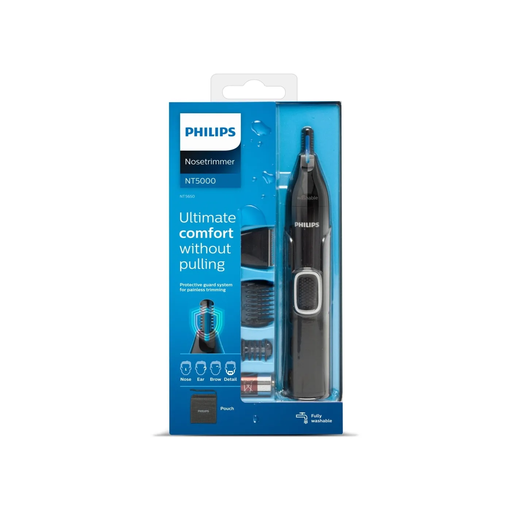
Why we recommend this product: The Philips Series 5000 NT5650/16 is a versatile grooming tool engineered for safety and precision. Its PrecisionTrim technology, combined with the protective guard system, ensures a comfortable, pull-free experience. Its fully washable design and textured grip make it practical to handle.
Advantages:
Best for: Users seeking a reliable, brand-name device for comprehensive grooming of the nose, ears, and eyebrows, who also value easy cleaning.
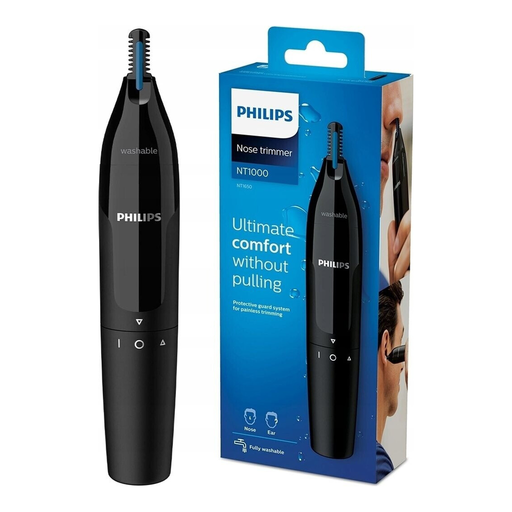
Why we recommend this product: The Philips NT1620/15 focuses on the core function: safely trimming nose and ear hair. Its compact, ergonomic design and AA battery operation make it a straightforward and portable companion for basic grooming.
Advantages:
Best for: Users who need a simple, cost-effective, and portable solution exclusively for trimming nose and ear hair.
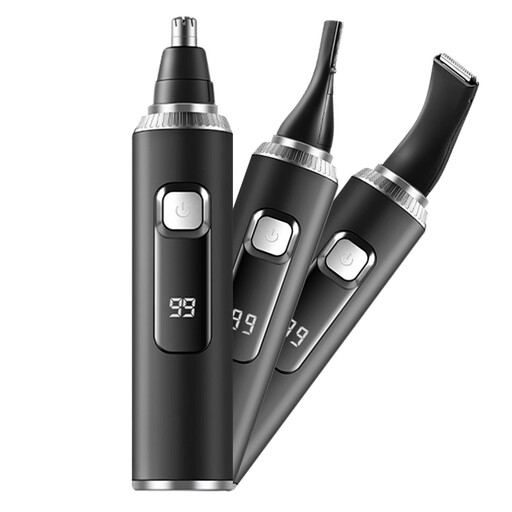
Why we recommend this product: The Sparoma TC-021 is a technologically advanced 3-in-1 system. With a high-speed motor (8500 RPM), a rechargeable USB-C battery, and a full IPX7 waterproof rating, it offers a high degree of convenience and functionality. The LED battery status display is a practical detail.
Advantages:
Best for: Tech-savvy users who prefer a multi-functional device with modern features like rechargeable operation, high motor power, and full water resistance.
If our featured models don't meet your specific requirements, you can find a broader selection of devices in our main category. There, you can compare various models based on brand, price, and feature set.
Discover more ear and nose hair trimmers
The cleaning method depends on the device's water resistance. For models with a detachable head, remove it and rinse it under running water. Fully waterproof devices (e.g., with IPX7 certification) can be held entirely under the tap. After cleaning, all parts should be allowed to air-dry completely before the device is reassembled or stored.
Yes, when used correctly, modern nose hair trimmers are very safe. They are equipped with protective guards that prevent the rotating or oscillating blades from directly touching the sensitive nasal lining. This minimizes the risk of cuts and irritation compared to alternatives like scissors.
Most devices marketed as nose hair trimmers are also explicitly designed as ear hair trimmers. The narrow, rounded cutting head is well-suited for use in the outer ear canal. However, it is important not to insert the device too deeply and to follow the manufacturer's instructions.