
Lieferung heute & morgen

Qualitätsgarantie

Willkommens-Angebote freischalten: KOSTENLOSE Lieferung | Bis zu 80 % RABATT | Kostenlose 30-Tage-JoyPlus-Testphase
App herunterladen
Choosing a notebook is a decision driven by functional requirements. Whether for academic notes, professional meeting minutes, or creative journaling, the specific features of a notebook—such as its format, paper quality, and binding type—define its practical utility. This article analyses the technical specifications to consider when selecting the right writing medium.
A notebook's functionality depends on objective criteria. A systematic review of these features allows for an informed choice tailored to your needs.
The size of the notebook is crucial for its intended use case.
Paper weight, measured in grams per square meter (g/m² or gsm), is an indicator of the paper's thickness and opacity.
The page layout structures how you use the notebook.
The binding determines how the pages are held together and how flat the notebook lies when open.
Based on an analysis of technical specifications and use cases, we present three distinct notebook models.
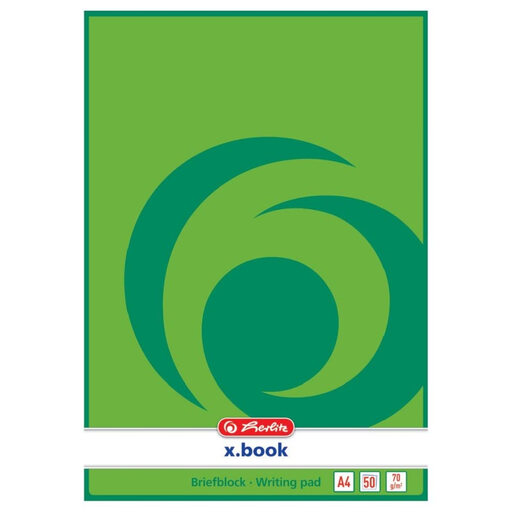
Why we recommend this product: The Herlitz 717405 is a functional A4 writing pad for daily use. The top-glued binding allows for clean removal of individual sheets, making it perfect for drafts, quick notes, or as a sketch pad. The 70 gsm wood-free paper provides a smooth surface for standard writing instruments.
Pros:
Who it's for: This product is aimed at pupils, students, and professionals who need a straightforward pad for sketches, brainstorming, or notes that don't need to be permanently bound.
View Product: Herlitz 717405 A4 Writing Pad
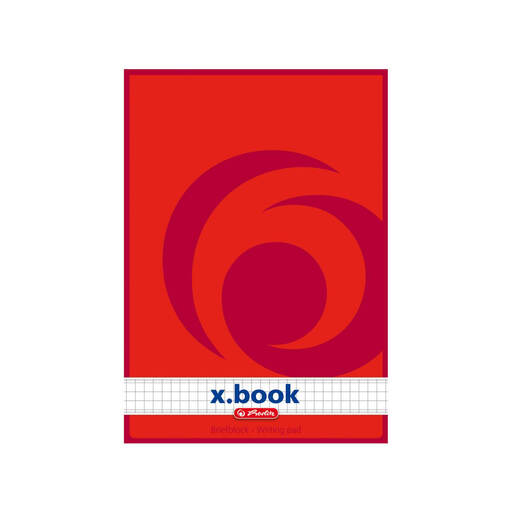
Why we recommend this product: The Herlitz 717538 combines the portable A5 notebook format with a squared ruling. This makes it a practical tool for on-the-go use, especially when structured notes or calculations are required. The 70 gsm paper quality is sufficient for everyday use with most pens.
Pros:
Who it's for: Ideal for field service professionals, tradespeople, or anyone who needs a compact squared writing pad for quick notes, lists, or calculations.
View Product: Herlitz 717538 A5 Notepad
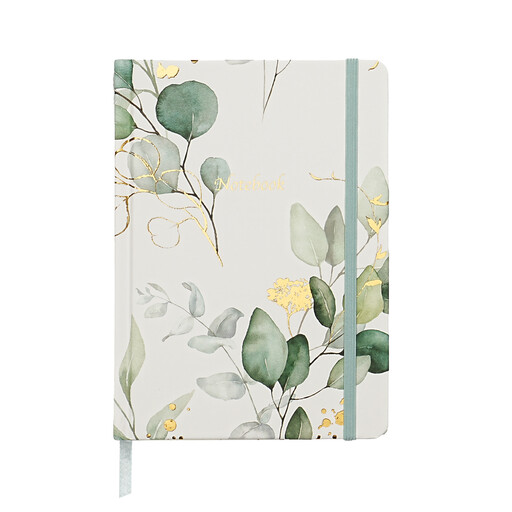
Why we recommend this product: This hardcover notebook from Jubiluu is designed for durability and a premium user experience. The 100 gsm paper is significantly thicker than standard, which greatly reduces ink bleed-through and makes it suitable for fountain pens. Additional features like the bookmark ribbon and elastic closure enhance its functionality for use as a journal or diary.
Pros:
Who it's for: Users looking for a robust, high-quality notebook for journaling, as a diary, or for important, long-lasting records. It also serves well as a professional notebook for business purposes.
View Product: Jubiluu A5 Hardcover Notebook
The products featured cover common use cases. If these models don't precisely meet your requirements, a wide range of specialised notebooks and other stationery is available. You can find an extensive selection in our White Paper category.
Go to Category: White Paper on Joybuy.de
1. What paper weight is suitable for fountain pens? For fountain pens, a paper weight of at least 90 gsm is recommended, with 100 gsm or more being ideal. Thinner paper is prone to ink bleeding through the page ("bleeding") or the writing showing heavily on the reverse side ("ghosting").
2. What is the difference between a thread-sewn notebook and a glue-bound writing pad? A thread-sewn notebook has stitched pages, which makes it very durable and allows it to lie flat on a table. It is designed for permanent records. A writing pad with glue binding (top-glued) is designed for individual sheets to be torn off easily. It is suitable for temporary notes and drafts.
3. Which format, A4 or A5, is better for university? This depends on the field of study and personal preference. An A4 notebook offers plenty of space for detailed notes and diagrams, which can be advantageous in science or engineering subjects. An A5 notebook is lighter and more compact, which can be more practical in text-heavy subjects where mobility between lectures is important. Many students use a combination of both formats.