
Lieferung heute & morgen

Qualitätsgarantie

Willkommens-Angebote freischalten: KOSTENLOSE Lieferung | Bis zu 80 % RABATT | Kostenlose 30-Tage-JoyPlus-Testphase
App herunterladen
A notebook should be dependable in everyday life: in your rucksack, on your desk, in the lecture theatre or as an evening journal. Yet product descriptions often lead to disappointing purchases. Terms such as “premium paper” or “particularly durable” do not tell you much on their own if the paper weight, ruling and cover are not clearly specified.
Three common pitfalls are particularly frequent when buying:
An A5 notebook measures approximately 14.8 × 21 cm and provides enough space for notes, task planning, journalling or longer texts. It is suitable for school, university, the office and creative writing projects. However, it takes up a little more room in a rucksack or small bag.
An A6 notebook is considerably more compact, measuring around 10.5 × 14.8 cm. It fits in many handbags and jacket pockets and is ideal for writing down shopping lists, ideas, brief conversation notes or sketches. For extensive note-taking, however, the smaller writing area may be impractical.
Before buying, you should therefore consider:
Paper weight is given in grams per square metre (g/m²). Paper with a weight of 100 g/m² is not automatically suitable for every writing instrument, but it offers a different feel and level of stability from very thin paper. The models presented here specify either 90 g/m² or 100 g/m².
A ruled notebook supports neat, consistent note-taking and is suitable for writing, journalling or keeping a diary. According to the product description, a special LAMY ruling combines lines and grid elements, making it suitable for written notes and simple sketches. For freehand drawing or mind maps, however, a plain notebook such as the LAMY B7 A5 is a better choice.
You should also look out for:
A hardback notebook protects the pages more effectively from pressure and creasing. It is suitable for frequent transport and can provide a firm writing surface when you are out and about. A fabric-covered or floral notebook may also feature decorative details such as foil stamping or debossing. These surfaces should be protected from moisture and direct sunlight.
A softcover notebook is more flexible and usually easier to handle. It can be slipped into a bag more easily and is ideal for everyday notes. The LAMY B3 A5, for example, has a flexible cover, 192 pages of 90 g/m² paper and thread-sewn binding.
A PU leather notebook is an alternative for shoppers who prefer a compact, textured cover. PU stands for polyurethane and does not mean that the material is genuine leather. When buying, you should therefore read the material information and care instructions carefully.
The following models differ in format, cover, paper and features. This categorisation is intended as a practical guide and does not replace checking the full product details.
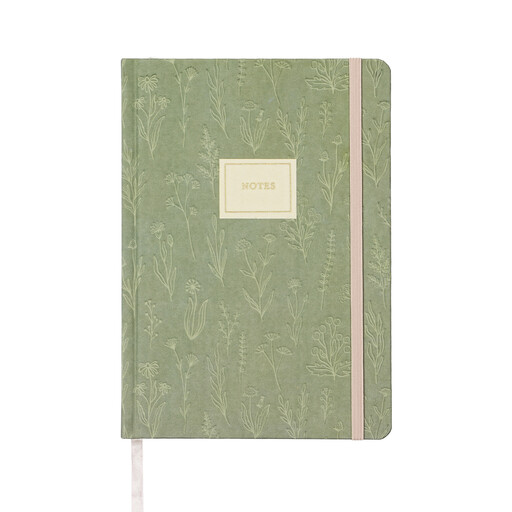
Why this product suits this profile: The A5 format provides plenty of space for school, the office and journalling. The decorative fabric cover with its floral design also makes a lovely gift.
96 sheets or 192 pages, 100 g/m² paper, a ribbon marker and an elastic closure are all clearly specified.
A5 hardback, cream-coloured ruled paper and decorative fabric design.
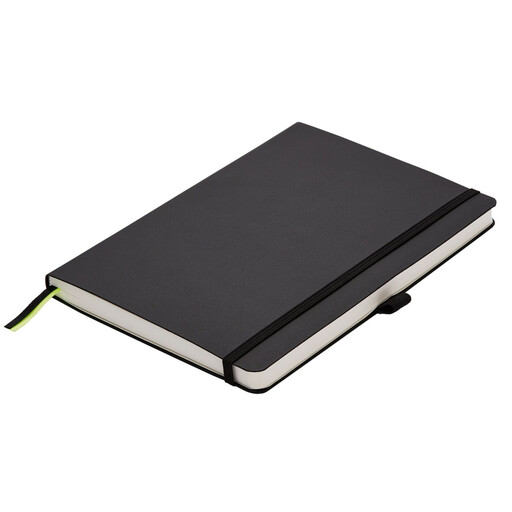
Why this product suits this profile: For professionals and students, this A5 writing notebook combines a flexible cover with extensive features for regular note-taking.
The product details specify 192 pages, 90 g/m², thread-sewn binding and compatibility information for various writing instruments.
Pen loop, two ribbon markers, elastic closure and rear paper pocket.
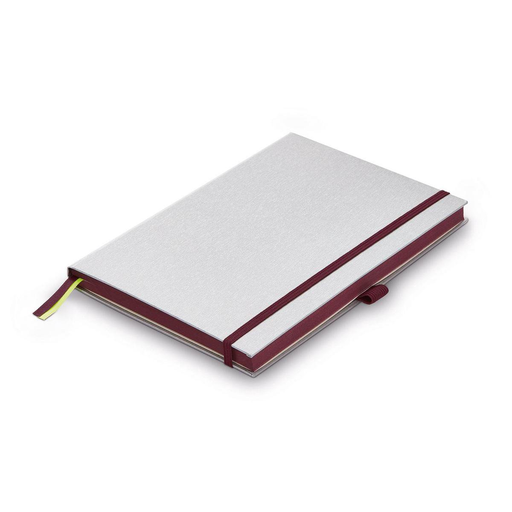
Why this product suits this profile: The compact A6 format is ideal for notes on the move, while the hardback cover and additional features are designed for regular use.
The cover, thread-sewn binding, elastic closure and rear slip pocket are all clearly specified.
192 pages of 90 g/m² paper, two ribbon markers and an integrated pen loop.
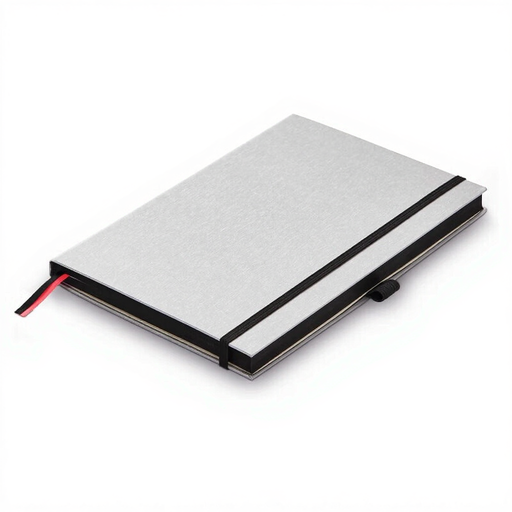
Why this product suits this profile: The plain pages provide room for sketches, mind maps, diagrams and freeform journalling without a prescribed ruling.
The plain format prevents an unsuitable ruling from restricting creative uses.
A5 hardback, approximately 90 g/m² paper and thread-sewn binding for a flatter opening.
We have put together a complete, regularly updated list of products that fully meet these strict selection criteria and the safety regulations applicable in the EU.
It depends on how you plan to use it. A5 offers more writing space for lessons, meetings and longer journal entries. A6 is easier to carry and practical for brief notes, lists and spontaneous ideas. If you regularly write outside the home, A6 is often more space-efficient.
The key factors are the paper weight, the paper surface and the specific ink. The LAMY models mentioned use 90 g/m² paper and are described in the product details as suitable for various writing instruments. Very wet inks or markers may still show through. It is therefore worth carrying out a short test on the last few pages.
Store the notebook in a dry place away from direct sunlight, high humidity and sources of heat. An elastic closure helps protect loose pages, but it should not be stretched excessively. Fabric and PU covers can be cared for with a soft, dry cloth. With a hardback notebook, do not force the spine to bend completely backwards.