
Lieferung heute & morgen

Qualitätsgarantie

Willkommens-Angebote freischalten: KOSTENLOSE Lieferung | Bis zu 80 % RABATT | Kostenlose 30-Tage-JoyPlus-Testphase
App herunterladen
A notebook should be reliable for everyday use, whether you’re taking notes at school, university or work, jotting things down on the go or keeping a journal. But eye-catching designs and general marketing claims don’t necessarily help you find the right one. What matters most is the size, paper, binding and practical details.
An A5 notebook measures around 14.8 × 21 cm, giving you plenty of space for longer notes, sketches and organised overviews. It fits in many rucksacks and work bags, but is less compact than an A6 notebook.
An A6 notebook is easier to carry and is ideal for quick notes, shopping lists or spontaneous ideas. However, the limited page space can be impractical for detailed note-taking. Before you buy, consider whether you’ll use your notebook mainly at a desk or on the go.
A notebook described as having “192 pages” usually contains 96 sheets, if you can write on both sides. A notepad, on the other hand, is often described as having “80 sheets” or “80 sheets of paper”. These figures aren’t directly comparable.
Also check whether the pages are perforated, removable or firmly bound. A fixed binding is a good choice for journals you’ll keep long term. If you want to file or share individual notes, micro-perforation and punched holes are more useful.
An elastic closure, pen loop or ribbon marker can make a notebook more practical. But these features alone don’t tell you whether the paper is suitable for different writing instruments. Figures such as 90 g/m² or 100 g/m² describe the paper’s weight, but don’t automatically indicate how it will perform with every type of ink.
An attractive hardback cover isn’t ideal for every use, either. It protects the contents better from pressure and creasing, but can be heavier and less flexible than a softcover notebook.
Also compare the actual dimensions. An A6 notebook with a hardback cover, pocket or binding may be slightly larger than the paper size alone.
A lined notebook is ideal for continuous text, meeting notes and journalling. Squared paper works well for tables, calculations, technical drawings and structured notes. Some models use a brand-specific ruling that sits somewhere between lines and a grid.
The Herlitz model has squared ruling with a white border. LAMY notebooks, by contrast, use a style of ruling described as “Lamy ruling”. Check these details against your preferred writing style before you buy.
A hardback notebook provides a firm writing surface and protects the pages. It’s a good choice for bags where the contents may be under more pressure. A softcover is more flexible and often more comfortable if you carry your notebook around frequently or like to lay it fully open.
Thread stitching can help a notebook lie flat. Spiral or twin-wire binding is useful if you want to write comfortably on both pages. For a notepad, punched holes and perforation are also worth considering.
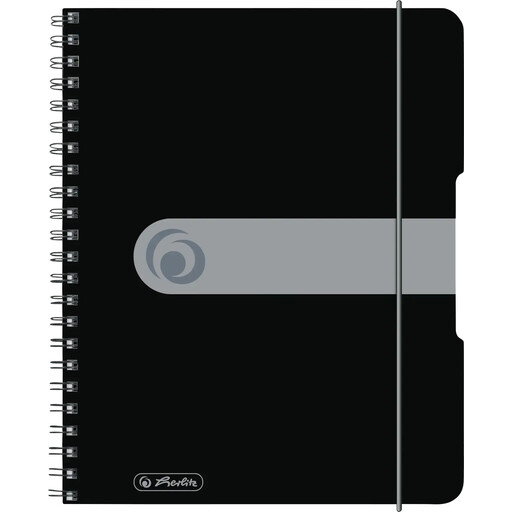
Why it suits this profile: This set of two A5 notepads has squared paper, flexible plastic covers and twin-wire binding, making it suitable for school, university and work.
The product information clearly states the sheet count, paper weight, ruling, perforation and punched holes. This makes it easier to work out how practical it’ll be before you buy.
Two notepads, squared paper, micro-perforation, six-hole punching and an elastic closure.
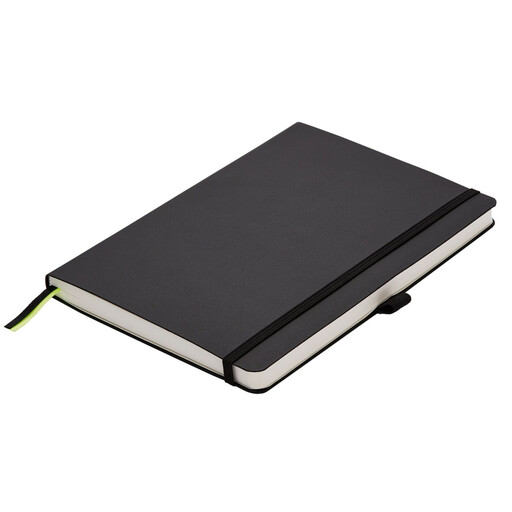
Why it suits this profile: The A5 size, 192 pages and flexible cover give you plenty of writing space in a notebook that’s still easy to carry every day.
The specifications list 90 g/m² paper, 192 pages, two ribbon markers, a pen loop, a paper pocket and an elastic closure.
A5 dimensions of 145 × 210 mm, ivory-coloured paper, thread stitching and eight perforated sheets.
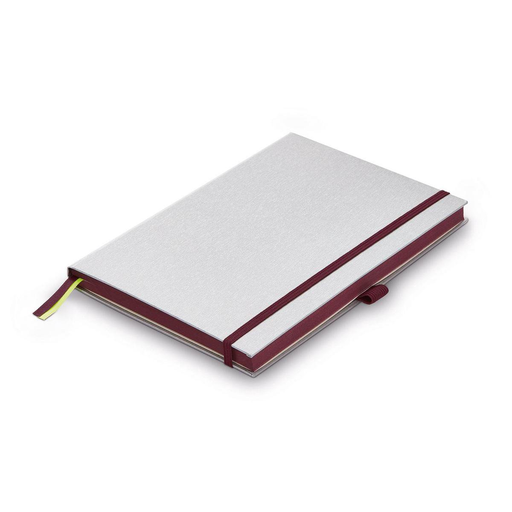
Why it suits this profile: This compact hardback notebook is designed for people who take lots of notes on the go and want to keep them protected.
The hardback cover is clearly specified. The page count, paper weight, closure and storage pocket are also described in detail.
A6 size, 192 pages of 90 g/m² paper, two ribbon markers, a pen loop, an elastic closure and eight perforated pages.
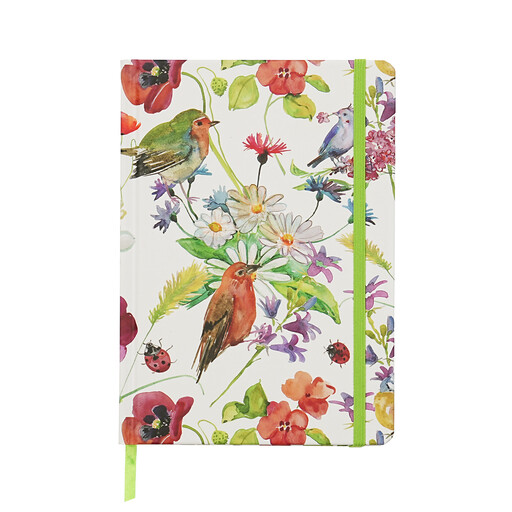
Why it suits this profile: This A5 journal pairs lined pages with a decorative hardback cover, making it ideal for journalling, note-taking and creative projects.
The product details specify the paper weight, sheet count, size, elastic closure and ribbon marker, so you can see exactly what you’re getting before you buy.
100 g/m² offset paper, 192 pages, a hardback cover, one ribbon marker and an elastic closure.
We’ve put together a complete, regularly updated list of products that meet these strict selection criteria and fully comply with the safety regulations in force in the EU.
Keep your notebook as dry as possible and out of prolonged direct sunlight. Moisture can make the paper buckle and damage the cover. An elastic closure will keep the book shut, but it’s no substitute for a suitable bag if you’re carrying it with bottles or damp items.
If your notebook has a pen loop, check that it’s wide enough for your preferred writing instrument. Ribbon markers are useful if you’re keeping notes on several topics at once. If you often need to remove individual pages, a notepad with micro-perforation and punched holes is more practical than a firmly bound notebook.
It depends on how you’ll use it. A5 gives you more writing space for lessons, university, work and journalling. A6 is more compact and suits quick notes on the go. If you often write longer pieces or sketch, the extra space in A5 is worth considering.
Its lifespan depends on the paper, binding, cover and how you carry it. A hardback can offer better protection in transit, while a softcover is more flexible. It’s not possible to give a reliable estimate of lifespan without knowing how you’ll use it.
Lined paper is ideal for continuous text and journalling. Squared paper is better for tables, calculations, diagrams and technical sketches. For school or university, a notepad with squared ruling and removable pages can be especially practical.