Which lighting solution is right for you?

Notebook sellers who care about colour

If you photograph paper, covers or print colours for product images, you should carefully adjust the light’s colour temperature and white balance. Adobe recommends white balance as a tool for accurate product photography.

Photographers working at a small desk

When there’s little room for your camera, notebook and light, it’s important to check that the stand height and light angle suit your setup. For the LUMIS Key Light Pro, Rollei specifies a stand height of 28.5 to 78 cm.

Creatives who shoot in different locations

If you photograph at different desks, you’ll need to weigh up a compact light against a larger panel that can be positioned separately. Godox lists mains and NP-F battery power for certain bi-colour models, while SmallRig specifies a built-in battery for the P96.

What to look for when buying

Desktop panel

A good fit if: you mostly take photos at the same small desk and a desktop stand can provide the side or angled lighting you want.

The trade-off: A stand makes setup easier, but limits where you can position the light.

Repositionable bi-colour panel

A good fit if: you photograph notebooks in different sizes or want to change the light angle and distance more often.

The trade-off: Check what mount, power supply and diffusion the specific model needs for your setup.

Compact camera light

A good fit if: you want to brighten a small area while out and about, and attaching the light to a camera or mount is important.

The trade-off: A brightness rating at a particular distance doesn’t tell you whether an entire open double-page spread will be lit evenly.

Priority What to check before buying Who should pay particular attention?
Colour reproduction Check the adjustable colour temperature range for the exact model; photograph paper whites and cover colours using a fixed white balance. If I want to show the colour of paper and covers accurately in product images, I’ll adjust the light’s colour temperature and white balance to work together. Around 36% of consumers put colour reproduction first.
Shadows and coverage Check the diffuser and positioning options; test the lighting on both a closed and an open notebook. If I want to photograph surfaces without distracting harsh shadows, I’ll check the light angle and diffusion on my subject. Around 29% of consumers prioritise even lighting.
Space and light angle Check the stand height and mount against your desk and camera position. If there’s little room left on my desk, I need to be able to position the light so there’s enough space for my camera and notebook. Around 21% of consumers prioritise space and positioning.
Power supply and accessories Check whether the exact model includes a power supply, cable, battery option and the mount you need. If I want to start shooting at a location without needing extra accessories, or often move my setup, I’ll check the power supply and mounting options in advance. Around 14% of consumers prioritise a setup that’s ready to use.

Common misconceptions

  • Bi-colour, a high CRI or RGB won’t automatically give you colour-accurate photos

    The light itself won’t set your camera’s white balance. A manufacturer’s colour rendering rating also doesn’t prove how paper and covers will look in the finished image.

    Adjust the light’s colour temperature and white balance together, then take a test shot using the actual materials.

  • A brightness rating doesn’t prove that a small light will cover a whole double-page spread

    Illuminance figures apply at specific distances. They don’t tell you whether a larger, flat subject will be lit evenly.

    Check the distance, framing and light distribution on an open notebook; consider a repositionable or larger panel if needed.

  • A panel doesn’t automatically come as a complete kit for your shooting location

    Power and mounting options vary by model and sales package. Rollei states that the LUMIS Key Light Pro does not include a USB power adapter.

    Check the contents of the exact model against your planned setup.

    You may need a separate USB power adapter for this Rollei model. For other versions, check whether a tripod or any other parts you need are included.

Brands and product ranges to consider

Rollei

The LUMIS Key Light Pro is a desktop panel for a fixed, compact setup.

  • Rollei says it comes with a diffuser, desktop stand and remote control; the stand height ranges from 28.5 to 78 cm.
  • Rollei states that this model doesn’t include a USB power adapter. Check whether the available stand positions give you the light angle you want.

Godox

The LP400Bi and LP600Bi panels are examples of repositionable bi-colour lights for larger setups.

  • For these bi-colour models, Godox specifies a colour temperature range of 2800 to 6500 K, a diffusion panel, and mains and NP-F battery power.
  • Check the mount, compatible battery and contents for the specific model.

amaran

The P60x is a bi-colour panel for setups where choosing the light angle is important.

  • The manufacturer specifies a colour temperature range of 3200 to 6500 K and CRI ≥ 95 for the P60x.
  • These manufacturer ratings don’t guarantee the results you’ll get with your camera. Also check which batteries and accessories are included in the sales package.

SmallRig

The P96 is a small panel that attaches to a camera or mount, and offers a useful point of reference for mobile detail shots.

  • SmallRig specifies a built-in battery, 2700 to 6500 K and 150 lux at 1 m for the P96.
  • The rating at 1 m doesn’t show whether an entire open notebook will be lit evenly enough.

NEEWER

The RGB660 PRO II twin kit is a multi-light option for when you want creative lighting as well as neutral product images.

  • NEEWER describes this kit as offering a colour temperature range of 3200 to 5600 K and RGB control.
  • RGB isn’t an advantage in itself for capturing neutral paper whites. Check the lighting effect with your camera and the actual materials.

Lighting options at Joybuy

The products below offer different lighting options for desk and product photography. Some are arc lights, light boxes or compact video lights rather than conventional LED panels, so bear these differences in mind when choosing.
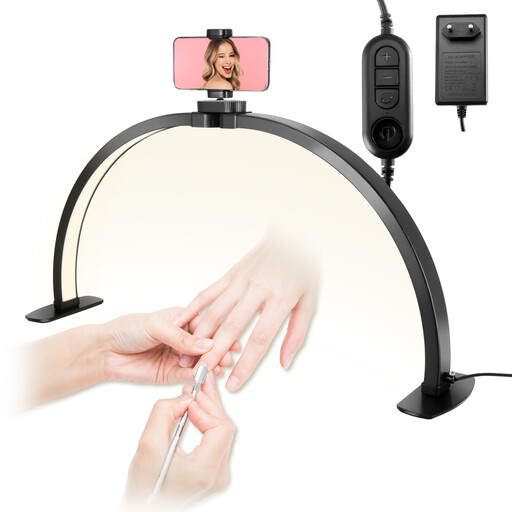
30-inch foldable LED arc light with three colour temperatures and a smartphone holder

30-inch foldable LED arc light

An arc light for desk photography if you want to combine a light source with a smartphone holder; it isn’t a conventional LED panel.

Three colour temperatures from 3000 to 6000 K; smartphone holder.

View product
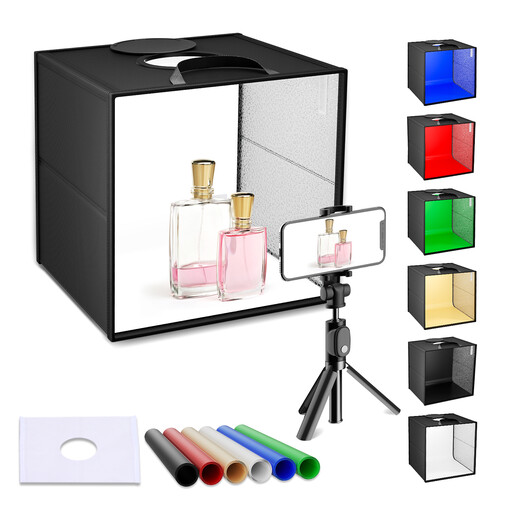
Foldable LED photo box with coloured backdrops and adjustable brightness

Foldable LED photo box

A photo box for product images when you want to photograph your subject in a defined shooting area; it isn’t a substitute for a separately positionable panel.

Three adjustable light colours, nine brightness levels and a diffusion cloth.

View product
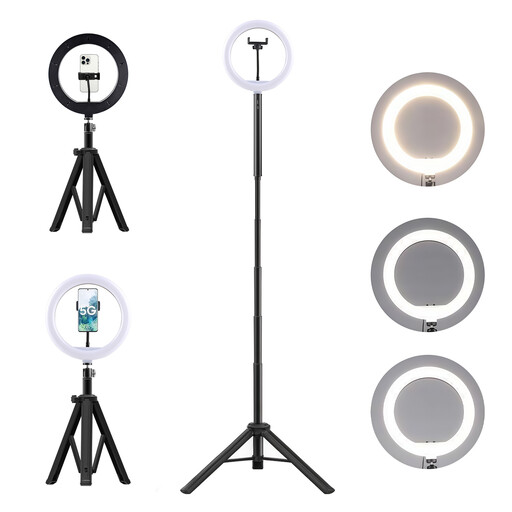
10-inch LED ring light kit with tripod and smartphone holder

10-inch LED ring light kit

A ring light for product photography if a light with a tripod and adjustable smartphone holder suits your setup; it isn’t an LED panel.

10-inch ring light; three colour temperature modes; 360° rotating head. The product title also mentions a 10000-mAh power bank.

View product
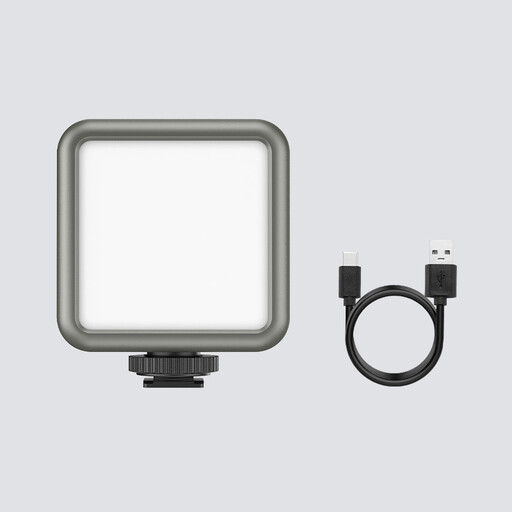
ULANZI VL49 LED video light with 2000-mAh battery and adjustable colour temperature

ULANZI VL49 LED video light

A compact video light for small product or macro shots when a portable light source matters more than a large panel surface.

2000-mAh battery; dimmable; 2500 to 9500 K; magnets on the back.

View product
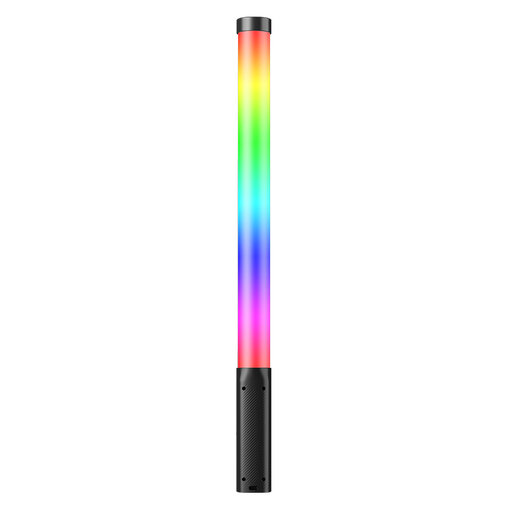
Ulanzi VL119 10W RGB light wand with 3300-mAh battery

Ulanzi VL119 10W RGB light wand

A handheld light wand for mobile product photography when a compact light source matters more than a fixed-position panel.

Built-in 3300-mAh battery; 2500 to 9000 K; 360 lux at 0.5 m.

View product

Frequently asked questions

Is a high CRI enough for colour-accurate notebook photos?

No. A CRI rating won’t set the white balance for your shot. Photograph paper whites and cover colours under your intended lighting, with white balance controlled. Adobe recommends using a grey card when accuracy matters.

How should I start positioning the light?

Position the panel so you can assess the light angle and shadows directly in your camera’s view. If the shadows are harsh, try suitable diffusion; the effect will also depend on the distance and position of the light source.

What should I check if my photos have bands under artificial light?

Test the camera and dimmer settings you plan to use. Sony explains that flickering light can cause bands, and that adjusting the shutter speed or using an anti-flicker function on compatible cameras may help. The right setting depends on your camera and light.

What should I know about accessories and returns before buying?

Check whether the exact sales package includes a power adapter, tripod and diffusion; according to Rollei, the LUMIS Key Light Pro doesn’t include a USB power adapter. For most online purchases made by consumers in the EU, there is generally a 14-day cancellation period from the date the goods are received. Exceptions may apply, and return costs may be charged.

What are the rules on CE marking and disposal?

Whether a light needs a CE mark depends on the EU product rules that apply to it; CE marking is not a general, independent certificate of testing. According to the German Environment Agency, waste electrical equipment should not go in household rubbish, but should be taken to designated return or collection points.