
Lieferung heute & morgen

Qualitätsgarantie

Willkommens-Angebote freischalten: KOSTENLOSE Lieferung | Bis zu 80 % RABATT | Kostenlose 30-Tage-JoyPlus-Testphase
App herunterladen
A single notebook is often not enough for school, university, work and personal projects. Notebook sets make it possible to organise different subjects separately or keep several copies in different places. However, sets can vary considerably in terms of format, paper, page count and features.
Before buying, you should therefore look beyond colours and product images. What matters is whether the notebook suits your writing style, where you plan to use it and what you need to write in it.
An A5 notebook offers considerably more writing space than an A6 or A7 notebook. The larger format is suitable for lesson notes, project planning and journalling. A6 and A7 notebooks, on the other hand, fit more easily into smaller bags and are designed for short notes or to-do lists.
A set containing several small notebooks is not automatically suitable for lengthy texts. Check whether you mainly write bullet points or regularly need several pages for each subject.
Notebook listings sometimes state the number of sheets and sometimes the number of pages. One sheet has a front and a back. So, “50 Sheets/100 Pages” means 50 sheets or 100 writable pages.
With a 4-pack of notebooks, you should also check whether the page count applies to each notebook or to the entire set. This distinction affects the actual value for money and the price per item.
A spiral notebook can often be laid flat and turned easily. However, spiral binding may take up more room in tightly packed bags. A softcover notebook is generally more flexible and lighter, but offers less protection than a hard cover.
The position of the spiral is also important. A notebook with a top spiral binding can make one-handed writing easier, while side-bound models are more in keeping with the classic school or office format.
If you often write diagrams, tables or longer texts, A5 is usually the more practical choice. For keeping several separate subjects in one bag, an A6 or A7 set may be more suitable.
Paper weight is given in grams per square metre (g/m²). Paper weighing 70 g/m² is lightweight and suitable for ballpoint pens, pencils and fine-liners. At 90 g/m², the paper has a little more substance and may feel more pleasant during everyday use.
However, paper weight alone does not indicate whether paper is suitable for fountain pens, markers or ink. If you use wet writing media, look for specific information about ink resistance and, where possible, test it on an inconspicuous page.
A squared notebook is useful for tables, calculations, technical sketches and structured notes. A lined notebook is suitable for continuous text, lecture notes and journalling. Unlined paper can offer greater freedom for creative uses.
Additional features can be helpful in everyday use:
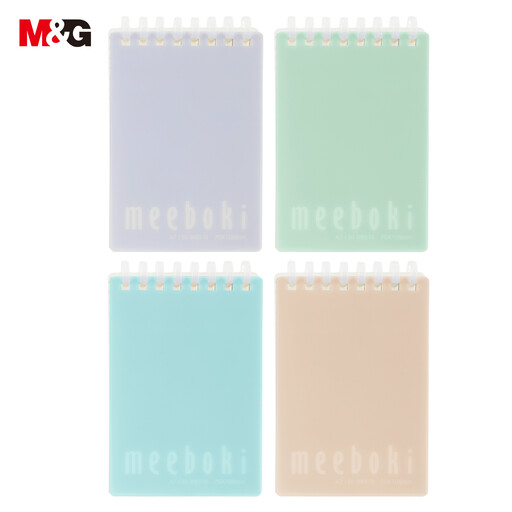
Why this product suits the profile: The compact A7 format is ideal for short notes and task lists, while helping you keep different subjects separate. Four colours make it easier to organise them.
The specifications clearly state the A7 format, squared paper and four individual notebooks. This makes it easier to assess the limited writing space realistically before buying.
Four notebooks, 50 sheets or 100 pages per item, top soft spiral binding and four different colours.
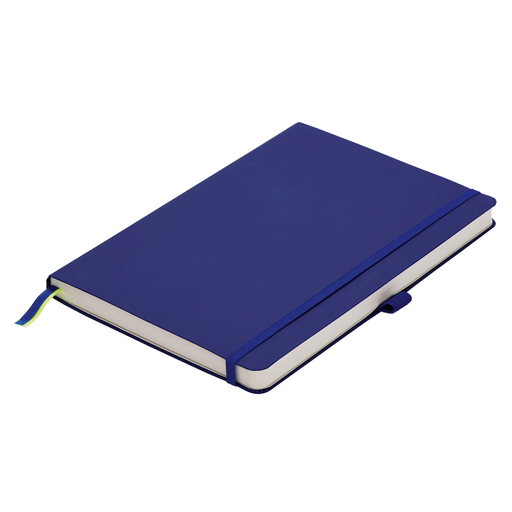
Why this product suits the profile: The A6 softcover is aimed at professionals, students and anyone looking for a single journal notebook with practical organising features.
The product specifications state 192 pages, 90 g/m² paper, two ribbon markers, a pen loop and a back pocket. This means you can check the features in detail before buying.
A6 format, lined paper, softcover, 192 pages and integrated organisation features.
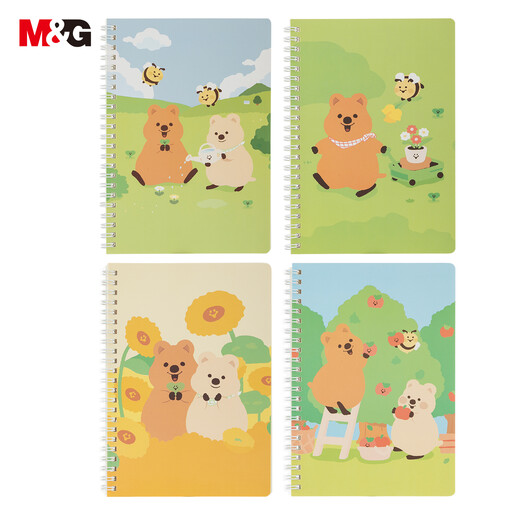
Why this product suits the profile: The A5 format provides more space for lessons, university, office tasks and journalling. The four notebooks can be allocated by subject, project or personal use.
The format, ruling and capacity are specified: four A5 notebooks with 60 sheets or 120 pages each. The spiral binding can lie flat.
A5 writing space, four designs, lined paper and spiral binding for easy page-turning.
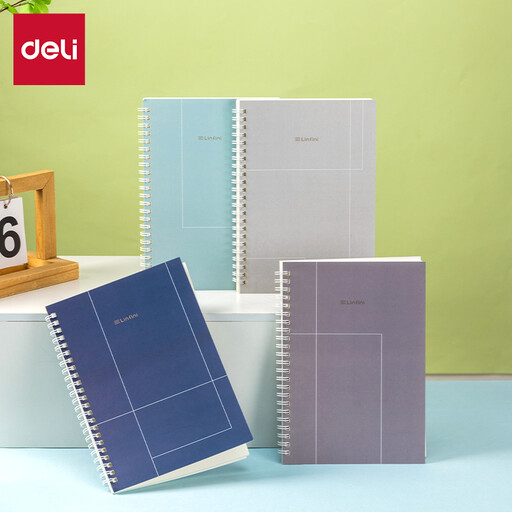
Why this product suits the profile: This A5 spiral notebook is designed for regular handwriting at university, in the office or when journalling. The set allows you to keep several work areas separate.
The product name specifies A5, 70 g/m², 60 sheets or 160 pages, as well as four items. These details make it easier to compare this set with others.
A5 dimensions of 148 × 210 mm, spiral binding, 70-g/m² paper and four notebooks per pack.
We have put together a complete, regularly updated list of products that fully meet these strict selection criteria and the safety regulations applicable in the EU.
Compare these points before placing your order:
For brief reminders and to-do lists, A6 or A7 notebooks save space. An A5 notebook offers more room, but naturally takes up more space in your bag or rucksack.
Its lifespan depends on the page count, binding, how it is transported and how much you write. A spiral notebook may experience more wear from frequent page-turning and pressure on the spiral. A softcover notebook should be stored in a dry place and not kept bent for long periods.
A set can reduce the price per item and makes it easier to organise different subjects. However, you should compare the price per notebook, page count, paper weight and features. A lower unit price is not necessarily the right choice if the format or paper is unsuitable for its intended use.