
Lieferung heute & morgen

Qualitätsgarantie

Willkommens-Angebote freischalten: KOSTENLOSE Lieferung | Bis zu 80 % RABATT | Kostenlose 30-Tage-JoyPlus-Testphase
App herunterladen
Whether you need them for lecture notes, meeting notes, to-do lists or creative writing, notebooks and sticky notes are practical stationery essentials that come in handy in many everyday situations. At the same time, unclear information about paper, ruling or adhesive strength can quickly lead to the wrong purchase. A stylish cover alone says little about whether an A5 notebook, an A6 notebook or a set of Sticky Notes will really suit its intended use.
A small A6 notebook fits easily into a jacket or handbag, but offers considerably less space for longer notes. The format can be ideal for quick reminders, sketches or spontaneous ideas. However, if you want to record lectures, workflows or journal entries, you will generally need more writing space. An A5 notebook offers a practical compromise between clear organisation and portability.
The number of pages is just one factor. Paper weight, binding and ruling are also important. Thin paper may show more ink through on certain types of pen. A spiral binding lies flat on the desk, while a casebound hardcover notebook often feels more enclosed and protected. Specifications such as “100 g/m²” describe the paper weight, but do not on their own guarantee every writing characteristic you may be looking for.
Sticky notes, memo notes and self-adhesive notepads do not stick equally well to every surface. Dust, moisture, rough materials or frequent repositioning can affect their adhesion. For important reminders, buyers should also check whether the notes can be removed without leaving residue and whether the size is large enough for the amount of text required.
Also check the number of pages or sheets. Product specifications should make it clear whether they refer to sheets or individual pages.
Paper weight is given in grams per square metre. According to product descriptions, products with 90 or 100 g/m² paper may be designed to provide a more stable writing surface. However, if you use fountain pens, rollerball pens or fibre-tip pens, you should still look for specific information about ink absorption or show-through. Simpler types of paper are often sufficient for pencils and ballpoint pens.
Practical features can make everyday use easier:
For sticky notes, dimensions, sheet count, colour distribution and adhesive strips are the relevant points of comparison. A standard size of 76 × 76 mm offers more writing space than small page-marker strips. Lined paper can be helpful when messages or lists need to be written as neatly and evenly as possible.
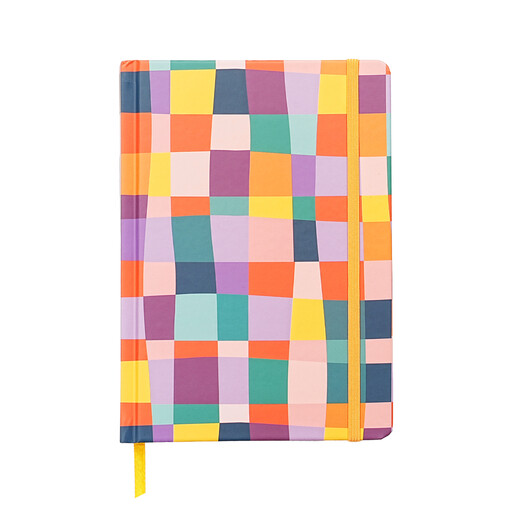
Why this product suits this profile: The A5 format is suitable for notes at school and in the office, while 96 sheets of lined paper provide space for continuous notes and a writing journal.
The product details clearly state the format, paper weight and sheet count. This makes it easier to assess the usable writing space before buying.
100-g/m² offset paper, elastic closure band, ribbon page marker and pen loop; available in several colour options.
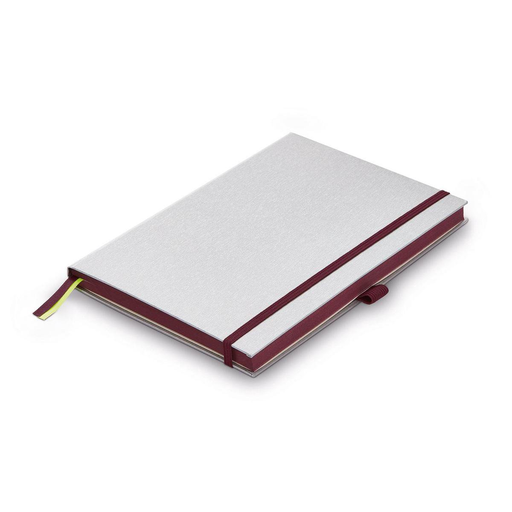
Why this product suits this profile: This compact A6 notebook is aimed at professionals and creatives who write on the go and prefer a notebook with a comprehensive set of features.
The features go beyond those of a basic notebook: two ribbon page markers, a pocket and eight removable sheets are all clearly specified.
192 pages of 90-g/m² paper, hardcover, thread-sewn binding, pen loop and elastic closure, according to the product description.
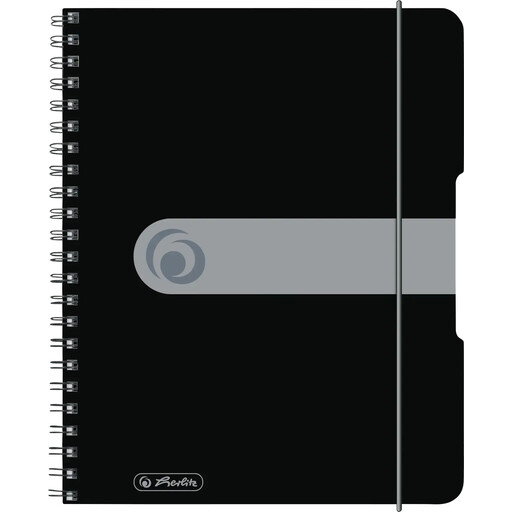
Why this product suits this profile: For studying, office work and projects involving frequent page changes, this squared spiral notebook provides a structured workspace.
The ruling and binding are clearly stated. Micro-perforation and six-hole punching also allow pages to be removed and filed.
Two notepads with 80 sheets each, special squared ruling, Twin-Wire binding and elastic band.
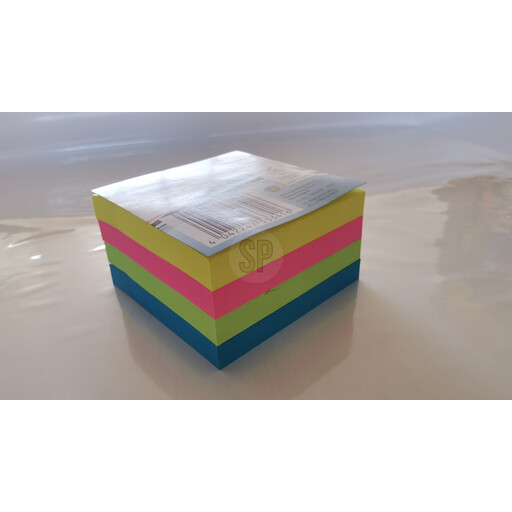
Why this product suits this profile: The square format is ideal for short tasks, marking pages and leaving reminders on monitors, desks or documents.
The dimensions are clearly specified. According to the product description, the notes can be attached to and removed from various surfaces.
Standard format with a writable surface and adhesive strip for temporary reminders and page marking.
We have put together a complete, regularly updated list of products that fully meet these strict selection criteria and the safety regulations applicable in the EU.
For an office desk, yellow memo notes in a standard size are often sufficient. If you want to organise tasks by colour, a neon-coloured Memopad Stick-On Set could be a good choice. Lined sticky notes are useful for longer messages. If you use them frequently, it is worth checking the number of pads and sheets per pack rather than comparing only the individual price.
Use self-adhesive notes on clean, dry surfaces wherever possible. When applying them to delicate books, varnished furniture or important documents, it is advisable to test them first in an inconspicuous area. Moisture and high temperatures may affect the paper quality or adhesive performance, according to the product information.
An A5 notebook is practical for many uses because it provides enough writing space while still fitting easily into a rucksack or bag. A squared notebook is suitable for mathematics, tables and technical sketches. For minutes and longer texts, a lined notebook is a good choice.
Their durability depends on storage conditions, paper and adhesive. Dry room temperatures, clean surfaces and protection from direct moisture help them perform as intended. Adhesive strength may decrease with frequent reuse.
Sticky notes can be useful for temporary marking. However, check the surface and remove the notes slowly. With delicate paper or valuable documents, test them first in an inconspicuous area.