If you have a confirmed peanut or tree nut allergy, a nut product containing the allergen that triggers your reaction is not a suitable study snack. According to gesund.bund.de, even small amounts can trigger a reaction. If you can eat nuts but want to avoid certain ingredients or salt, you can choose suitable options by checking the ingredient, allergen and nutritional information. Even when choosing a nut-free alternative, make sure the labelling on the specific pack fits your personal avoidance plan.
Who should consider their choice carefully?
Students with a confirmed peanut or tree nut allergy
For them, avoiding the allergen that triggers their reaction comes before choosing a nut mix. According to gesund.bund.de, even small amounts can trigger a reaction in people with a food allergy. Any alternative snack must therefore fit their individual, professionally assessed avoidance plan.
Students avoiding specific ingredients
If you can eat nuts but want to avoid, for example, milk ingredients or certain types of nuts, check the ingredients of every product. The ingredients list and highlighted allergens are more informative than a general description on the front of the pack.
Students looking for a simple snack to take with them
Here, the key things to consider are a short ingredients list, the salt content and a suitable pack size. The German Nutrition Society recommends a small handful of nuts a day as a general guide; this does not replace checking for allergens or deciding how much is right for you.
What should you look for when choosing?
If you have an allergy, first check whether the snack fits your avoidance plan. Only then compare suitable products for their ingredients, salt content and pack size.
| Criterion |
What to check when buying |
Who it matters most to |
| Peanut or tree nut allergy |
Check the ingredients, highlighted allergens and any precautionary statements about possible traces against your individual avoidance plan. |
If I’m allergic to peanuts or certain tree nuts, I need a suitably labelled snack instead of a product containing the allergen that triggers my reaction. For around 36% of consumers, avoiding these allergens is the top priority. |
| Avoiding specific ingredients |
Read the ingredients list for the specific product and distinguish between allergens it contains and possible traces. |
I can eat nuts but want to avoid a particular ingredient or type of nut, so I need to assess each mix individually. This is the main concern for around 29% of consumers. |
| A simple snack |
Compare the ingredients list and salt content per 100 g; don’t assume that ‘unsalted’ means ‘allergen-free’. |
For longer study sessions, I’d rather choose a lightly seasoned option without losing sight of the allergens. Around 21% of consumers prioritise this. |
| Easy-to-carry portion |
Check the pack size and ingredients together; a small pack says nothing about whether it’s suitable for you. |
If I’m taking a snack with me to study, a handy pack is particularly important. Portion size is a priority for around 14% of consumers. |
Common misconceptions
-
Assuming ‘unsalted’ or ‘vegan’ means ‘nut-free’
These descriptions answer different questions from allergen labelling. For example, Seeberger’s unsalted nut selection, listed by REWE, contains almonds, cashews, peanuts and pecans.
If you have an allergy, first check the ingredients and allergen information on the specific pack. Only then compare other features.
-
Assuming that no precautionary trace warning means a product is safe
According to Verbraucherzentrale, accidental contamination does not always have to be declared. So, the absence of a voluntary warning does not rule out cross-contact.
If your avoidance plan also covers possible traces, don’t decide whether a product is suitable based solely on the absence of a warning.
-
Checking just one type of nut in a mix
EDEKA’s nut and kernel mix lists almonds, cashews and hazelnuts as ingredients. EDEKA also states that it may contain traces of other tree nuts and peanuts.
Before choosing a mix, check all the listed types of nuts and peanuts against your avoidance plan.
-
Assuming online information matches the pack label
EDEKA notes that online product information may differ from the packaging. The label on the product you actually buy is what matters.
Check the label again before eating the product. If you have a specific question about an ingredient, use the contact details provided on the pack.
Brands and retailer ranges to help you choose
Seeberger
The individual products and mixes listed by REWE show why the exact product name and pack matter when choosing.
- The roasted nut selection and nut trio differ in their ingredients and pack sizes, among other things.
- The roasted nut selection contains several tree nuts and peanuts; its labelling does not tell you about all Seeberger products.
EDEKA
The retailer’s range includes nut mixes with ingredient and allergen information for each product.
- For its nut and kernel mix, EDEKA lists almonds, cashews, hazelnuts and pumpkin seeds as ingredients.
- The mix may contain traces of other tree nuts and peanuts. EDEKA also notes that online information may differ from the packaging.
Alesto
Lidl describes Alesto as offering natural nuts and dried fruit, as well as seasoned snacks.
- The product types described make it easier to look for a plain or seasoned option.
- The brand description does not guarantee that individual products are free from particular allergens or possible traces.
REWE
The retailer provides ingredient and allergen information for the nut products it lists.
- The information on the listed Seeberger products helps you identify differences in ingredients before choosing.
- If you have an allergy, you still need to check the label on the pack you actually buy.
ALDI SÜD
For questions about the ingredients in individual products, ALDI SÜD refers customers to the supplier named on the packaging.
- The pack provides a contact for specific questions about the product.
- A general assumption about the retailer’s range is no substitute for checking the ingredients and allergens in the product you choose.
Joybuy products on this topic
If you’re considering pumpkin seeds instead of nuts as a study snack, you’ll find a suitable pack here. If you have an allergy, whether it’s suitable depends on the labelling on the pack you buy and your individual avoidance plan.
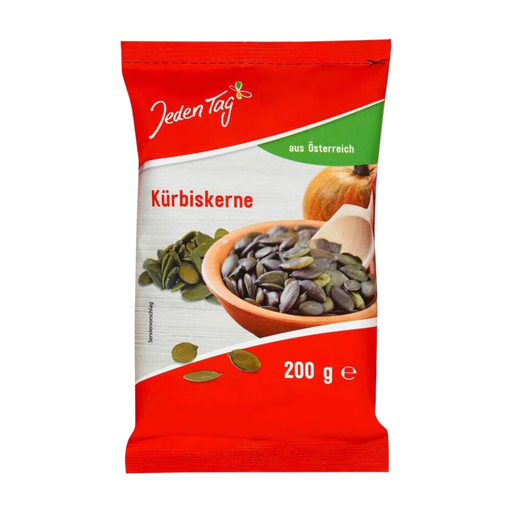 Image unavailable
Jeden Tag shelled pumpkin seeds, 200 g
These pumpkin seeds may be an alternative to a nut mix if they fit your avoidance plan. If you have an allergy, check the ingredients, allergens and any information about possible traces on the specific pack. The product type alone cannot guarantee protection from cross-contact.
View at Joybuy
Frequently asked questions
Are nuts a ‘free-from’ snack if you have a peanut or tree nut allergy?
A nut product containing the allergen that triggers your reaction is not a suitable alternative. According to gesund.bund.de, even small amounts can trigger a reaction in people with a food allergy. Choose a snack whose labelling fits the avoidance plan agreed with your doctor.
What’s the difference between allergens in a product and possible traces?
Allergens that are present and must be declared have to be highlighted in the ingredients list. According to Verbraucherzentrale, accidental contamination does not always have to be declared. So, if you also need to avoid traces, the absence of a precautionary warning is no guarantee of safety.
Does ‘no added salt’ mean a nut mix is suitable for people with allergies?
No. The salt information tells you nothing about which nuts or peanuts the product contains. Seeberger’s unsalted nut selection, listed by REWE, contains several types of nuts and peanuts; the label on the specific pack is what matters.
What should I do if the online information differs from the packaging?
Base your choice on the label on the specific pack. EDEKA notes that its online information may differ from the packaging. For questions about individual ingredients, ALDI SÜD refers customers to the supplier named on the pack.


