
Lieferung heute & morgen

Qualitätsgarantie

Willkommens-Angebote freischalten: KOSTENLOSE Lieferung | Bis zu 80 % RABATT | Kostenlose 30-Tage-JoyPlus-Testphase
App herunterladen
A nut and fruit mix combines nuts with dried fruit, making it practical for the office, university, hiking or travelling. Online retailers offer everything from classic trail mix to combinations with mango, berries, chocolate or roasted nuts. However, eye-catching packaging reveals little about the actual ingredients.
If you want to buy trail mix, there are three common pitfalls you should avoid:
In a fruit and nut mix, the ingredients are listed in descending order by weight. Percentages are particularly helpful: according to the product information, Seeberger Soft Berry & Roasted Nut Mix contains 50% dried, partly sugar-coated berries and 50% tree nuts. Seeberger Cashew & Mango Mix is listed as containing 50% cashew nuts and 50% dried mango pieces.
Also check the allergen information. Mixed nuts often contain peanuts, almonds, cashews, hazelnuts or walnuts. Statements such as “May contain traces of other nuts” are also relevant for allergy sufferers. If you have an intolerance, always check the information on the packaging of the product actually delivered.
The nutrition table allows for an objective comparison. The values usually refer to 100 g, while a typical portion is considerably smaller. Examples from the products listed include:
You cannot judge whether a “healthy snack” is healthy based on a marketing term alone. The ingredients, portion size and your personal diet are what matter. With sweetened fruit, it is worth checking the “of which sugars” figure; with salted varieties, look at the salt content.
Resealable bags are practical for a rucksack, desk drawer or hand luggage. It is even easier to plan how much you eat when the trail mix is already packed in individual portions. This applies, for example, to Chacha Daily Nuts with 23 g bags.
After opening, nuts with dried fruit should be stored somewhere cool and dry, away from direct sunlight. An airtight seal helps preserve their crunch and flavour for longer. The best-before date applies to the unopened pack; you will find the exact information on the relevant product.
Roasted nuts may contain oil, salt or spices. If you prefer a more neutral flavour, distinguish between natural, roasted and roasted-and-salted varieties. Dried fruit may also be processed with oil, sugar or coating agents.
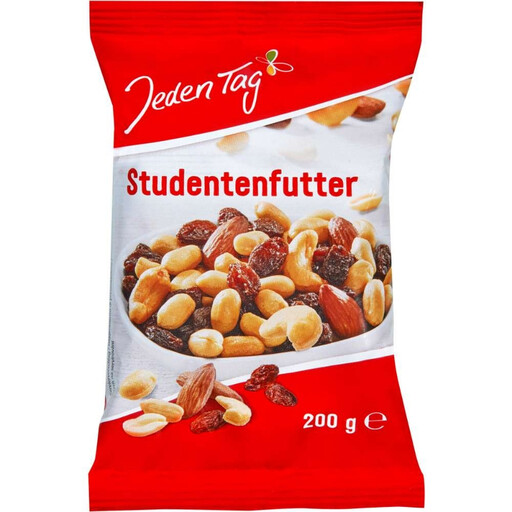
Why this product suits the profile: The 200-g pack offers a classic combination of raisins, peanuts, almonds and cashews for university, commuting or snacking at home.
The product information states the proportions of the main ingredients and highlights peanuts, cashews, almonds and possible traces of other nuts.
Classic trail mix with 40% raisins, 38% peanuts, 9.5% almonds and 9% cashews, according to the product description.
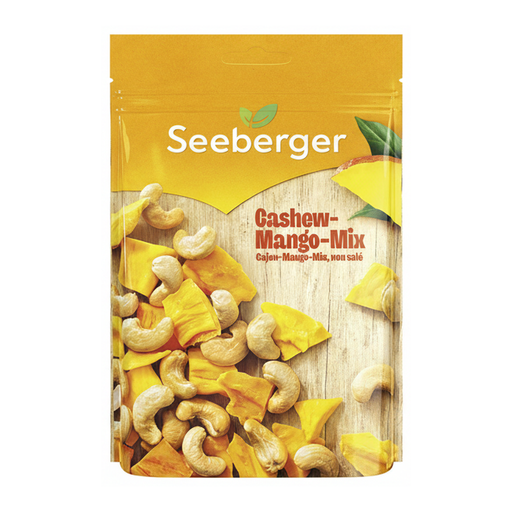
Why this product suits the profile: This mix contains only cashew nuts and mango pieces, making it suitable for shoppers who prefer a short ingredients list.
The product description states that each ingredient makes up 50% of the mix and clearly identifies sulphur dioxide as an antioxidant.
50% cashew nuts and 50% dried mango; according to the product information, 454 kcal and 0.09 g salt per 100 g.
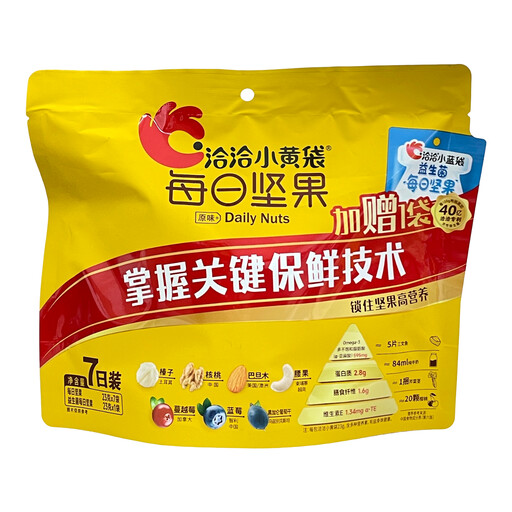
Why this product suits the profile: Seven individual 23-g packs are ideal for working days, day trips and travelling when you want a set portion size.
The individual portions reduce the risk of eating directly from a large bag while you are out and about. Even so, the packaging should be consumed soon after opening.
161 g total contents in seven portions; ingredients include almonds, cashews, walnuts, hazelnuts, blueberries and cranberries.
We have put together a complete, regularly updated list of products that fully meet these strict selection criteria and the safety regulations applicable in the EU.
For a snack when you’re out and about, resealable 150- or 200-g bags are a practical choice if you plan to spread the contents over several days. For hiking, train journeys and working days, individual portions are a better option. If you want to use the mix with yoghurt, porridge or baked goods, you can choose a larger pack.
With sweet varieties such as berry, mango or cranberry mixes, remember to account for any added sugar. If you prefer a savoury flavour, roasted or salted nuts are available. According to the nutrition table, these often contain less sugar, but may contain more salt and fat. The right choice therefore depends on your preferred flavour and intended use, rather than broad marketing claims.
Important: nuts can pose a choking hazard to young children. Products containing nuts should be kept out of the reach of children under four. If you have allergies, the complete labelling on the packaging is the deciding factor.
Unopened packs are suitable for consumption until the stated best-before date. Some product information gives a remaining shelf life of at least 36 or 48 days for unopened products; the specific date is shown on the packaging. After opening, the mix should be stored in a dry, cool place in an airtight container or resealed securely.
Trail mix may contain nuts and dried fruit, but it is not automatically “healthy”. Nuts are high in energy, while dried fruit and coated berries can add sugar. So check the ingredients list, sugar, salt and calorie information, as well as the actual portion size.
For a household or use across several meals, 150- to 200-g bags are suitable. If you want to plan your portions more easily when you are out and about, you may prefer small 23-g bags. For longer journeys, the packaging should be resealable and protected from heat and moisture.