
Lieferung heute & morgen

Qualitätsgarantie

Willkommens-Angebote freischalten: KOSTENLOSE Lieferung | Bis zu 80 % RABATT | Kostenlose 30-Tage-JoyPlus-Testphase
App herunterladen
A nut milk maker can simplify the preparation of soya, almond or oat milk. Instead of soaking, blending, heating and then filtering the ingredients separately, a plant milk maker handles several steps automatically. For families, vegan households, people with lactose intolerance and busy professionals, a compact model with a timer and keep-warm function is particularly appealing.
However, appliances vary considerably in capacity, cleaning requirements and programmes. Some advertising claims sound more comprehensive than the technical specifications actually suggest. The following criteria can help you avoid making the wrong purchase.
A long list of programmes is not automatically an advantage. What matters is whether the functions you need in everyday use are included:
A model with ten programmes may be excessive for a small household, while a compact model with five menus may be sufficient for everyday needs.
A stated capacity of 1 litre generally refers to the container’s maximum capacity, not necessarily the usable quantity for every recipe. With hot drinks, the min./max. markings must be observed to prevent spillages during blending and heating.
For one to three people, 600 ml may be sufficient. Families or households wanting to prepare several portions are more likely to benefit from a container with a capacity of around 1,000 ml.
Automatic self-cleaning can loosen residue from the blades and inner wall. However, it does not mean that the appliance is completely maintenance-free. The lid, seals and hard-to-reach areas should be checked after cleaning. The motor unit must not be immersed in water. Whether individual parts are dishwasher-safe must be confirmed in the relevant instruction manual.
For soya beans, nuts and cereals, the combination of motor power and suitable blade configuration is important. Product specifications may state, for example, ten stainless-steel blades, 200 watts of blending power or a heating power of 750 to 800 watts. These figures provide technical points of reference, but do not alone guarantee a particular consistency.
If you want to make plant milk yourself, you should also check whether dry or soaked beans may be used. When processing hard ingredients, normal operating sounds caused by changing motor speeds may occur. The instruction manual provides information on soaking times, maximum quantities and permitted programmes.
In heated appliances, food and hot liquids come into direct contact with the inner container. Useful features include:
BPA-free describes a material characteristic, but it is not a substitute for checking the complete instruction manual. For products intended for the German market, you should also check the mains voltage, plug, markings and details of the responsible person in the EU.
A start-time preset of up to twelve hours is practical for busy professionals and families: ingredients can be added in the evening and the programme set for the following morning. With perishable ingredients, you should still follow the instructions, particularly when leaving them in the appliance for longer periods.
A keep-warm function lasting two hours can maintain the drink at serving temperature after preparation. The exact temperature depends on the model. One appliance, for example, specifies a keep-warm temperature of around 55 °C. This is a manufacturer’s specification, not a general guarantee for every programme.
When cleaning, you should distinguish between an automatic rinsing programme, drying and sterilisation. Not every ‘Clean’ function includes all three steps.
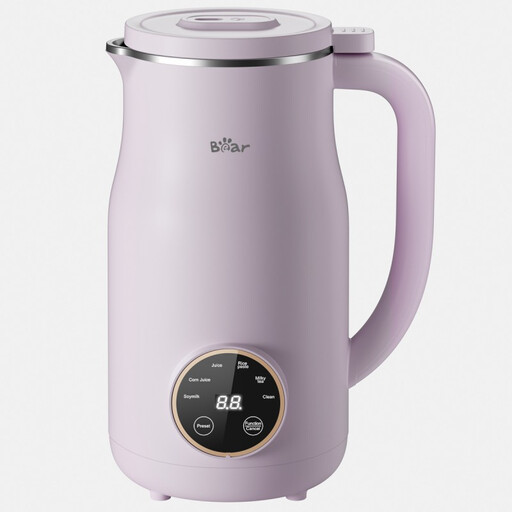
Why this product suits this profile: The 600 ml capacity is designed for one to three people and is suitable for individual portions of soya milk or other hot drinks.
The clearly limited capacity makes it transparent that this appliance is not intended for large family portions. Five function menus plus a cleaning option focus on the essential applications.
600 ml capacity, 304 stainless-steel inner container, up to twelve-hour timer and a safety lock on the lid.
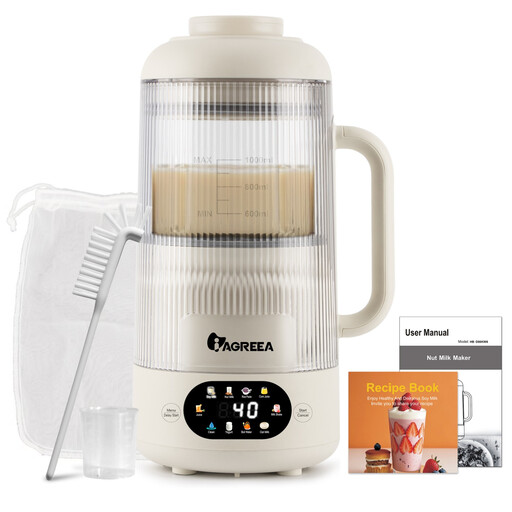
Why this product suits this profile: The 1-litre container, glass inner container and extensive automatic functions are aimed at households that regularly prepare a variety of drinks.
The product description distinguishes between cold and hot programmes and specifies automatic cleaning with drying. This describes the available processes more precisely than simply listing the menus.
Ten programmes, 1,000 ml capacity, twelve-hour start-time preset, acoustically insulated housing, plus cleaning accessories and filter bags.
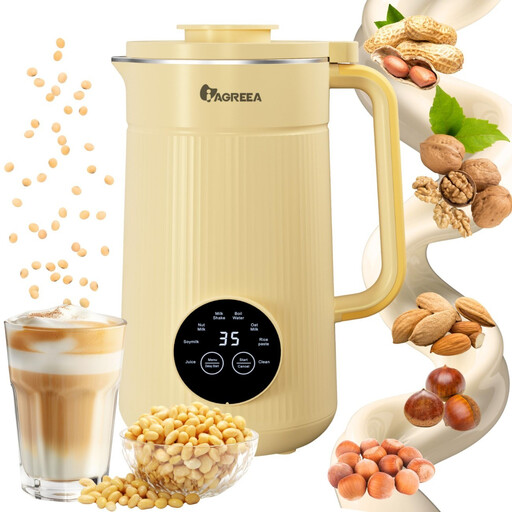
Why this product suits this profile: If you want to prepare nut milk, soya milk, oat milk, juices and shakes in one appliance, you get several preset programmes in a compact footprint.
The specifications state both the 1-litre capacity and the min./max. markings, as well as the safety sensor on the lid. This makes it easier to monitor hot preparations.
Eight programmes, ten stainless-steel blades, 800 watts of heating power, automatic keep-warm function and a one-minute cleaning function, according to the supplier.
We have put together a complete, regularly updated list of products that fully meet these strict selection criteria and the safety regulations applicable in the EU.
Before using the appliance for the first time, all removable parts that come into contact with food should be cleaned in accordance with the instructions. Hot programmes involve additional safety rules:
Many plant milk makers have a dedicated oat milk programme. Whether rolled oats, oat groats or other types of grain may be used depends on the particular model and recipe book. The permitted quantity and recommended amount of liquid should be followed.
Running costs consist of electricity and ingredients. For an accurate estimate, you can take the heating and blending motor’s power, programme duration and electricity tariff into account. You will also need to factor in the cost of nuts, soya beans, oats and, where applicable, spices. A multifunction blender with a heating function can replace several kitchen appliances, but its energy consumption varies depending on the programme.
It is not possible to give a reliable general lifespan. It depends on factors including frequency of use, cleaning, recipe quantities and adherence to cooling times. Regular care, avoiding overfilling and using the appliance in accordance with the manufacturer’s instructions can reduce the strain on the motor and seals.