
Lieferung heute & morgen

Qualitätsgarantie

Willkommens-Angebote freischalten: KOSTENLOSE Lieferung | Bis zu 80 % RABATT | Kostenlose 30-Tage-JoyPlus-Testphase
App herunterladen
A nut mix can be practical for eating on the go, at the office, while studying or as a topping for yoghurt and muesli. However, the name alone reveals little about the actual composition. There are clear differences between a classic student mix, roasted snack nuts and a nut-and-fruit mix when it comes to sugar, salt, ingredient proportions and portion size.
Names such as “Daily Nuts”, “Gourmet Mix” or “Energy Mix” often describe the product concept, but not necessarily its composition. The ingredients list is what matters. If raisins, sweetened cranberries, chocolate or sugar syrup appear near the beginning, it is more likely to be a sweet nut-and-fruit mix than a pure nut mix.
You should also check whether the types of nuts mentioned in a nut mix are actually present in significant quantities. For example, a product containing several varieties may consist mainly of peanuts, while cashews or almonds account for only a smaller proportion.
Roasted nuts may contain no additional ingredients, but they can also be refined with oil, salt, sugar or spices. If you are looking for a neutral mix for salads or muesli, compare the salt content and ingredients list. The salt content of salted nuts can vary considerably depending on the recipe.
Roasting also affects how the product is best used: a seasoned nut-and-seed mix is more suitable for savoury snacks, while an unsweetened mix can be used more flexibly as a topping.
A 400- or 500-gram bag is practical for families or regular users. For eating on the go, individual portions are more suitable. Without portion control, a small handful can quickly become a larger quantity. So do not just compare the pack size; also check the recommended portion size and the values per 100 grams.
First, assign the product to a category:
Pay attention to the percentages. According to the product information, Jeden Tag Gourmet Salad Seed Mix consists of 40% sunflower seeds, 30% pumpkin seeds, 20% roasted soya beans and 10% pine nuts. This makes it more suitable as a savoury addition to salads, bowls, yoghurt or baked goods than as a classic student mix.
Nuts naturally contain relatively high levels of fat and energy. This is not incompatible with a balanced diet, but it should be taken into account when planning portions. Compare the following in particular:
The product data generally refers to 100 grams. For individual portions, you should also check the values per pack.
Checking allergens is particularly important with nut mixes. Common ingredients include peanuts, almonds, cashews, hazelnuts, walnuts, pistachios, macadamia nuts or soya beans. The packaging may also state that the product could contain traces of other nuts.
Always read the current packaging information before buying. Recipes, trace-allergen statements and best-before dates may differ from the information provided online. Hard nuts and seeds can also pose a choking hazard for young children.
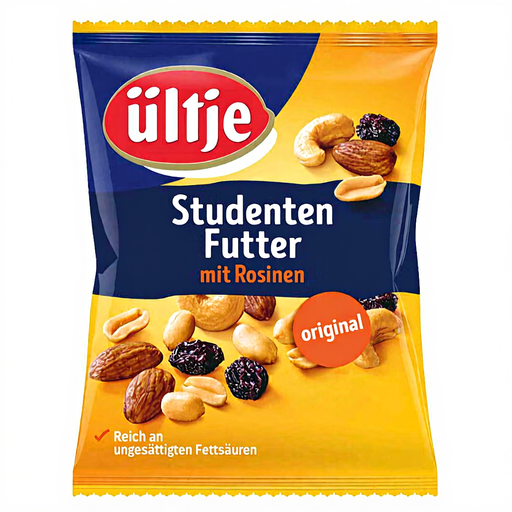
Why this product suits this profile: The 200-gram pack combines 30% raisins with peanuts, cashews and almonds, and can be portioned for studying, commuting or hiking.
The proportion of raisins and the ingredients are clearly stated. According to the product information, the salt content is 0.07 g per 100 g.
A classic recipe, resealable packaging and versatile use as a snack or topping.
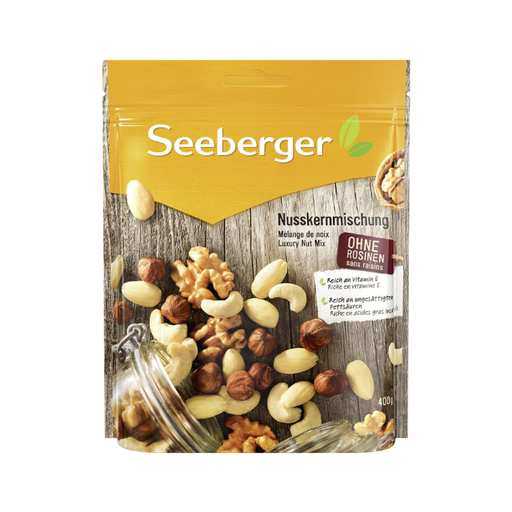
Why this product suits this profile: The mix contains hazelnut, almond, cashew and walnut kernels and, according to the product information, contains no raisins.
The nutritional information lists 4.6 g of sugar and 0.02 g of salt per 100 g. The warning about possible traces of nuts should still be noted.
400 g contents, several varieties of nuts and a comparatively low stated salt content.
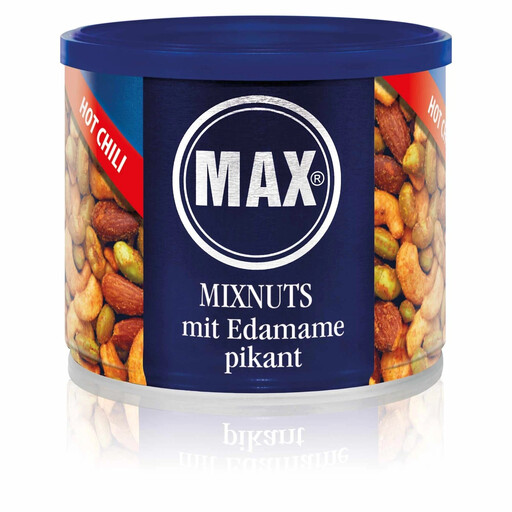
Why this product suits this profile: Roasted almonds, cashews and edamame with chilli seasoning are aimed at people looking for a savoury, vegan-friendly snack.
The recipe explicitly lists 0.2% chilli, as well as oil, salt and other seasoning ingredients. This makes it easier to assess the robust flavour before buying.
250-g pack, 25 g of protein and savoury seasoning; according to the product information, consume within 2–3 days of opening.
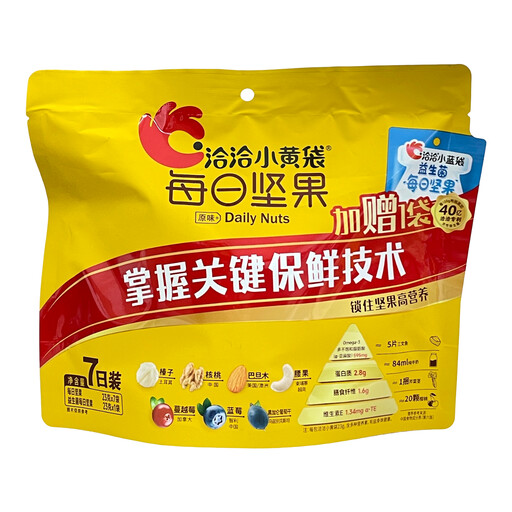
Why this product suits this profile: Seven individual 23 g packs are ideal for work, school, travelling or days when having a set snack portion is convenient.
The individual portions reduce the risk of eating straight from a large pack. The nuts and dried fruit included, along with the allergens, are clearly stated.
161 g total contents, individual 23-g bags and a mix of almonds, cashews, walnuts, hazelnuts and dried fruit.
Nuts and seeds should be stored in a cool, dry place away from direct sunlight. Heat, moisture and air can affect their crunch and flavour. After opening, an airtight container is recommended. For mixes containing dried fruit, you should also ensure that the fruit does not dry out.
Depending on the recipe, you can use a nut mix in various ways:
If you want to buy a nut mix online, consider the product image, ingredients list, nutritional table, allergens, pack size and best-before date together. This prevents the packaging size or a promotional product name alone from determining your purchase decision.
We have put together a complete, regularly updated list of products that fully meet these strict selection criteria and the safety regulations applicable in the EU.
Student mix usually contains a combination of nuts and dried fruit, often including raisins. A pure nut mix, on the other hand, consists mainly of different nut kernels. If you prefer a less sweet option without raisins, a nut kernel mix may be more suitable.
This depends on the recipe, packaging and storage conditions. Check the best-before date on the pack and seal the contents airtight. If the product develops an unusual smell, altered flavour or signs of moisture, it should not be eaten.
Individual portions are particularly practical for eating on the go because they are easy to transport and provide a set quantity. For longer-term use at home or in the office, resealable packs containing 200 to 500 g are more suitable. If you have allergies, check the ingredients and trace-allergen information in full before eating.