
Lieferung heute & morgen

Qualitätsgarantie

Willkommens-Angebote freischalten: KOSTENLOSE Lieferung | Bis zu 80 % RABATT | Kostenlose 30-Tage-JoyPlus-Testphase
App herunterladen
A nut mix is practical for the office, university, school, walks or social gatherings. At the same time, products can differ considerably in their ingredients, salt content, sugar, portion size and allergen information. Eye-catching packaging or the word “premium” alone says little about the actual composition.
500 g may seem attractively priced at first glance. However, the ingredients list is what really matters. In a nut kernel mix, individual ingredients may only be present in small quantities. So pay attention to the percentages and to which ingredient appears first.
In a nut and fruit mix, the sweet notes often come from raisins, sweetened cranberries or candied fruit. This is not automatically a problem, but it should be taken into account when choosing. Compare the “of which sugars” value per 100 g with other products.
Roasted nuts may also contain oil, flavourings, sugar, yeast extract or smoke components. With salted nuts, it is worth checking the salt content. If you prefer a short ingredients list, choose mixes with just a few clearly named ingredients.
First check which nuts are actually included: cashews, almonds, pistachios, macadamias, pecans, peanuts or walnuts. A cashew mix may, for example, have a high cashew content, while a classic trail mix with nuts and raisins usually contains a larger proportion of fruit.
Oils and sweeteners are also relevant. A product labelled “Honey & Salt” or with maple flavour belongs to a different taste category from a pure nut mix.
The nutrition table allows for an objective comparison. The most relevant values are:
The figures refer to 100 g and do not necessarily represent a realistic portion. A single 23 g portion is therefore considerably smaller than the values on the packaging might suggest.
Under the Food Information Regulation (EU) No 1169/2011, allergens that must be declared have to be highlighted in the ingredients list. For nut products, these include almonds, hazelnuts, cashews, walnuts, pecans, pistachios and macadamias, among others. Peanuts, soya or sulphites may also be present.
People with allergies should always check the current packaging. Statements such as “May contain traces of other nuts” describe a possible risk of cross-contamination. Nuts and kernels also present a choking hazard for children under four.
The following selection categorises products by use, pack size and composition. Details of ingredients and nutritional values are taken from the respective product information.
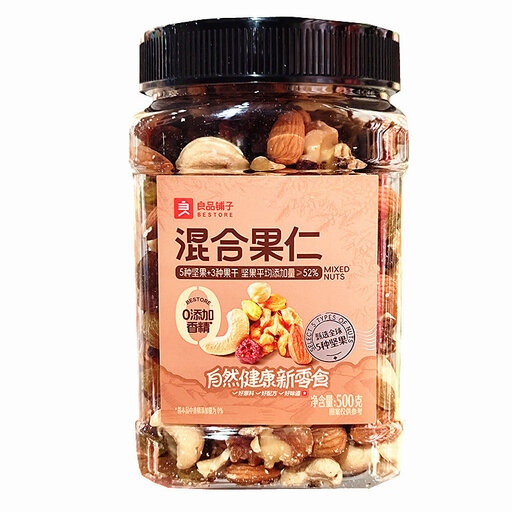
Why this product suits this profile: The 500 g pack is ideal for households looking for a classic mix for a range of snacking occasions. It contains cashews, almonds, pistachios, macadamias, pumpkin seeds and salt.
The ingredients list is limited to nuts, pumpkin seeds and salt. No additional flavourings or sweeteners are listed.
20 g of protein and 5 g of sugar per 100 g according to the product information; large pack for the household or for stocking up.
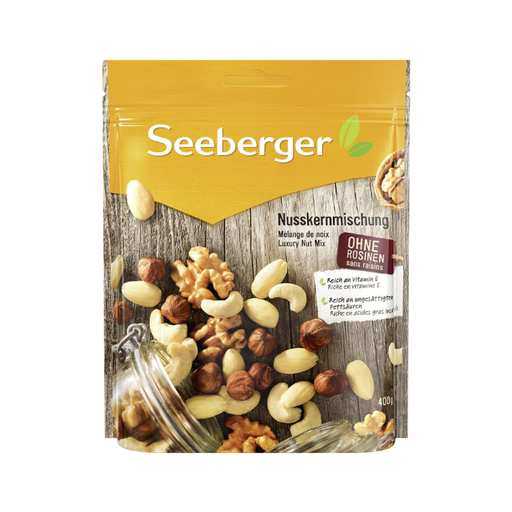
Why this product suits this profile: This mix is aimed at people who want to avoid raisins and prefer a combination of hazelnuts, blanched almonds, cashews and walnuts.
The fruit sugar from raisins is not included. According to the product information, the mix contains 11 g of carbohydrates and 4.6 g of sugar per 100 g.
400 g pack, 20 g of protein per 100 g and 0.02 g of salt per 100 g according to the product information.
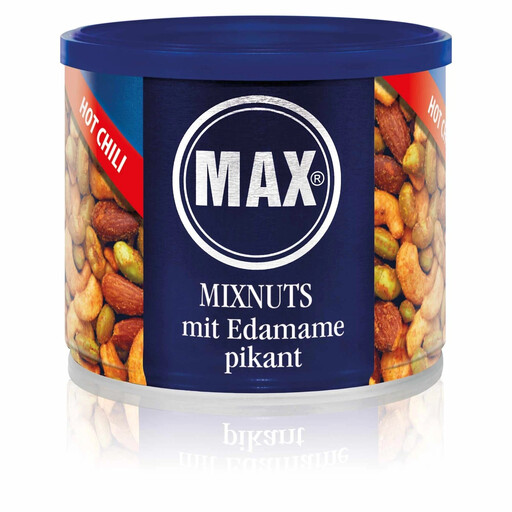
Why this product suits this profile: This mix combines roasted almonds and cashews with edamame and chilli. It is designed for vegan snacking and savoury flavour profiles.
The savoury seasoning is clearly stated. If you want to avoid added sugar or fruit, this offers a different composition from trail mix.
25 g of protein per 100 g according to the product information; ingredients list featuring almonds, cashews and soya beans. Contains 1.3 g of salt per 100 g.
For a classic mix of nuts and dried fruit, options include Seeberger Studentenfutter Trail Mix, Ültje Classic Student Mix and Jeden Tag Studentenfutter. These products combine nuts with raisins and differ in their fruit content, pack size and nutritional values.
If you prefer small portions, Cha Cha Daily Nuts is a practical choice. The pack contains five individual 23 g portions. For fruity flavours, options include the Seeberger Cashew & Cranberry Snack Mix and the Cashew & Mango Mix. With mango products, you should also check for sulphites, if these are listed among the ingredients.
For sweet-and-savoury varieties with honey, maple flavour or chocolate, compare the sugar, fat and salt content carefully. These products are better suited to flavourfully composed snack nuts than to a simple mix with a short ingredients list.
We have compiled a complete, regularly updated list of products that fully meet these strict selection criteria and the safety regulations applicable in the EU.
For work, university or commuting, resealable bags or individual portions are practical. A pack such as Cha Cha Daily Nuts with 23 g portions makes it easier to manage quantities. For longer trips, a 200 to 500 g pack can be useful, provided it is sealed airtight after opening.
This depends on the product, packaging and storage conditions. Store nuts and nut and fruit mixes in a cool, dry place away from light. Reseal the bag after opening. If the product has an unusual smell, rancid taste or signs of moisture, it should no longer be eaten. The best-before date and the information on the packaging remain the deciding factors.
Not every mix is vegan. Plain nuts and kernels may be vegan, while honey, milk ingredients or certain chocolate coatings may not be. So check the ingredients list and look for an explicitly stated vegan label. If you have a soya allergy, you should also take care with edamame and chocolate products containing soya lecithin.