
Lieferung heute & morgen

Qualitätsgarantie

Willkommens-Angebote freischalten: KOSTENLOSE Lieferung | Bis zu 80 % RABATT | Kostenlose 30-Tage-JoyPlus-Testphase
App herunterladen
Buying a nut mix may initially sound straightforward. However, products on the shelf or in an online shop can differ considerably: some contain mostly dried fruit, while others are heavily roasted or salted. Pack size, ingredients list and portion format also determine whether the nut mix suits your everyday routine.
Trail mix usually consists of a combination of nuts and raisins. However, the ratio can vary considerably. A product with a high fruit content often contains more carbohydrates and sugar than a pure nut mix. The ingredients list is therefore crucial: ingredients are generally listed in order of weight.
If you are looking for a nut and fruit mix, check whether you want raisins, cranberries or other dried fruit included. For a nut mix without raisins, mixes containing only nuts and seeds are a better choice.
Roasted nuts can be made without salt. For salted nuts, it is worth checking the salt content per 100 grams. Sugar, oil, smoke or flavourings may also be included in a seasoned mix. A distinctive flavour does not automatically come from a greater variety of nuts.
A 500 g nut mix or bulk pack can be useful for families, offices and regular consumption. However, once opened, nuts need to be stored in a cool, dry place and preferably in an airtight container. Portioned nuts are often easier to manage on the go or in a desk drawer. A 150 g bag, on the other hand, is better suited to trying a product or enjoying it occasionally.
Pay attention to the exact blend and the percentage of individual ingredients. Common allergens include walnuts, cashews, almonds, hazelnuts, macadamias, pecans, pistachios and peanuts. Statements such as “May contain traces of …” refer to possible cross-contact during production.
For products containing dried fruit, you should also check for added sugar and vegetable oils. Cranberries and other berries are sometimes processed with sugar. This is an objectively verifiable difference between natural mixed nuts and a sweeter trail mix.
For a fair comparison, use the nutritional information per 100 grams rather than looking only at the serving size. The key values include:
Nuts are naturally high in fat, which means they also provide a high energy content. This is not a quality issue, but it should be taken into account when planning your personal portions. A healthy snack is not guaranteed by the product description alone.
A resealable tub or bag offers better protection against moisture and unwanted odours after opening. Individual portions make it easier to take nuts to the office, university or on trips. You should also check the best-before date on the specific packaging, as it may vary from one batch to another.
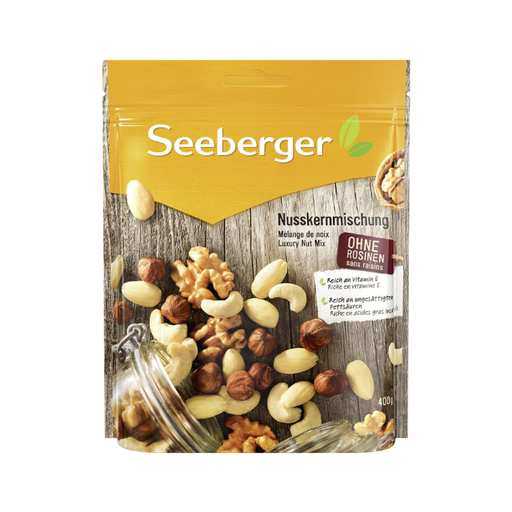
Why this product suits the profile: The 400 g pack contains a nut kernel mix made from hazelnuts, blanched almonds, cashews and 10% walnut kernels. According to the ingredients information, it contains no raisins.
The ingredients list clearly confirms that it contains no raisins, avoiding confusion with classic trail mix.
400 g bulk pack, 644 kcal and 20 g protein per 100 g according to the product information, with a salt content of 0.02 g per 100 g.
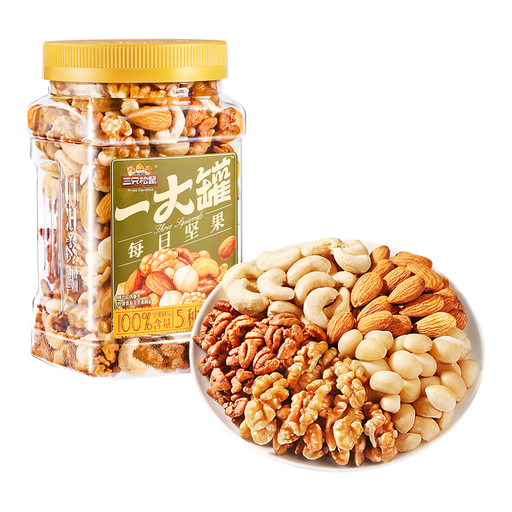
Why this product suits the profile: The mix consists of walnuts, cashews, almonds, pecans and macadamias. It comes in a resealable 500 g tub.
The five types of nuts are clearly stated. With 0.1 g of salt per 100 g, the salt content is easy to assess directly.
38% walnuts and 32% cashews according to the ingredients information; tub with a lid for storage at home.
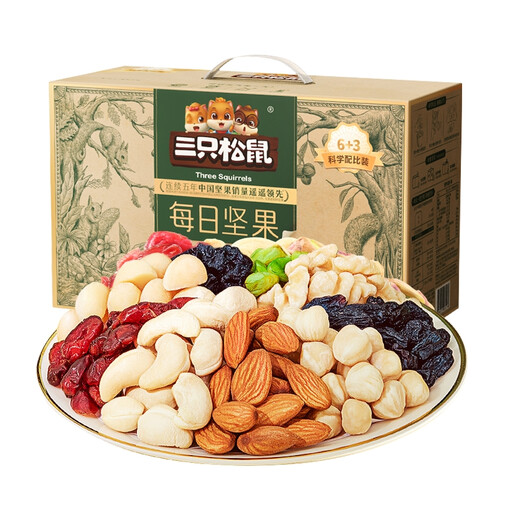
Why this product suits the profile: The 30 individual packs of 25 g each are suitable for the office, university, travel and daily use without the need for additional weighing.
The portions reduce the risk of taking more than intended from an open bulk pack. Ingredients and allergens are listed individually.
Nine ingredients, including walnuts, cashews, almonds, hazelnuts and dried fruit; 0 g of salt per 100 g according to the product information.
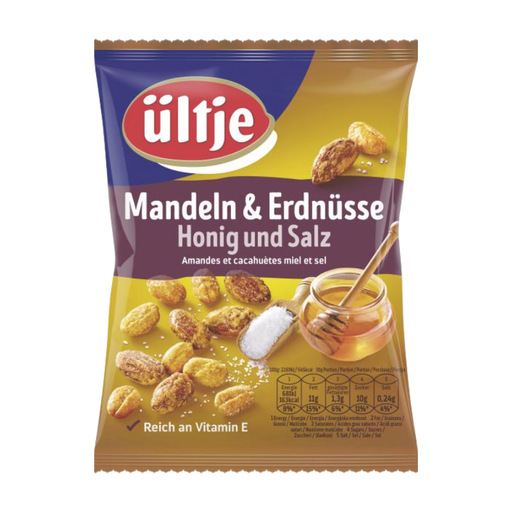
Why this product suits the profile: The mix combines almonds and peanuts with honey, sugar, oil and salt. The resealable 200 g bag is designed for individual snacking occasions.
The sweet and savoury recipe is clearly stated. With 14 g of sugar and 1.1 g of salt per 100 g, the flavour can be assessed objectively.
33% almonds and 33% peanuts according to the product information; resealable bag and 200 g pack size.
We have put together a complete, regularly updated list of products that fully meet these strict selection criteria and the safety regulations applicable in the EU.
For the home, a bulk-pack nut mix is practical when several people will be helping themselves or when the mix is regularly added to yoghurt, muesli and salads. In the office, resealable packaging or individual portions are more hygienic and easier to manage. For days out, lightweight 150 g to 250 g packs are a good choice.
In family households, packaging should be kept out of the reach of young children. Whole nuts can pose a choking hazard to children under four. Always check the allergy information on the packaging carefully before eating.
Portioned nuts or resealable bags are practical for the office. Individual portions such as 25 g prevent the entire pack from being left open. If you want to avoid dried fruit, choose a pure nut mix and check the ingredients list.
The specific best-before date is printed on the packaging. Once opened, the mix should be stored in a cool, dry, dark place and kept tightly sealed. Changes in smell, flavour or crunchiness are reasons not to eat the product.
No. Whether it is suitable depends on your preferred flavour and personal eating plan. Compare the sugar and salt content per 100 g. Natural nuts generally contain no added seasonings, while roasted or salted varieties may have a distinctly different recipe.