
Lieferung heute & morgen

Qualitätsgarantie

Willkommens-Angebote freischalten: KOSTENLOSE Lieferung | Bis zu 80 % RABATT | Kostenlose 30-Tage-JoyPlus-Testphase
App herunterladen
A nut mix is practical for your desk, university, hikes or as a topping. However, trail mix, mixed nuts, seed mixes and nut-and-fruit mixes can differ significantly in terms of ingredients, sugar, salt, allergens and pack size. If you focus only on the product name or eye-catching packaging, you can quickly end up with a mix that does not suit your everyday needs.
Nut mixes may contain oils, salt, sugar, flavourings or coatings. It is particularly worth checking the ingredients list for roasted nuts. For example, a product may be roasted with sunflower oil or enhanced with smoked salt and smoke flavouring. This is not necessarily a problem, but it should match your personal preferences.
A nut-and-fruit mix with raisins, cranberries, mango or other dried fruit usually contains more carbohydrates and sugar than a pure nut mix. Seeberger Cashew & Mango Mix lists cashew nuts and dried mango pieces at 50 per cent each; the nutritional information states 30 grams of sugar per 100 grams. Seeberger Cashew & Cranberry Snack Mix contains 31 grams of sugar per 100 grams, with the cranberries being sweetened.
If you are looking for a nut mix without raisins or with as little fruit as possible, you should therefore compare the order of the ingredients and the nutrition table.
Peanuts, almonds, cashews, hazelnuts, walnuts, pecans, macadamias and soya are among the commonly relevant allergens. Other nuts may also be present as traces. The statement “may contain traces” is just as important for people with allergies as the main ingredients. The labelling should also be checked for a salad seed mix: according to the product information, Jeden Tag Gourmet Salad Seed Mix contains soya and may contain traces of peanuts and nuts.
Start by considering how you want to use the product:
Also pay attention to the quantities given for the individual ingredients. With variable mixing ratios, the composition may differ from one pack to another.
In the products listed, nuts and seeds typically provide a high energy content. For pure or roasted nut mixes, the figures range from approximately 603 to 647 kcal per 100 grams. Seed mixes may have a higher protein content: Seeberger Vital Salad Seed & Kernel Mix provides 30 grams of protein per 100 grams, while the shelled Styrian pumpkin seeds contain 36 grams.
These values refer to 100 grams, not to a small handful. Smaller bags or individually portioned packs are practical for better portion control. Cha Cha Daily Nuts, for example, consists of five individual 23-gram portions.
150-gram bags are suitable for occasional consumption or for taking in a rucksack. 350- or 400-gram packs make sense if you use the mix regularly, for example as a topping or snack for several people. Once opened, nuts and seeds should be stored in a cool, dry place away from heat and direct sunlight. A tightly sealed bag or airtight container helps preserve their crunch and flavour.
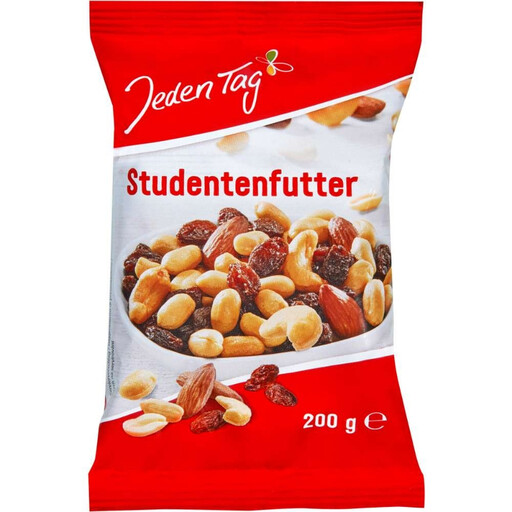
Why this product suits this profile: The 200-gram pack combines 40% raisins with peanuts, almonds and cashews. This makes it a classic snack for studying, work or short breaks.
The proportions of the ingredients and the nutritional values are provided. The fruit content is clearly stated, so the mix cannot be mistaken for a low-sugar nut mix.
17 g of protein and 31 g of carbohydrates per 100 g; ready-to-eat pack for taking on the go.
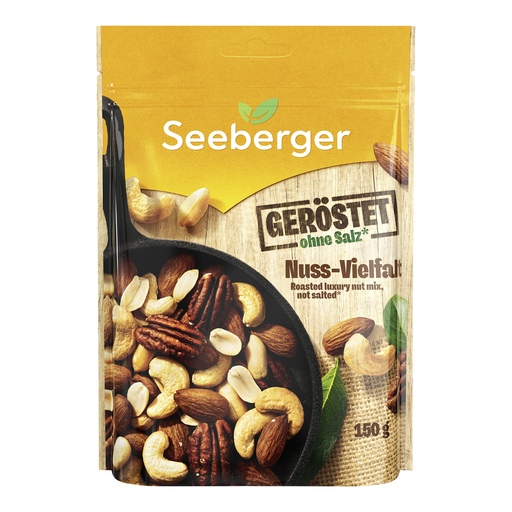
Why this product suits this profile: The mix contains almonds, cashews, pecans and peanuts and is roasted. It is labelled vegan, vegetarian and lactose-free.
The specific selection of nuts is listed. Information about possible traces of other nuts makes it easier to check allergens before buying.
647 kcal and 24 g of protein per 100 g; four clearly named types of nuts in a 150-gram pack.
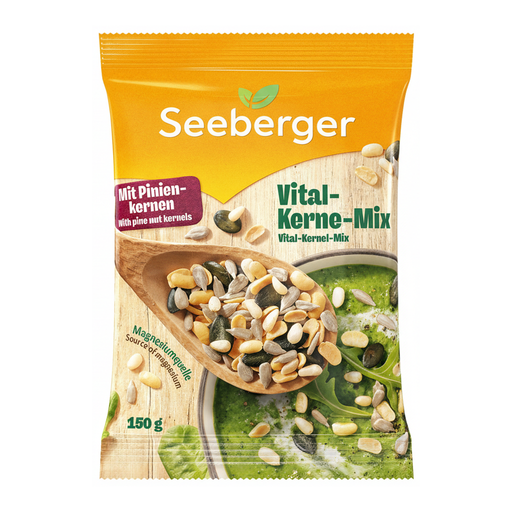
Why this product suits this profile: The mix of sunflower seeds, pumpkin seeds, roasted soya beans and pine nuts is suitable as a salad seed mix, topping or snack on its own.
This is not a sweet nut-and-fruit mix. There is no fruit or sugar content; however, soya is listed as an allergen.
30 g of protein per 100 g; vegan and gluten-free according to the product information, with 45% sunflower seeds and 28% pumpkin seeds.
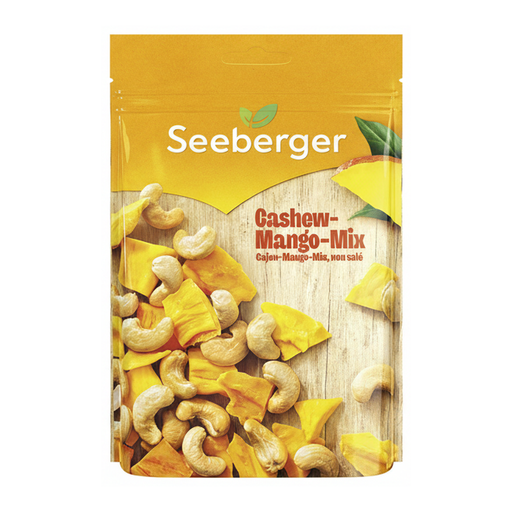
Why this product suits this profile: Two main ingredients, a resealable bag and a weight of 150 grams make this mix suitable for commutes, hikes or keeping in your snack drawer.
The ingredients list identifies dried mango, potato starch and sulphur dioxide. Allergens such as cashews and sulphites are therefore clear before purchase.
454 kcal, 11 g of protein and 48 g of carbohydrates per 100 g; cashew nuts and mango are each listed at 50%.
We have put together a complete, regularly updated list of products that fully meet these strict selection criteria and the safety regulations applicable in the EU.
For taking on the go, 150- to 200-gram bags or individual portions are practical. Trail mix with raisins provides a fruity element, while a pure nut mix contains less sugar from dried fruit. Resealable packaging, weight and your personal allergen requirements are the key considerations.
The specific best-before date is stated on the packaging. Once opened, nuts and seeds should be stored in a dry, cool, dark place, preferably in an airtight container. If the smell or taste changes, or if there are visible signs of deterioration, the product should no longer be consumed.
Before buying, check the full ingredients list and the highlighted allergen information. Peanuts, tree nuts, soya and sulphites are particularly relevant. Recipes may change, so the labelling on the pack delivered is the definitive source. Young children should not eat nuts and hard seeds unsupervised because of the risk of choking.