
Lieferung heute & morgen

Qualitätsgarantie

Willkommens-Angebote freischalten: KOSTENLOSE Lieferung | Bis zu 80 % RABATT | Kostenlose 30-Tage-JoyPlus-Testphase
App herunterladen
Anyone looking to buy a nut mix will find a wide selection online: roasted nuts, salted nuts, trail mix, nut and fruit mixes, or individual varieties such as pistachios, walnuts, almonds and macadamia nuts. The packaging often creates a particularly premium impression. However, the ingredients list, nutritional information and intended use are what really matter when choosing the right product.
Names such as trail mix or nut and fruit mix can cover very different recipes. Dried fruit often contains sugar or may be sweetened additionally. For example, the Seeberger Cashew-Cranberry Mix consists of 60% roasted cashew nuts and 40% sweetened dried cranberries. The nutritional table states that it contains 31 g of sugar per 100 g.
If you are looking for a fruitier snack, you may find this combination suitable. For a mix with as little sugar as possible, a pure nut mix or a nut and seed combination is the more obvious choice.
Roasting changes the flavour and texture. The product may also contain oil, salt, smoke flavourings, sugar or spices. With roasted and salted nuts, it is therefore worth checking the ingredients list and salt content.
For comparison, according to the product information, Seeberger Roasted & Salted Premium Nut Mix contains 0.82 g of salt per 100 g and provides 24 g of protein per 100 g. An unsweetened alternative with very little salt is Seeberger Premium Nut Mix Without Raisins, with 0.02 g of salt per 100 g. However, the description “without raisins” says nothing about whether other ingredients or possible traces are present.
Nuts are among the allergens that must be declared. Depending on the mix, it may contain peanuts, cashews, almonds, hazelnuts, walnuts, pistachios, macadamia nuts or Brazil nuts. Manufacturers also often warn of possible traces resulting from cross-contact.
Before buying, you should therefore check both the allergens present and statements such as “May contain traces of …”. For children under four, you should also follow the choking hazard warning stated on the product pages.
Ingredients are generally listed in descending order by weight. With a cashew and mango mix containing 50% cashew nuts and 50% dried mango pieces, the composition is easy to understand. With mixes containing “variable proportions by weight”, however, the quantities of individual nuts may differ.
Look out for:
Nutritional values per 100 g allow for a fair comparison between 100 g, 150 g, 250 g, 350 g and 500 g packs. Nuts naturally tend to have a high fat and energy content. This is not a judgement on quality, but an objective product characteristic.
The following values may be relevant when choosing:
A 150 g product is suitable for keeping snacks in the office or taking them on the go. Larger packs, such as 350 g or 500 g, can be more practical for households, parties, baking recipes and regular use. Once opened, the pack should be resealed and stored somewhere cool and dry.
Flavoured or salted mixes are commonly chosen for eating straight from the pack. For baking, salads or toppings, natural kernels are a good option. Organic pine nuts, such as Jeden Tag Organic Pine Nut Kernels, consist of pine nuts from certified organic farming according to the product information and are labelled vegan. The pack may nevertheless contain traces of other allergens.
Vegans and vegetarians should also look beyond the nut base and check ingredients such as honey, milk products or chocolate. A vegan snack, for example, may be a mix of nuts, edamame and spices. The specific labelling on the product page and packaging remains decisive.
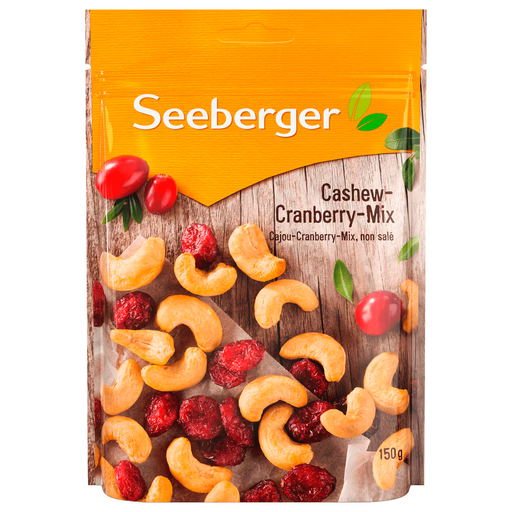
Why this product suits the profile: The 150 g pack combines 60% roasted cashew nuts with 40% sweetened cranberries, making it suitable for eating straight from the pack, adding to yoghurt or using in baking recipes.
The stated ratio makes the fruit content clear. According to the product information, the salt content is 0.03 g per 100 g.
Clear 60/40 recipe, versatile use and resealable storage according to the product information.
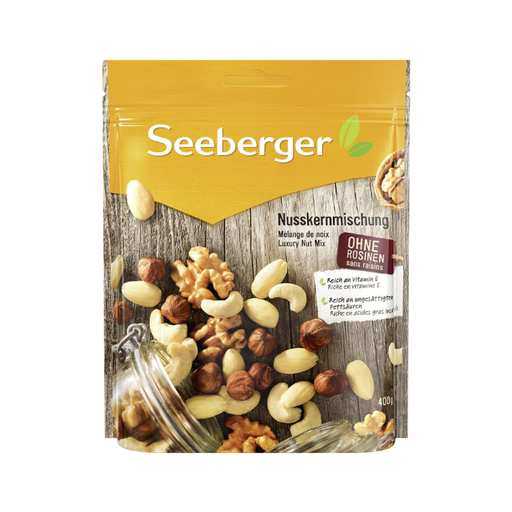
Why this product suits the profile: The mix contains hazelnut kernels, blanched almonds, cashew nuts and 10% walnut kernels, making it suitable for regular snacking or use as a topping.
The product information states 0.02 g of salt and 4.6 g of sugar per 100 g. Possible traces of other nuts should nevertheless be taken into account.
400 g pack, 20 g of protein and 57 g of fat per 100 g according to the nutritional information.
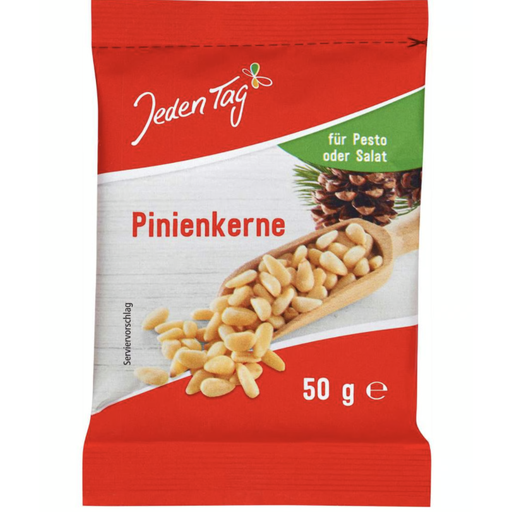
Why this product suits the profile: The organic pine nuts are intended for pesto, salads, rice dishes, desserts and use as a roasted topping.
According to the product information, the ingredients list consists of pine nuts from certified organic farming. Trace warnings on the packaging remain relevant.
Organic and vegan labelling according to the product description, with a 50 g portion for specific recipe use.
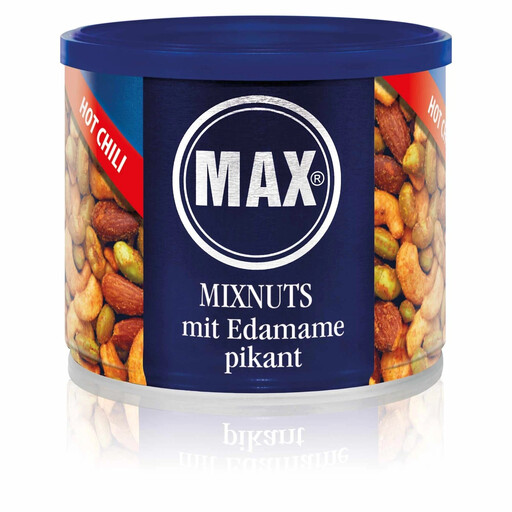
Why this product suits the profile: Roasted almonds, cashews and edamame are combined with chilli and other spices. The product description labels the mix as vegan.
The ingredients list explicitly names oil, salt and spices. With 1.3 g of salt per 100 g, this is worth considering before buying.
250 g pack, 25 g of protein per 100 g and a spicy recipe containing 0.2% chilli powder according to the product information.
We have put together a complete, regularly updated list of products that fully meet these strict selection criteria and the safety regulations applicable in the EU.
Resealable packs containing 150 to 250 g are practical for taking with you. If you prefer sweet ingredients, you can choose a cashew and cranberry mix or a cashew and mango mix. For a savoury snack, roasted and salted nuts or a mix containing edamame may be suitable. Ingredients, salt content and allergens should be checked before buying.
Nuts should be stored somewhere cool and dry, protected from direct sunlight. Open packaging should be sealed tightly, or the contents transferred to an airtight container. This is particularly important with larger packs such as 350 g or 500 g, as they often take longer to use.
That depends on the specific recipe. A nut and fruit mix may be vegan, while other products contain honey, milk products or chocolate that is not suitable for vegans. You should therefore check the vegan labelling as well as the ingredients list. Even with vegan products, potential allergens such as nuts, peanuts, soya or sulphites must still be taken into account.