Solo baker with a loaf tin
If you want to make a small nut roast using an oven recipe, your tin, the cooking space and the top-and-bottom heat setting all need to be compatible.


Start by checking your loaf tin and the recipe’s heating method. A mini oven with conventional top and bottom heat is an option if the tin fits in the usable cooking space with the required clearances. An air fryer needs a suitable ovenproof dish and a recipe that works for it. If your tin fits in your existing oven, you don’t need another appliance for the occasional nut roast. Wattage and cooking capacity alone can’t tell you how well it will bake or how much electricity you’ll save.
If you want to make a small nut roast using an oven recipe, your tin, the cooking space and the top-and-bottom heat setting all need to be compatible.
An extra appliance will only fit in the space you have if you can also leave the ventilation clearances required for that particular model.
If you plan to use the appliance for other foods too, check which heating functions and cleaning features you’ll actually need day to day.
A good fit if: you need an extra appliance and your loaf tin, its height and the required clearances all fit within the usable interior. LEBENSBAUM’s example recipe uses conventional top and bottom heat at 180 °C. The Rommelsbacher BG 1055/E and Steba KB M19 are examples of models with this heating method.
Bear in mind: the cooking capacity alone won’t tell you whether your tin will fit. A freestanding appliance also needs space around it in line with the instructions for that particular model.
A good fit if: you’ll mainly use it for small air-fried dishes and have a suitable ovenproof dish and a preparation method that works for your nut roast. Philips lists baking as a function of the NA120/00.
Bear in mind: the basket capacity doesn’t prove that a loaf tin will fit. You can’t assume the 180 °C conventional top-and-bottom heat and 50–60 minutes specified in LEBENSBAUM’s oven recipe will work as an air-fryer setting without checking first.
A good fit if: your tin already fits and you only make nut roast occasionally, or you cook other dishes at the same time.
Bear in mind: running costs depend on actual energy use and how often you use the oven. The EU energy label for full-size household ovens cannot automatically be applied to smaller ovens.
| What to consider | What to look for when buying | Who will find this most important? |
|---|---|---|
| Tin and recipe heating method | Compare the tin’s external dimensions, including its rim and handles, with the usable interior dimensions, height and clearance from the heating elements; check for conventional top-and-bottom heat. | If you have a specific loaf-tin recipe in mind, fit and heating method are essential. Around 40% of consumers put this check first. |
| A safe place to put it | Allow for the casing, the door opening and the clearances specified in the instructions for the exact model at the intended location. | With limited free space, I want to be sure the appliance and the necessary air gaps will fit where I plan to put it. Around 30% of consumers prioritise having a safe, suitable place for their appliance. |
| Use beyond making a roast | Consider the dishes you make most often and the heating functions they need; also check whether your existing oven will do the job. | If you want to use an extra appliance regularly for other small dishes, useful functions matter more than features you’ll never use. Around 20% of consumers prioritise versatility for everyday use. |
| Cleaning and ongoing costs | Check the cleaning instructions and whether parts can be removed; compare electricity costs using only comparable energy-use data, your own usage and your electricity tariff. | If you bake often, you’ll want to remove crumbs easily and get a clear idea of running costs. Around 10% of consumers prioritise easy maintenance and keeping running costs in check. |
The cooking capacity or approval for round tins of a particular diameter doesn’t prove that a loaf tin, including its rim, will fit.
Measure the outside of your tin and compare its width, depth and height, as well as the necessary clearance from the heating elements, with the usable interior dimensions.
For the BG 1055/E, Rommelsbacher requires 4 cm of clearance at the sides and 1 m above, and says it must not be built in. These requirements apply to this model, not to all appliances.
Before buying, check the installation instructions for the exact model and measure the intended space, including the clearances specified.
Power, cooking time and the amount baked vary. There’s no comparison here of energy use for making the same nut roast under the same conditions.
For a cost comparison, use energy-use data based on the same task and measurement method, or measure the energy used during the actual cooking process.
The BG 1055/E is an 18 l mini oven with conventional top and bottom heat. Rommelsbacher says it can accommodate dishes up to 25 cm in diameter.
According to Steba, the KB M19 offers 19 l of capacity, selectable top and bottom heat, and an optional fan setting.
According to the manufacturer, the TO 26 SilverStyle is a 26 l freestanding oven with conventional top and bottom heat and a fan setting.
The TO 2052 is in the particularly compact oven category: Severin lists a 9 l capacity and top and bottom heat that can be switched on separately or together.
The NA120/00 air fryer is the hot-air basket alternative. Philips lists a capacity of 4,2 l and baking as one of its cooking methods.
The Joybuy products below include mini ovens and a freestanding cooker. For your nut roast, check the tin, heating method and available space against the specifications for the exact model.
 No image available
The description says it’s suitable for one or two people and has conventional top and bottom heat. Still check that your loaf tin fits inside.
The stated temperature range of 100 to 230 °C includes the 180 °C used in LEBENSBAUM’s recipe. The product title also mentions a pizza function.
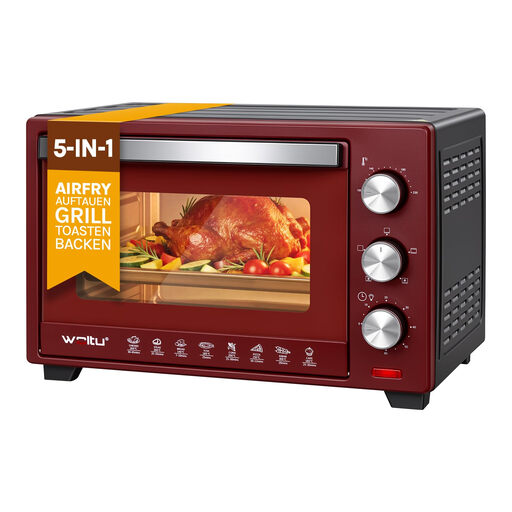 No image available
The description says it can cook meals for three to four people. For a small nut roast, consider whether you really need the extra capacity and have enough space for it.
According to the product description, you can select top and bottom heat separately or together. The stated temperature range is 100 to 230 °C; a timer and temperature control are also listed.
 No image available
The product title mentions baking and grilling. Before buying, check that it explicitly offers the heating method your recipe requires.
The stated temperature range is 100 to 250 °C. The title also lists 1600 W, a timer and a crumb tray.
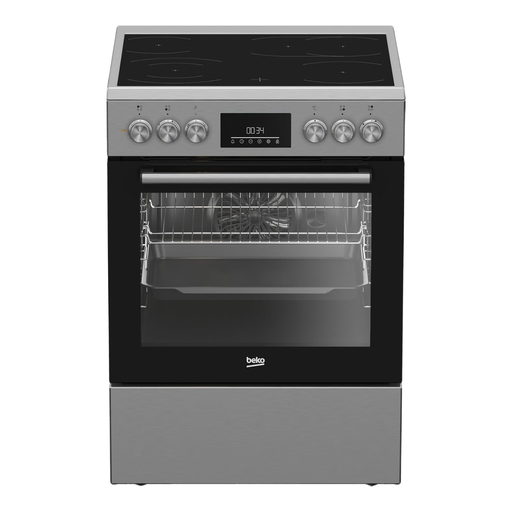 No image available
This freestanding cooker needs a suitably large space, so it’s a better option if you also cook other oven-baked dishes.
The description lists a 72 l capacity, eight heating functions and fan cooking with a circular heating element. The stated appliance dimensions are 85 × 60 × 60 cm.
Not without checking first. LEBENSBAUM’s nut roast recipe calls for conventional top and bottom heat at 180 °C for around 50–60 minutes in a loaf tin. Philips lists baking as a function of the NA120/00, but doesn’t give a confirmed cooking time for this nut roast. First check that the tin fits in the basket and that there’s a suitable set of cooking instructions.
Only if the instructions for the specific appliance and the space available allow it. Rommelsbacher says the BG 1055/E must not be built in and specifies 1 m of clearance above it; this measurement doesn’t automatically apply to other models.
No. The European Commission lists small ovens as outside the scope of the household oven regulations shown. So the absence of an oven energy label isn’t, by itself, a useful way to compare a mini oven with a full-size one.
Electrical appliances covered by the relevant EU rules must carry CE marking. It’s the manufacturer’s declaration of conformity, not a central EU certification or an independent test of baking performance. CASO lists CE marking for the TO 26 SilverStyle.
The Verbraucherzentrale explains that, as a rule, the retailer is responsible for ensuring the goods were free from defects when they were handed over for two years. This is separate from a voluntary manufacturer’s guarantee. For a standard online purchase, you’ll also usually have a 14-day right to cancel. The conditions for this are separate from your rights concerning faulty goods.