Nut roast in a loaf tin
If you want to use a tin you already own, compare its dimensions with the oven’s interior and shelf positions.


For a nut roast in a loaf tin, a mini oven with selectable fan and conventional heating is a flexible option, provided the cooking space and countertop position suit the tin and the manufacturer’s installation instructions. An air fryer oven could also work if your specific tin fits inside with enough clearance. Neither type of appliance will, by itself, stop the top from browning too quickly: follow your recipe and keep an eye on the roast as it cooks.
If you want to use a tin you already own, compare its dimensions with the oven’s interior and shelf positions.
If worktop space is limited, the appliance’s dimensions and installation instructions need to suit the space available.
If you bake other dishes as well as nut roast, being able to choose between fan and conventional heating can be useful. The key is still whether your dishes will fit inside.
Suitable if: you want to switch between fan and conventional heating depending on the recipe.
Consider: Interior and exterior dimensions vary by model; a larger cooking space takes up more room on your worktop.
Suitable if: your tin fits inside and you mainly bake using fan heat.
Consider: On models such as the Steba KB 27 U.2, the fan cannot be switched off.
Suitable if: you have a specific tin that you’ve measured and it fits inside with enough clearance.
Consider: The word ‘bake’ on its own doesn’t tell you whether your tin will fit inside.
Suitable if: you already have a suitable oven and there isn’t a safe place on your worktop for another appliance.
Consider: You won’t need an additional countertop oven; there’s no evidence that buying a new one will automatically save energy.
| What to consider | What to check before buying | Who will find this especially important |
|---|---|---|
| Will the tin fit? | Measure the tin, including handles, and compare its size with the interior dimensions and shelf height of the specific model. | If I want to keep using my loaf tin, I’ll want to check its dimensions before buying. Around 36% of consumers say fit is their main concern. |
| A safe place to put it | Compare the appliance’s dimensions and door opening with the available space, and check the installation instructions. | In a small kitchen, I’ll want to know whether the oven can be positioned safely with the required clearance. Around 29% of consumers put available space first. |
| Heating mode and browning | Check whether the fan can be switched off and conventional heating selected; use the recipe instructions as a starting point. | If my recipe specifies a particular heating mode, I’ll want to be able to choose it. Around 21% of consumers care most about control over the way they bake. |
| Use and cleaning | Consider how easy the cooking space is to access, whether there’s a removable crumb tray, and energy use for comparable cooking tasks. | I’ll want to clean the oven without hassle and get an idea of how much electricity it uses. Around 14% of consumers are mainly concerned about ongoing use and maintenance. |
The capacity in litres won’t tell you whether a tall or long loaf tin will fit inside.
Measure the tin, including handles, and compare its width, depth and height with the interior dimensions and shelf positions of the exact model.
If the tin doesn’t fit, you may need a different tin or appliance.
You’ll also need to allow for the installation requirements in the relevant manual; surfaces that can be touched may become hot.
Check the intended position against the manual for that exact model, and don’t use the clearance measurements for a different appliance.
The rated power alone doesn’t show how much electricity a particular cooking task will use.
Only compare energy-use figures on the same basis, and consider how often you’ll use the appliance.
The range includes smaller and larger baking and grilling ovens; the BGE 1580/E has a selectable fan setting.
The TO 2058 is a baking and toasting oven with fan heat, plus top and bottom heat that can be switched on separately or together.
The TO 20 SilverStyle is a compact countertop oven with fan, top and bottom heat.
The KB 27 U.2 is a compact grill oven with permanent fan heating.
This selection includes mini ovens and air fryer ovens for baking or roasting. Check whether your loaf tin will fit by comparing its dimensions with the interior measurements and installation instructions for the specific model.
 No image available
Could work for nut roast if your tin fits inside and you can select the right heating mode.
32 l; temperature control from 100 to 250 °C; 60-minute timer; top heat, bottom heat and combined heat.
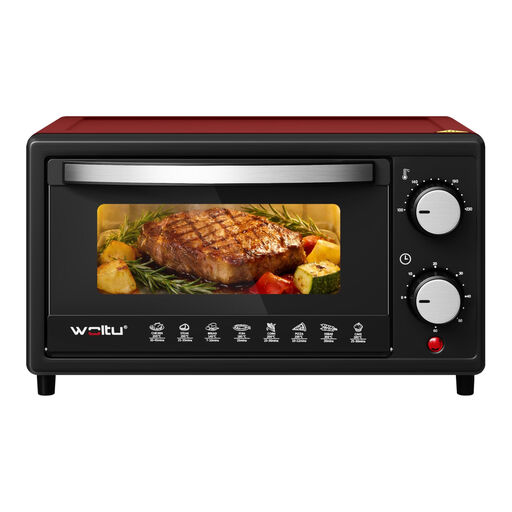 No image available
A compact option to consider if your baking tin fits inside with the required clearance.
10 l; temperature control from 100 to 230 °C; 60-minute timer; top and bottom heat. Listed appliance dimensions: 37 × 26,5 × 21 cm.
 No image available
Could be suitable if you want to choose between the listed heating modes and your tin fits inside.
28 l; three adjustable shelf positions; temperature control from 100 to 230 °C; top heat, bottom heat or combined heat.
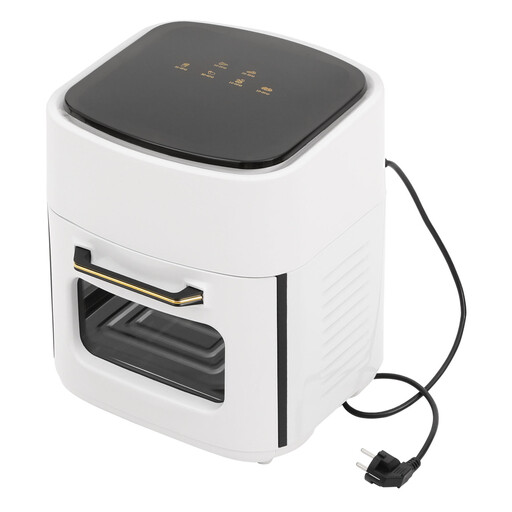 No image available
Consider it as an alternative for nut roast only if your specific tin fits inside with enough clearance.
15 l; 1400 W; 360° all-round heating; baking programmes and viewing window.
 No image available
Only consider it for nut roast if your tin fits inside; the stated pizza size doesn’t replace this check.
30 l; 21 preset programmes; 360° air circulation; 1800 W; described in the product name as suitable for a 13-inch pizza.
The right heating mode is the one specified in your particular recipe. If you want to switch between fan and conventional heating, check that both are available on the model you choose, and keep an eye on the roast as it bakes.
Rommelsbacher says this is generally possible for the specific mini oven models it names, but notes that you may need to adjust the quantity to suit the cooking space. This isn’t a guarantee for other models or a differently sized tin, so check the roast as it bakes.
Measure the tin, including handles, and compare its length, width and height with the interior dimensions and shelf positions of the specific model. Also allow for the clearance required in the appliance manual.
Follow the installation and cleaning instructions for your exact appliance. The Severin TO 2058 manual warns that accessible surfaces can become very hot, and says to unplug the appliance and let it cool before cleaning. These aren’t general clearance rules for other ovens.
No. Wattage alone doesn’t tell you how much electricity an appliance will use for a particular cooking task. Germany’s consumer advice centre recommends checking actual electricity consumption and comparing figures only for similar tasks.