Bakers with a loaf tin they want to use
If you want to use your existing tin for your nut roast, compare its external dimensions, including the handles, with the usable oven cavity, shelf height and clearance from the heating elements.


If the shared oven is available, your loaf tin fits and the recipe suits its available heating functions, you don’t automatically need a separate appliance to make a nut roast. A freestanding mini oven could be a good choice if you want to bake independently and the tin, oven cavity and model-specific clearance requirements all work with the space you have in mind.
If you want to use your existing tin for your nut roast, compare its external dimensions, including the handles, with the usable oven cavity, shelf height and clearance from the heating elements.
If you share your worktop, you’ll need room not only for the appliance itself but also for the clearances specified in the manual for that particular oven.
Having your own appliance can make you less dependent on the shared oven’s availability. Don’t forget to factor in the extra space it needs, cleaning and arrangements with other users.
A good fit if: You can use the oven, your tin fits and its available heating functions suit the recipe.
Things to consider: You won’t need another countertop appliance, but you’ll have to agree on when to use the oven and who cleans it.
A good fit if: You want to bake independently and your tin and chosen location suit the specific model.
Things to consider: You’ll have your own oven cavity, but you’ll need space for it and must follow the installation requirements.
| What matters | What to check before buying | Who is this important to? |
|---|---|---|
| Whether your loaf tin will fit | Check the tin, including its handles, against the internal width and depth, and the available height at the shelf. The capacity in litres alone doesn’t tell you whether the tin will fit. | If I want to keep using my existing tin, its actual fit matters most; around 33% of consumers put this first. |
| A safe place to position the oven | Allow for the appliance’s external dimensions and the clearances in the manual for that specific model. Steba requires a 10 cm gap between the back of the KB M19 and the kitchen wall; the Severin TO 2068 manual specifies 12 cm at the sides and back, and 30 cm above. | If I share a worktop, the appliance and its required clearances must fit in the space available; around 27% of consumers prioritise this. |
| Heating functions and independent use | Compare the specific model’s fan function, top/bottom heat, temperature range and timer with the recipe. REWE’s vegetarian nut roast recipe calls for 180 °C fan oven or 200 °C conventional heat; these temperatures apply to that recipe. | If I want to bake without having to work around other people’s schedules and choose the heating function specified in the recipe, I look for both; around 27% of consumers put this need first. |
| Cleaning after use | Check the cleaning instructions and whether any parts can be removed. For the TO 2068, Severin says to unplug the appliance and let it cool down before cleaning. | If I share the oven with others, I want it to be easy to clean afterwards and to agree on cleaning any surfaces I’ve used; around 13% of consumers prioritise cleaning effort. |
A mini oven’s capacity doesn’t tell you whether a particular loaf tin, including its handles, will fit or have enough clearance at the shelf height you need.
Measure your tin and compare its width, depth and height with the internal dimensions and shelf space of the specific appliance.
If the tin doesn’t fit, you may need a different tin or more than one batch.
Clearance requirements vary from one model to another. An appliance that fits on your worktop isn’t necessarily positioned safely in the space you have in mind.
Before you buy, check the manual for that exact model and agree on where it can go with the other users of the shared kitchen.
If there isn’t enough space, you’ll need to consider another location or a different appliance.
In its test of 18 mini ovens, updated on 18 August 2026, F.A.Z. Kaufkompass ranked the Rommelsbacher BGE 1580/E first. That result doesn’t tell you whether your tin will fit or whether you can position the oven in your kitchen.
Use a test result as one point of reference, and also check the tin, available space and heating functions you need.
The BGE 1580/E is a freestanding oven and grill with a 30-litre capacity.
The KB M19 is a 19-litre countertop oven for smaller dishes, provided your tin and available space are suitable.
According to the manufacturer, the TO 2068 has an oven capacity of around 20 litres and a switchable fan function for smaller portions.
The TO 20 SilverStyle is a freestanding oven with a capacity of around 20 litres and published internal dimensions.
This selection from Joybuy includes mini ovens and compact air fryer ovens for your own use. Whether a model is suitable for your nut roast depends on your loaf tin, the heating function available and the space you have for it.
 No image available
If your recipe specifies a temperature and cooking time, compare them with the settings available on the appliance.
The stated temperature range is 100–250 °C, with a 60-minute timer. Check the internal dimensions before choosing your loaf tin.
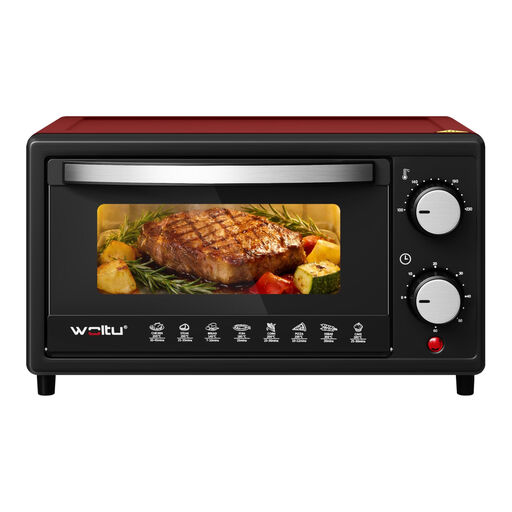 No image available
If you’re looking for a small countertop appliance, take particular care to check that your tin will fit inside.
The description lists top and bottom heat. The stated temperature range is 100–230 °C, with a timer of up to 60 minutes.
 No image available
If your recipe calls for different heating functions, compare its instructions with the appliance’s available settings.
The description lists top heat, bottom heat and combined heat. The stated temperature range is 100–230 °C, with a 60-minute timer.
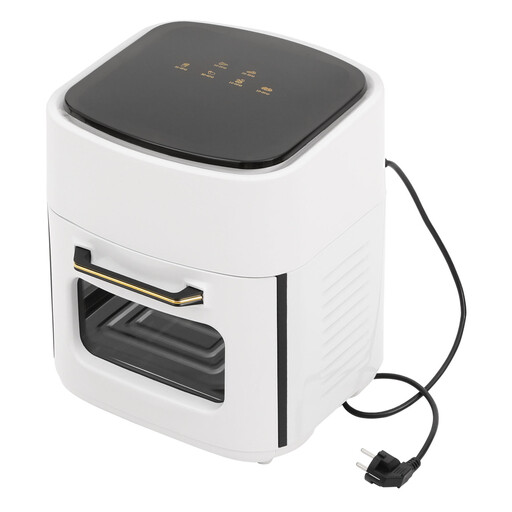 No image available
If you’re considering a compact fan oven, check that your tin and cooking method are suitable for the recipe.
Features include 360° heating, preset programmes, a viewing window and a dishwasher-safe basket.
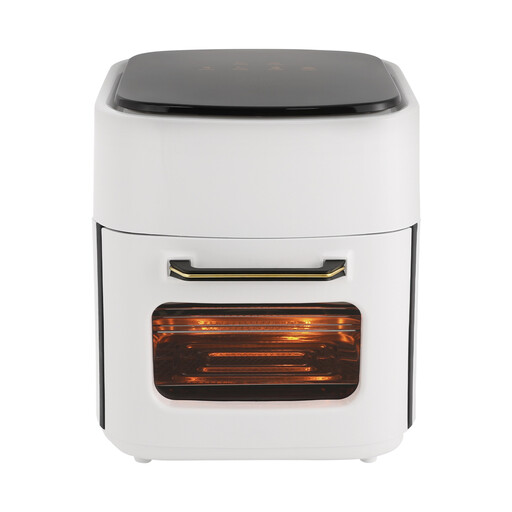 No image available
If you want to set the temperature and cooking time to suit your recipe, compare the stated range with its requirements.
The stated temperature range is 80–200 °C, and the timer runs from 5–65 minutes. The description also lists 360° heating and a dishwasher-safe basket.
No. REWE’s vegetarian nut roast recipe specifies 180 °C fan oven or 200 °C conventional heat for that recipe only. Follow the heating function and cooking time in your recipe, and check that your tin and the oven settings are suitable.
That depends on the requirements for the specific model. For the Severin TO 2068, the manual requires 30 cm of clearance above, and 12 cm at the sides and back. Don’t assume these measurements apply to other appliances.
Follow the instructions for the appliance you’re using. For the TO 2068, Severin says to unplug the appliance and let it cool down before cleaning; Rommelsbacher lists a removable crumb tray for the BGE 1580/E. In a shared kitchen, remember to clean any accessories you’ve used and wipe down the surfaces you’ve touched.
If a product is faulty, your statutory rights are against the seller; a guarantee is an additional promise offered voluntarily. The Verbraucherzentrale notes that the cover depends on the guarantee’s terms and conditions. When looking at an offer, check who the seller is and which terms apply.
Where applicable harmonised EU rules require a product to carry the CE mark, the manufacturer uses it to declare that the product meets the relevant requirements. According to the European Union, the mark isn’t issued by a central EU body as a safety certificate.