Photographing carving details
You want to bring out the notches, edges and surface texture of a single nutcracker, and adjust the light to suit.


For fine carving details, an adjustable light source positioned to one side is a good place to start: you can check the shadows directly from the camera’s point of view. Window light may be enough if your shooting space is bright and easy to control. For changing locations, a battery-powered light may be more suitable, while a COB light with compatible accessories is a good option for using modifiers and lighting wider shots.
You want to bring out the notches, edges and surface texture of a single nutcracker, and adjust the light to suit.
As well as close-ups, you need repeatable shots of entire figures and want to set up the lighting and camera position consistently.
You take photos in a limited space or at different locations, so the mounting options and power supply need particular attention.
A good fit if: You have a regular shooting spot by a window, where the details look bright enough and the light is easy to control.
Consider: You won’t need an additional light, but you’ll depend on the available daylight. Very even lighting can make the relief appear less pronounced.
A good fit if: You want to light individual details in a small space from different angles and position the light independently of the camera.
Consider: Its compact design makes it easy to reposition. Check that the light’s size, output, mount and power supply suit your framing and shooting time.
A good fit if: You want to photograph the whole figure as well as its carved details, and adjust the character of the light with a compatible modifier.
Consider: Modifiers and stands take up space and may need to be purchased separately. A lux rating with a reflector does not tell you how bright the light will be with a softbox.
| Priority | What to check before buying | Who it matters most to |
|---|---|---|
| Bringing out fine texture | Side positioning and adjustable brightness; compare test shots taken from the same camera angle. | If you want to bring out the notches and edges on a single nutcracker, having control over the direction of the shadows is what matters most. Around 33% of consumers prioritise visible surface texture. |
| Reproducing the colour of the wood | Check for a white-light mode and adjustable colour temperature; photograph the same area of wood with a set white balance. | If you want the wood colour to look consistent across a series of images, pay particular attention to the light colour and white balance. Around 27% of consumers prioritise accurate wood colour. |
| Light coverage and framing | Allow space and distance for both detail shots and full-figure shots; check what’s included and whether a diffuser or modifier is compatible. | If you take both close-ups and full-figure shots, your setup needs to work with each type of framing. Around 20% of consumers prioritise light coverage and setup. |
| Portability and power | Check the power source, included cables and batteries, and suitable mounting options for the specific model. | If you shoot in different locations or want to work without a mains socket, portable mounting and power are essential. Around 20% of consumers prioritise portability and power. |
The manufacturer’s rating for the amaran COB 60x S applies to a specific reflector, distance and colour temperature. It cannot automatically be applied to a different modifier.
Only compare brightness figures measured under the same conditions, and check which accessories are actually included for your setup.
You may need to buy a compatible modifier or stand separately.
The direction of the shadows in fine notches depends on where the light is positioned. A camera-mounted light alone won’t give you the side lighting you want in every setup.
Before buying, plan where you’ll position the camera and light, and check whether you need a suitable separate mount.
Your statutory rights when an item is faulty are separate from a voluntary manufacturer’s guarantee. The terms and conditions of any guarantee apply to the latter.
Check the seller and guarantee terms separately, and keep your proof of purchase.
The COB 60x S is a bi-colour COB light with a Bowens mount, designed for setups where you want to use a compatible modifier.
The RM120 is a compact battery-powered RGB light for small, flexible setups.
The manufacturer describes the LED6R as a compact RGB video light, suitable for still-life and product photography too.
According to the manufacturer, the W60/W60R range includes portable continuous lights: the W60 is bi-colour, while the W60R is a colour-light version.
The following Joybuy products include compact battery-powered and camera lights, as well as COB lights for detail shots and wider framing. Before buying, check the relevant EU product requirements for the specific model and whether CE marking is required; the CE mark alone is not independent proof of safety.
 No image available
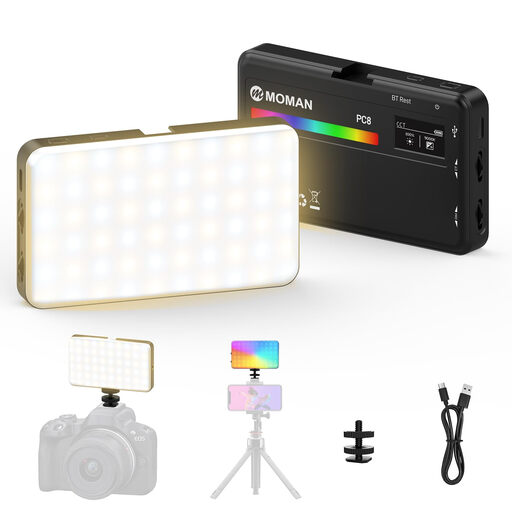
For a compact setup where you want to adjust the light colour and brightness, and position the light flexibly.
The product description lists 2,500–9,000 K, 0–100% brightness, and 1/4-inch and cold-shoe mounts.
 No image available
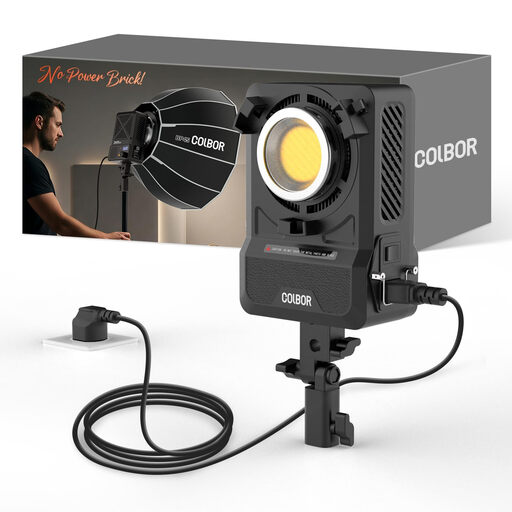
For a fixed setup where you want to change the character of the light with a compatible modifier.
The product name lists bi-colour lighting from 2,700–7,000 K and a Bowens mount; the description mentions an integrated power supply design.
 No image available
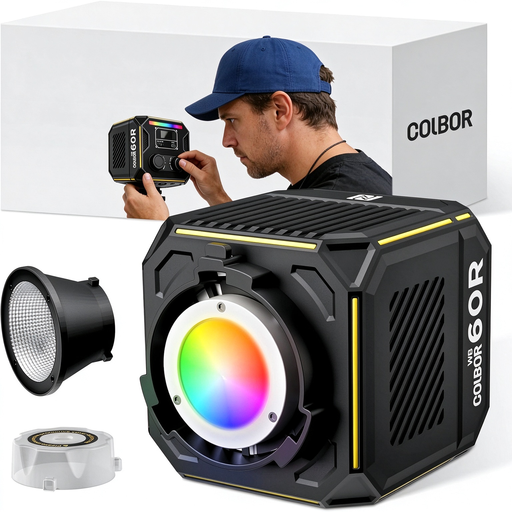
For a flexible setup when you want to work away from a mains socket and vary the light colour.
The product name lists a built-in 59-Wh battery, bi-colour lighting from 2,700–6,500 K, and full-colour RGBCW.
 No image available
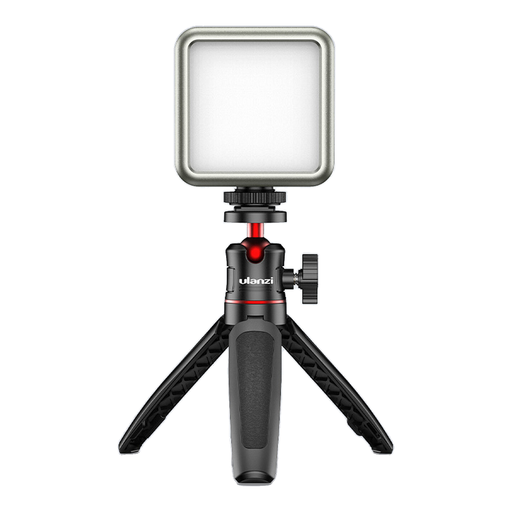
For a small, adjustable setup when you want to change the brightness and colour temperature.
The product name lists a 2,000-mAh battery, 2,500–9,500 K and magnets on the back.
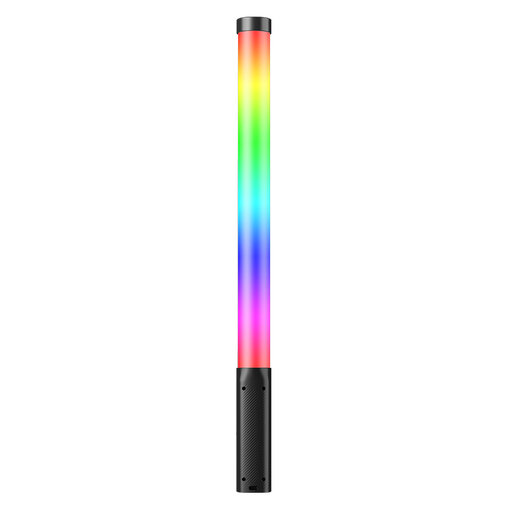 No image available
For a portable setup where you want to position the light by hand and adjust its colour.
The product name lists a built-in 3,300-mAh battery and an adjustable colour temperature of 2,500–9,000 K.
No. Light affects exposure and shadows, but depth of field and camera shake also play a part in close-ups. Keep your camera steady when comparing shots, and assess the lighting and focus separately.
Start by positioning it to one side of the nutcracker, then check on the camera screen which notches are casting shadows. Adjust the angle and brightness; a diffuser can help if harsh shadows obscure important areas. Canon Europe also recommends using a weaker fill light on the opposite side when filming to soften shadows.
Follow the instructions for the specific model. According to the manufacturer’s manual, the SmallRig RM120 has a built-in battery. The manual warns against removing it yourself and includes advice on charging after long periods in storage.
An electric light sold in Germany must meet the relevant EU product requirements; CE marking is required where the applicable regulations say it is. Check the marking and traceable manufacturer information for the specific product: the European Union and the Federal Network Agency point out that the CE mark alone is not independent proof of testing.