Which snacks are suitable for whom?

Families managing a peanut or tree nut allergy

If the snack is for a child with an allergy, nuts are not a nut-free alternative. Choose a different type of product and check its ingredients, allergen information and, where applicable, precautionary allergen labelling.

Families looking for gluten-free or lactose-free snacks

If there’s no nut allergy, a labelled nut product may be suitable. It’s the specific product that matters: bars and mixes contain additional ingredients, so the product type alone doesn’t confirm that it meets your requirements.

Families looking for an after-school snack

For the journey home or to tide your child over until dinner, check the pack size, ingredients and type of mix. Plain nuts, salted varieties and nut-and-fruit mixes suit different tastes and needs.

What should you look for when buying?

First, check whether a peanut or tree nut allergy rules out nut snacks. You can then check the specific pack against any other dietary requirements and see whether it’s suitable for taking on the go.

What you need What to check when buying Who it matters most to
Nut-free If you have a peanut or tree nut allergy, choose a different type of snack instead of nuts, and check its ingredients and allergen information. If my child needs to avoid peanuts or certain tree nuts, I won’t look for a supposedly suitable nut mix but choose an appropriate alternative. Around 36% of consumers would make this their top priority when buying.
Gluten and lactose Check the required claim on the finished product, as well as the ingredients in the specific mix or bar. If I want a snack without gluten or lactose, I won’t rely on the word ‘nuts’ alone. For around 29% of consumers, this labelling would be the main consideration.
Ingredients and flavour Compare the ingredients list and details of salt or sweet additions for the variety you’ve chosen. For a regular after-school snack, I want to know whether I’m packing plain nuts or a mix with other ingredients. This would be the most important consideration for around 21% of consumers.
Format and portability Check the pack size and closure. For young children, pay particular attention to choosing a suitable format. When we’re out and about, I need a snack that’s easy to handle. If a young child is eating it, convenient packaging doesn’t replace checking the form of the nuts. Around 14% of consumers would consider format and portability first.

Common mistakes when choosing

  • Assuming ‘gluten-free’ means ‘nut-free’

    A nut snack labelled gluten-free may still contain peanuts or tree nuts. Gluten labelling does not tell you whether a product is suitable for someone with a nut allergy.

    If peanuts or tree nuts need to be avoided, choose a different type of snack and check its ingredients and allergen information.

  • Assuming every variety from a brand is the same

    Plain nuts, seasoned mixes and bars can have different ingredients, even within the same range. The labelling on one product does not automatically apply to other varieties.

    When shopping, compare the exact variety name with the ingredients list and the required ‘free from’ claim on that specific pack.

  • Misreading or overlooking precautionary allergen labelling

    According to the Verbraucherzentrale (German consumer advice centre), precautionary allergen labelling refers to the possibility of unintended cross-contamination; it is different from listing an allergen as an ingredient. Such a warning does not prove that cross-contamination has occurred or that it has been ruled out.

    If you have an allergy, follow the medical advice that applies to you rather than judging the risk based solely on a marketing term or precautionary allergen warning.

  • Assuming an easy-to-carry pack makes a snack suitable for any age

    Whole, hard nuts may be unsuitable for young children because of the risk of choking. The pack size doesn’t change this.

    Choose a suitable format for young children. If the snack is going to school, an after-school club or childcare, also check the rules there.

Brands and ranges to help you choose

Seeberger

Seeberger offers nuts and nut-and-fruit mixes in a range of varieties.

  • The range includes, among other options, plain and roasted varieties.
  • According to Seeberger, its mixed nuts roasted without salt contain almonds, cashews and peanuts. ‘Without salt’ does not mean ‘nut-free’ here.

REWE frei von und REWE Sortiment

REWE describes ‘frei von’ as a range of gluten-free and lactose-free products. Its online shop also lets you filter nut products by ‘gluten-free’.

  • The labelling can help you narrow down products to suit a particular dietary requirement.
  • A shop filter is no substitute for checking the chosen pack for ingredients, peanuts and tree nuts.

EDEKA Bio und EDEKA Sortiment

You can compare nut products and bars in the EDEKA range by checking the labelling on each product.

  • EDEKA describes its Bio Knusperriegel Nussmix as gluten-free and lactose-free.
  • According to EDEKA, this bar contains peanuts and almonds. Its labelling does not mean it is nut-free, nor does it apply to other products in the range.

ALDI SÜD Sortiment

ALDI SÜD offers a variety of nuts and dried fruit.

  • The different varieties give you the chance to compare ingredients and types of mix directly.
  • Check the specific product to see whether it meets any gluten- or lactose-related requirements.

Lidl und Solevita

Lidl offers a range of own-label food brands. Lidl describes Solevita as a drinks brand, not a nut snack brand.

  • You can compare the information on individual food products in the Lidl range.
  • The Solevita brand name doesn’t tell you whether a nut snack is suitable for a particular ‘free from’ requirement.

Explore suitable product types at Joybuy

Here you’ll find a nut-and-fruit mix and a seed-and-kernel mix as possible snacks between meals. Check the labelling on the specific pack for both. If you have a peanut or tree nut allergy, the nut-and-fruit mix is not a nut-free alternative.
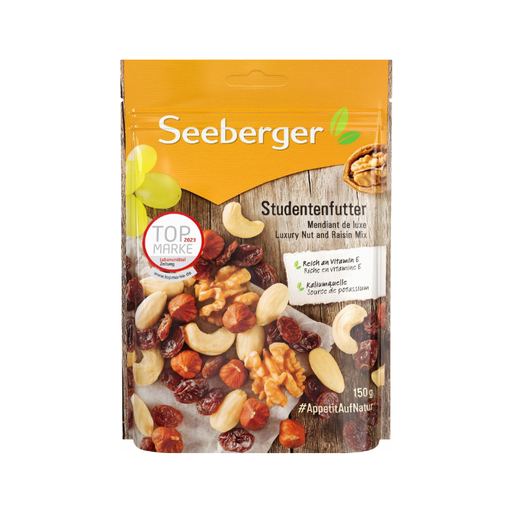
Seeberger Studentenfutter Trail Mix, 150 g

Seeberger Studentenfutter Trail Mix, 150 g

A nut-and-fruit mix for an after-school snack, provided there is no relevant nut allergy. If needed, check the gluten claim, ingredients and allergen information on the pack. The 150 g refers to the pack contents, not an individual portion.

View at Joybuy
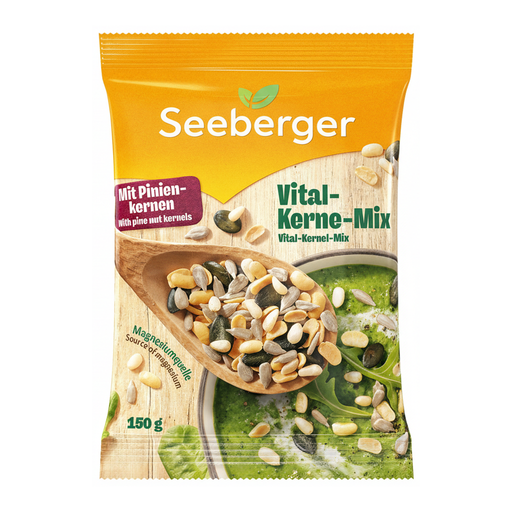
Seeberger Vital Salad Seed & Kernel Mix, 150 g

Seeberger Vital Salad Seed & Kernel Mix, 150 g

This seed-and-kernel mix may be suitable as a snack only if its ingredients and allergen information meet the needs of the person eating it. In particular, check the gluten claim and any information about soya, peanuts and tree nuts on the specific pack. The pack contains 150 g.

View at Joybuy

Frequently asked questions

Are nuts a nut-free snack?

No. If you have a peanut or tree nut allergy, the relevant nut snack is not a nut-free alternative. EU food information regulations list peanuts and certain tree nuts as allergens that must be declared. If you choose a different type of snack, check the information on that specific product too.

Are plain nuts enough if I need a gluten-free snack?

The product type alone doesn’t confirm that the finished product is labelled gluten-free. If you need this claim, check the specific pack. Under EU rules, ‘gluten-free’ means no more than 20 mg/kg of gluten in the finished product. For mixes and bars, you should also check the other ingredients.

What does ‘May contain traces of peanuts’ mean?

This warning indicates the possibility of unintended cross-contamination; it does not mean peanuts are an ingredient. If you have an allergy, take it into account in line with your individual medical advice. According to the Verbraucherzentrale (German consumer advice centre), precautionary allergen labelling is different from the mandatory declaration of allergenic ingredients.

Are whole nuts a suitable snack to take out for young children?

Whole, hard nuts are not a suitable standard snack for young children because of the risk of choking. Choose an age-appropriate format. A peanut or tree nut allergy remains a reason to avoid the relevant allergen, whatever the format.