Those keeping an eye on calories
You want something crunchy after your workout and to keep track of the snack’s energy content. Measuring out a portion in advance matters more than the size of the pack.


If you want to keep track of your calorie intake after a workout, choose nuts based on portion size and nutritional information, rather than claims that a particular type is low in calories. The German Nutrition Society describes nuts as energy-dense. You can compare their ingredients by choosing plain or unsalted varieties. If you mainly want your snack to provide protein, check how much a portion contains and consider pairing your nuts with another suitable source of protein.
You want something crunchy after your workout and to keep track of the snack’s energy content. Measuring out a portion in advance matters more than the size of the pack.
You want to know how much protein your portion of nuts actually provides, and whether you’d like to pair it with another food.
You compare additives and need reliable information about the ingredients, allergens and possible traces listed on the specific pack.
First decide how much you want to eat as a post-workout nut snack. Then compare the protein content of that portion and check the ingredients and allergen information.
| Criterion | What to check | Who should pay particular attention |
|---|---|---|
| Calories and portion size | Compare the kcal per 100 g and for the amount you plan to eat. Measure out your portion before eating. | If I want to plan just a small snack after my workout, I need to be able to decide on the amount in advance. Around 42 % of consumers would make portion and calorie control their top priority. |
| Protein per portion | Check the protein figure for your portion rather than relying on the per-100 g figure alone. REWE lists 8,1 g per 30 g for its roasted ja! almonds. | If I mainly want my snack to provide protein, I want to know what the amount I actually eat will give me. Around 33 % of consumers would put protein content first. |
| Ingredients and allergens | Read the ingredients list and the allergen and trace information on the specific pack; “roasted” alone doesn’t tell you whether other ingredients have been added. | If I have a known allergy or want to avoid certain additives, the labelling determines what I choose. Around 25 % of consumers would check ingredients and allergens as a priority. |
Even unprocessed nuts are energy-dense. If you eat straight from a large pack, it’s easy to exceed your planned portion.
Compare the kcal per 100 g and decide how much you want to eat before you start.
Roasting alone doesn’t tell you whether oil, salt or other ingredients have been added.
Read the ingredients list on the specific pack and compare it with the nutritional information.
The protein figure per 100 g doesn’t automatically tell you how much protein a small snack portion provides. A larger portion of nuts also means more energy.
Work out the protein in the portion you plan to eat, then decide whether you’d like to add another suitable source.
Labelling can vary between individual nut products. An unsalted variety isn’t automatically suitable if you have an allergy.
If you have a known allergy, follow your individual medical advice and check the product’s current labelling before eating it.
These brands and own-label ranges are worth considering when comparing specific nut products. You can’t assume that the ingredients and nutritional values of one product apply to the brand’s entire range.
Worth considering if you want to compare plain or roasted nut varieties by their specific ingredients.
Own-label products with specific almond varieties you can compare by portion size and nutritional information.
Own-label ranges to consider when comparing specific plain almond products.
An own-label range to consider when comparing specific plain almond varieties.
Lidl’s Alesto range includes both plain nuts and seasoned snack varieties.
This selection includes cashews, almonds, pine nuts and walnuts for a planned snack or as an ingredient in another meal. Pack size and a suitable snack portion aren’t the same thing, so compare the nutritional information for the amount you plan to eat.
 No image available
If you’re looking for roasted cashews with no added salt, compare the kcal and protein figures on the pack for the portion you have in mind.
Pack size: 150 g. The whole pack isn’t the same as a snack portion.
 No image available
If you want to eat whole natural almonds after your workout, decide on the amount independently of the pack size.
Pack size: 500 g. For your portion, compare the energy and protein figures, as well as the current allergen information.
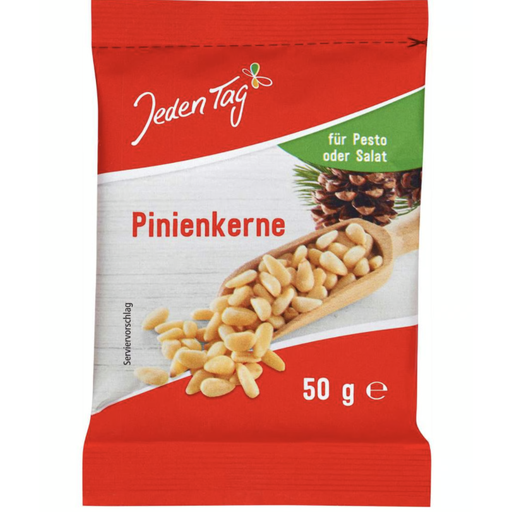 No image available
Pine nuts are an option if you only want a measured amount to add to a snack or another meal.
Pack size: 50 g. You still decide on the portion with this pack size, so check the nutritional information.
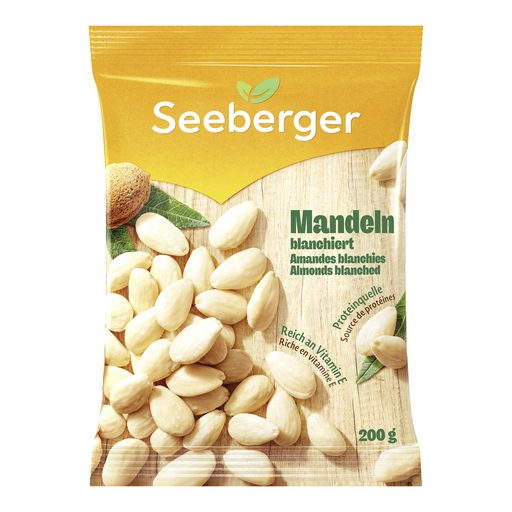 No image available
These blanched almonds are worth considering if you want to use a measured amount as an ingredient in your snack.
Pack size: 200 g. Compare the energy and protein figures for the amount you actually plan to use.
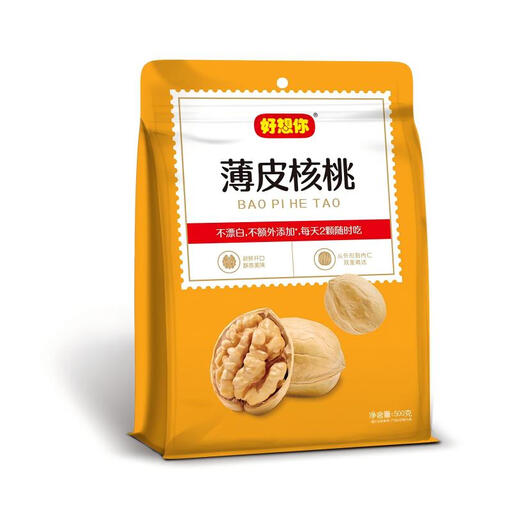 No image available
If you want to take walnuts with you and don’t mind cracking the shells, check the nutritional information for your planned amount before buying.
Total pack size: 500 g in 8 packs. The total weight doesn’t tell you what a snack portion should be.
Pay particular attention to portion size: nuts aren’t low in calories just because they’re plain. The German Nutrition Society describes them as energy-dense. For specific almond products, REWE, ALDI SÜD and EDEKA list between 596 and 619 kcal per 100 g.
Almonds can contribute protein, but what matters is the amount in the portion you actually eat. REWE lists 8,1 g of protein per 30 g for its roasted ja! almonds. If you’re aiming for a higher protein intake, compare this figure with the rest of your meal.
Not simply because they’re roasted. Seeberger says its roasted almonds are prepared without oil or added salt. For another variety, check its own ingredients list and nutritional information.
Store the nuts in an airtight container. The Federal Centre for Nutrition recommends a sealed container, ideally in the fridge.
There’s no general recommendation for eating nuts if you have a known allergy. Follow your individual medical advice and read the ingredients, allergen and trace information on the specific pack. Don’t rely on the labelling of a different product.