Snackers comparing calories
You want to fit an afternoon snack into your planned food intake. To do this, compare the kcal per 100 g for similar products and keep an eye on how much you actually take from the pack.


Nuts are not automatically low in calories. For the plain cashews compared here, EDEKA lists 603 kcal per 100 g, and 609 kcal per 100 g for almonds; ALDI SÜD lists its roasted almonds at 620 kcal per 100 g. If you’re planning a calorie-conscious afternoon snack, compare products on the same weight basis and decide on your portion before you eat. Whether plain or roasted nuts suit you better also depends on the ingredients and the salt content of the specific product.
You want to fit an afternoon snack into your planned food intake. To do this, compare the kcal per 100 g for similar products and keep an eye on how much you actually take from the pack.
You’re looking for a simple ingredients list and want to check whether oil or salt has been added to a particular variety of nuts. The product name alone isn’t a substitute for checking the pack.
The types of nuts in the product, possible traces of other allergens and the product’s form are all important to you. Seeberger specifically warns that whole nuts pose a choking risk to children under four.
When comparing similar nut products, start by checking the energy value per 100 g, then plan your snack portion. Ingredients, salt and allergen information can all influence your choice, regardless of the calorie count.
| Criteria | What to check | Who it matters to |
|---|---|---|
| Energy value | Compare kcal per 100 g across similar nut products and take your planned portion into account. | If I’m planning my snack around an energy budget, I want to compare products on the same weight basis. For around 46% of consumers, energy value is the main factor behind their purchase. |
| Ingredients and salt | Read the ingredients list and compare salt in g per 100 g; roasted varieties may contain oil or salt. | If you’re looking for a simple recipe, you’ll want to know what else is in the pack besides the nuts. Around 36% of consumers prioritise ingredients and salt. |
| Allergens and product form | Check the allergen and trace information on the pack. Bear in mind the choking risk posed by whole nuts for young children. | If allergies or young children are a consideration in your household, your choice needs to suit your circumstances. For around 18% of consumers, this is the main factor in their purchase decision. |
The product figures compared here from EDEKA and ALDI SÜD range from 603 to 620 kcal per 100 g. If you eat straight from a large pack, it’s easy to lose track of how much you’ve actually eaten.
Compare similar products per 100 g and measure out your portion into a bowl or container before eating.
EDEKA’s roasted, salted cashews contain sunflower oil and table salt as well as cashews. So you can’t tell what’s in a product from the type of nut alone.
For each variety, check the ingredients, kcal per 100 g and salt content on the current pack.
As well as the nut listed as an ingredient, a pack may mention possible traces of other tree nuts or allergens. This is particularly important when buying for someone with an existing allergy.
If you have allergies, use the labelling on the specific pack as your guide, even if you’ve bought the product before.
A large pack isn’t automatically a single snack portion. Seeberger also warns that whole nuts pose a choking risk to children under four.
Measure out your planned portion separately and keep whole nuts away from children under four.
The range considered here includes plain almonds and cashews, as well as roasted, salted cashews. This lets you compare nut types and recipes using the details on specific packs.
The roasted almonds considered here are an option if you’re specifically looking for roasted almonds rather than plain ones.
Seeberger offers plain, roasted and mixed nut varieties, among others. Which one suits your afternoon snack depends on the specific recipe and pack size.
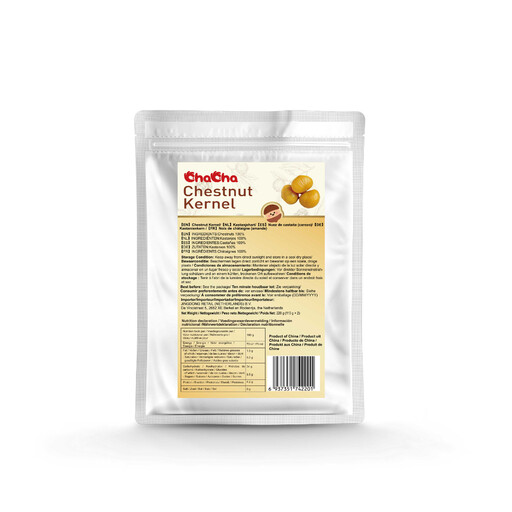
Here you’ll find cashews, almonds and pine nuts to compare. Chestnut kernels are a different type of snack, so be sure to bear this distinction in mind when comparing their pack information with that of nut kernels.
 No image available
For an afternoon snack made with chestnut kernels rather than nut kernels. The pack contains 220 g; use the information on the pack to decide how much you’d like to have.
 No image available
For anyone looking for pine nuts in a 50 g pack. If you want to eat them as a snack rather than use them as an ingredient in dishes, check that this type of product suits your preferences.
 No image available
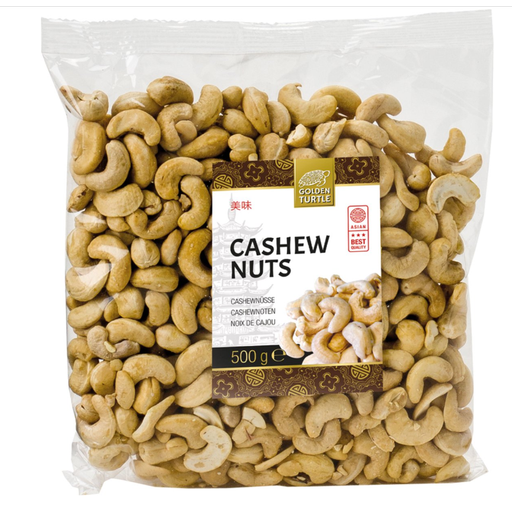
For a cashew snack where you can measure out your own portion. The pack contains 500 g; check the ingredients and nutritional values on the pack before comparing it with other cashews.
 No image available
For anyone specifically looking for roasted, unsalted cashews. The pack contains 150 g; “unsalted” doesn’t mean you can skip checking the nutritional information when comparing calories.
 No image available
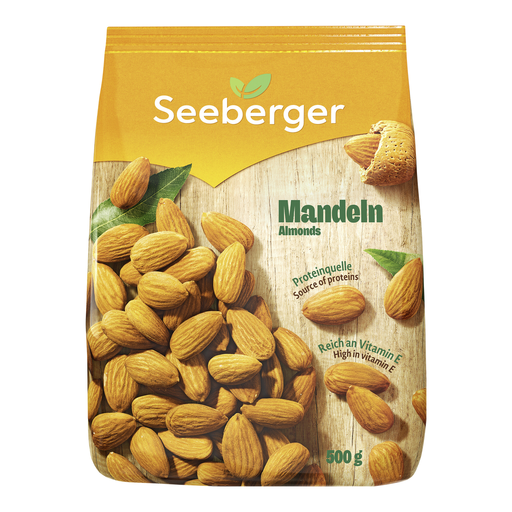
For anyone who prefers whole, plain almonds. The pack contains 500 g; measure out your preferred amount for an afternoon snack and check the allergen information if relevant.
Nuts shouldn’t automatically be considered low in calories. The figures from EDEKA and ALDI SÜD considered here range from 603 to 620 kcal per 100 g. The type you choose and how much you actually eat also count towards your snack’s calorie content.
Plain nuts are a good fit if you’re looking for a specific product with a simple recipe and no added oil or salt; that doesn’t mean this applies to every nut product. For the plain cashews considered here, EDEKA lists cashew kernels as the ingredient and 0 g salt per 100 g. Its roasted, salted variety also contains sunflower oil and table salt.
The Nutri-Score can offer an additional point of reference when it appears on the products. The Federal Centre for Nutrition describes it as a five-level representation of a product’s nutritional composition. When planning your snack portion, also check the kcal per 100 g and decide how much you’ll have.
Before buying, check the allergen labelling and any trace information on the specific pack. For the cashews considered here, EDEKA lists possible traces of peanuts, other tree nuts and soya, as well as cashews. This information shouldn’t be applied to other products.
Whole nuts aren’t a suitable snack for children under four because of the choking risk. Seeberger specifically highlights this risk for its nut mix; keep whole nuts out of reach of children in this age group.