
Lieferung heute & morgen

Qualitätsgarantie

Willkommens-Angebote freischalten: KOSTENLOSE Lieferung | Bis zu 80 % RABATT | Kostenlose 30-Tage-JoyPlus-Testphase
App herunterladen
If you want to buy nuts and nut mixes, you’ll find a wide selection online: natural walnuts, roasted nuts, salted nuts, pistachios, macadamia nuts and ready-made mixes with dried fruit. However, price alone says little about whether a product meets your needs. The key factors are the ingredients, portion size, processing, salt content and storage requirements.
Descriptions such as “premium”, “natural” or “high quality” are of limited value without specific product information. So always check the ingredients list and proportions. For a mix, it should be clear which types of nuts it contains and in what quantities.
One example is the Three Squirrels Daily Nuts Mix, which contains 30.4% walnuts and 22.4% cashews, along with dried cranberries, raisins, almonds, blueberries, hazelnuts, macadamia nuts and pistachios. The detailed breakdown makes it easier to assess whether the mix is mainly made up of nuts or dried fruit.
Roasted nuts can have a more intense flavour and firmer texture. For salted varieties, it is worth checking the salt content per 100 g. This can vary considerably from one product to another. Seeberger Macadamia Nuts, for example, contain 0.8 g of salt per 100 g, while a BE&CHEERY pistachio product lists 1.5 g of salt per 100 g.
Additional ingredients are also relevant. As well as nuts and salt, products may contain oil, sugar, smoke flavourings, sweeteners or flavour enhancers. This does not automatically make them unsuitable, but they should fit the way you intend to consume them.
Large packs are practical for families, offices or regular baking. For individuals, however, an opened 500 g pack may need to be stored for a long time. Nuts contain a lot of fat and should be protected from heat, moisture, light and strong odours. Small portion bags or resealable packaging can make everyday storage easier.
Nuts are allergens that must be declared. Look out for information about walnuts, cashews, almonds, hazelnuts, pistachios, macadamia nuts, peanuts and possible traces resulting from shared production facilities. For mixes containing dried fruit, you should also check whether sugar or vegetable oil has been added.
For the shortest possible ingredients lists, choose products with a clear composition, such as walnuts made from 100% walnut kernels or pine nuts made from 100% pine nuts. A longer ingredients list is common for seasoned snacks.
The nutrition table allows you to compare products directly. Pay particular attention to:
Descriptions such as “nuts as a snack” or “healthy snack” do not indicate a blanket health benefit. Portion size, your individual diet and the specific recipe remain the decisive factors.
For eating on the go, 25 g portions are convenient. Larger bags or tubs are suitable for baking, topping yoghurt or porridge, and sharing. Pine nuts are often used in small quantities for salads, pasta or quiches, while walnuts and hazelnuts can be used in a wide range of baking recipes.
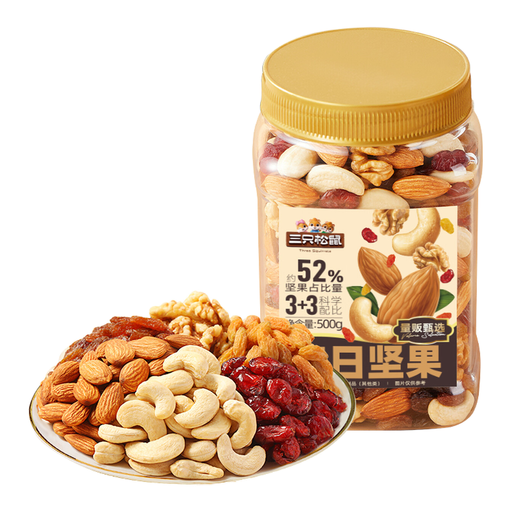
Why this product suits this profile: The 500 g tin combines walnuts, almonds, cashews and dried fruit. It is suitable for keeping at home, in the office or for sharing.
The proportions are stated, and the product lists 0 g of salt per 100 g. The proportion of dried fruit and its added sugar can be identified in the ingredients list.
500 g total quantity, a resealable tin and six listed main ingredients, including dried fruit.
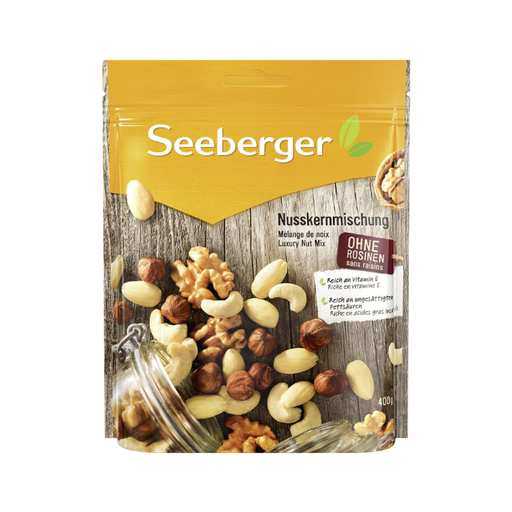
Why this product suits this profile: This nut mix contains no raisins and includes hazelnut kernels, blanched almonds, cashews and 10% walnut kernels.
The product data states 0.02 g of salt per 100 g and 4.6 g of sugar. This makes it possible to assess the salt and sugar levels specifically before buying.
400 g pack, 20 g of protein and a mix with no listed dried fruit or added sugar.
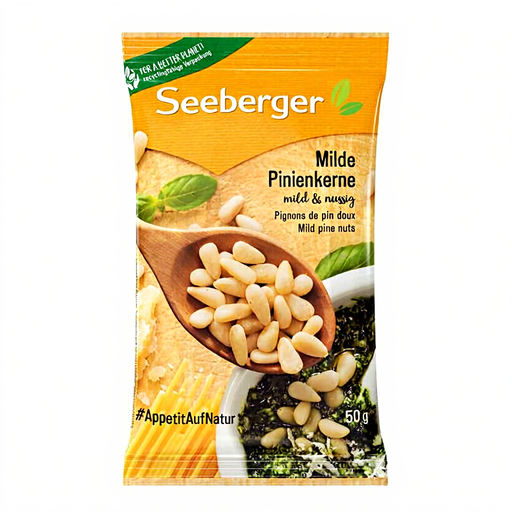
Why this product suits this profile: The small 50 g pack is designed for use as a topping for salads, pasta, quiches or desserts.
The pack size means you do not have to open a large supply for individual recipes. Ingredients and allergen traces are listed.
100% pine nuts, a 50 g portion and a stated salt content of 0.03 g per 100 g.
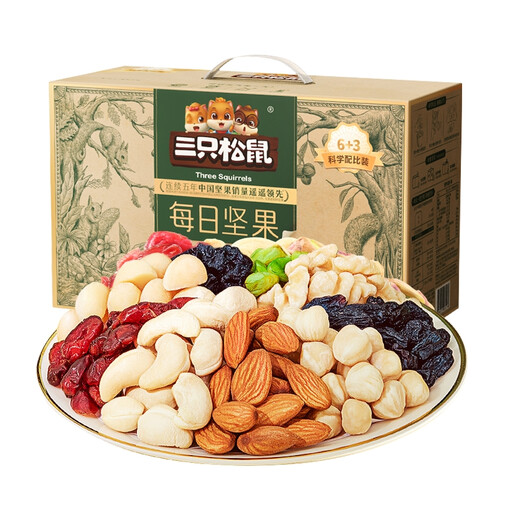
Why this product suits this profile: The pack contains 30 individual 25 g portions, making it suitable for working days, trips or controlled snacking on the go.
The individual bags reduce the risk of having to store a large opened pack for a long time. The salt content is stated as 0 g per 100 g.
750 g total quantity, 30 portions and nine listed ingredients, including walnuts, cashews, almonds and pistachios.
We have put together a complete, regularly updated list of products that fully meet these strict selection criteria and the safety regulations applicable in the EU.
As a general rule, store nuts and nut mixes in a cool, dry place away from light. After opening, reseal the packaging or transfer the contents to an airtight container. A changed smell, bitter taste or noticeably softer texture may indicate a loss of quality.
For products packed in a protective atmosphere or supplied in individual portions, follow the information on the packaging. The best-before date applies to the unopened pack and the storage conditions stated on it.
Whole nuts pose a choking hazard for children under four. Any relevant warnings on the packaging should be observed. People with nut allergies must check the full allergen declaration, including precautionary trace information.
For eating on the go, portioned products weighing 25 g or small resealable bags are practical. A nut mix can combine a range of flavours. If you want to avoid sugar and dried fruit, choose a pure nut mix or natural walnuts, hazelnuts or pistachios.
That depends on your preferred flavour and the ingredients list. Natural nuts often contain only the relevant type of nut. With roasted varieties, you should also check the salt, oil, sugar and seasoning. Roasting can provide a more intense flavour for recipes, while natural products are often easier to assess if you want the shortest possible ingredients list.
There is no single shelf-life that applies to every variety. Check the best-before date, storage instructions and condition of the product. After opening, store the nuts in a dry, airtight container and use them promptly. Particularly with large packs, consider your actual monthly consumption before buying.