If protein per 100 g is your priority for a school-holiday lunch, shelled pumpkin seeds could be a good addition: Seeberger lists around 36 g of protein per 100 g for pumpkin seeds, although botanically they are not nuts. For a nut snack, you could also choose unsalted peanuts, almonds or a mix. Check the protein content, ingredients and salt content on the specific pack. Do not plan to serve whole nuts to children under four. If you’re catering for a group of children, you’ll also need to check for individual allergies and read the product labelling.
Who should take care when choosing?
Active children and their families
If you want to add nuts or seeds to lunch after some exercise, consider the protein content as part of the whole meal. The German Nutrition Society (DGE) says that adults who do recreational sport do not need to increase their protein intake. This does not mean children need extra protein.
Families keeping an eye on salt
With peanuts, the seasoning can make all the difference: EDEKA lists 0.01 g of salt per 100 g for its roasted unsalted peanuts, compared with 1.7 g for the spicy GUT&GÜNSTIG version. Always check the details on the pack you buy.
Anyone planning food for a group of children
If several children will be eating, check for known allergies, ingredients and warnings about possible traces before serving. Age matters too: Seeberger warns that its Power Nut Mix poses a choking risk for children under four.
What to look for when buying
First decide whether protein content, salt levels, the needs of a group of children or the product format matters most for your school-holiday lunch. Then compare the information on the specific packs.
| Criterion |
What to check when buying |
Who it matters most to |
| Protein per 100 g |
Compare protein figures on the same per-100 g basis and take the intended portion size into account. |
After exercise, I want to add a protein-rich ingredient to lunch without treating a snack as a whole meal. Around 36% of consumers say protein content is their main priority when making this choice. |
| Salt and ingredients |
Compare the salt per 100 g and ingredient lists for unsalted, salted and seasoned varieties. |
For our holiday meals, I want to choose a type of nut where seasoning and salt aren’t the main focus. This is the most important reason for around 29% of consumers. |
| Allergens and product format |
Check the ingredients, highlighted allergens and possible traces. Do not plan to serve whole nuts or nut kernels to children under four. |
If several children are eating, I need to take each child’s known allergies and age into account before serving. Around 21% of consumers focus on this above all when choosing. |
| Everyday practicality |
Choose between individual types of nuts, mixes and pumpkin seeds, then compare the details on the packs available. |
For regular school-holiday lunches, I’m looking for a product format that’s easy to plan without having to come up with different snack ideas each time. For around 14% of consumers, everyday practicality is the deciding factor. |
Common selection mistakes
-
Looking only at ‘high protein’ on the front of the pack
Protein content varies between seeds, peanuts, almonds and mixes. A high figure per 100 g also doesn’t tell you what portion is right for a meal. According to the DGE, adults who do recreational sport do not need to increase their protein intake.
Compare the nutritional information per 100 g and think of nuts or seeds as part of the whole meal.
-
Assuming similar protein levels mean similar salt levels
The peanut varieties listed by EDEKA contain 26 g and 24.9 g of protein per 100 g respectively. But their salt levels are quite different: the unsalted and spicy varieties contain 0.01 g and 1.7 g per 100 g respectively.
For seasoned and coated products, check the salt and ingredients on the specific pack as well as the protein content.
-
Packing nuts for a group of children without checking first
Peanuts and tree nuts can be important allergens for some children. Whole nuts pose a choking risk for children under four; Seeberger specifically warns about this on its Power Nut Mix.
Check for known allergies and the childcare setting’s rules, read the labelling on the product you plan to use, and don’t plan to serve whole nuts to children under four.
Brands to consider
Seeberger
The range includes individual nuts and seeds as well as mixes. Compare the nutritional information for each product to help you choose.
- Seeberger lists around 36 g of protein per 100 g for pumpkin seeds, around 27 g for peanuts and around 24 g for almonds. The brand lists 22 g of protein per 100 g for its Power Nut Mix.
- The Power Nut Mix contains several types of tree nut. According to Seeberger, it may also contain traces of other nuts and peanuts.
Alesto
Lidl’s own-brand range includes both plain nuts and seasoned snack products.
- Alesto products at Lidl include plain cashews and almonds, as well as seasoned peanut snacks.
- To compare protein and salt, check the nutritional information for the specific variety.
ja! (REWE)
REWE’s own-brand range includes a seasoned snack option: roasted and salted peanuts.
- REWE lists 24.4 g of protein per 100 g for its roasted, salted ja! peanuts.
- For the same product, REWE lists 1 g of salt per 100 g and sunflower oil and table salt as ingredients. Possible traces of tree nuts are also declared.
EDEKA Herzstücke / GUT&GÜNSTIG
These two EDEKA product ranges include peanut varieties that show the difference between unsalted and spicy-seasoned options.
- EDEKA lists 26 g of protein and 0.01 g of salt per 100 g for its Herzstücke roasted unsalted peanuts.
- According to EDEKA, the spicy GUT&GÜNSTIG peanuts contain 24.9 g of protein and 1.7 g of salt per 100 g, as well as additional seasoning and sugar ingredients. When shopping, rely on the information on the pack.
FARMER NATURALS / FARMER (ALDI SÜD)
ALDI SÜD lists plain nuts and mixes, as well as seasoned snack options, under these ranges.
- The ALDI SÜD range includes plain almonds, cashews and walnuts, among other products.
- Check the protein, salt and ingredients for the pack you choose; special offers may only be available for a limited time.
Suitable products at Joybuy
This selection includes pumpkin seeds, whole almonds and a roasted nut mix as possible additions to a school-holiday lunch. The right choice depends in particular on the product format you want, the information on the pack and the ages of the children eating with you.
 No image available
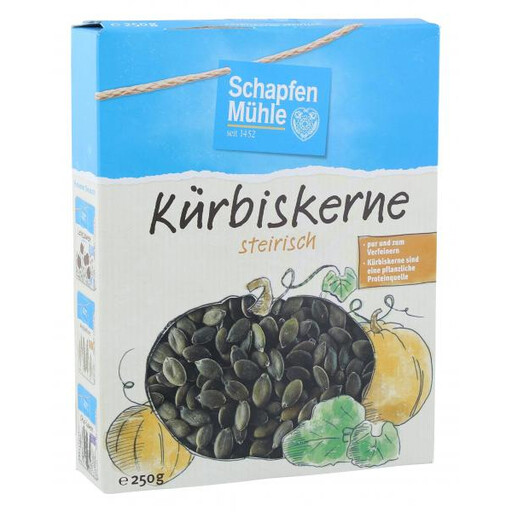
SchapfenMühle Styrian pumpkin seeds, 250 g
An option if you’d like to add pumpkin seeds to your school-holiday lunch. The pack contains 250 g; check the ingredients and allergen information before serving.
View at Joybuy
 No image available
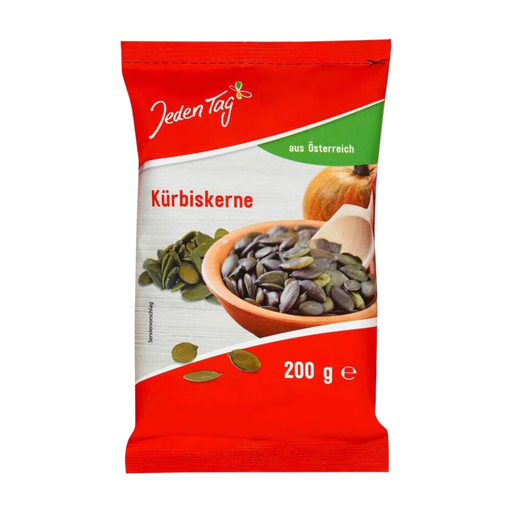
Jeden Tag shelled pumpkin seeds, 200 g
Shelled pumpkin seeds for anyone looking to add seeds rather than whole nuts. The pack contains 200 g; before eating, check the pack information against the needs of everyone who’ll be having them.
View at Joybuy
 No image available
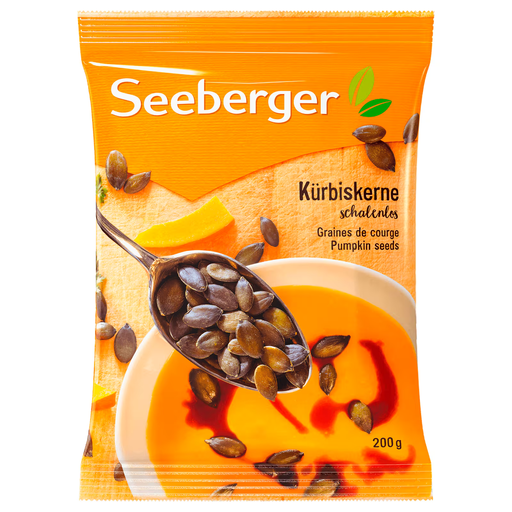
Seeberger shelled Styrian pumpkin seeds, 200 g
Another shelled seed option to add to a meal. The pack contains 200 g; compare the protein content and allergen information on this specific pack with other options.
View at Joybuy
 No image available
Seeberger Extra Natural whole almonds, 500 g
An option if you’d prefer almonds to pumpkin seeds. The pack contains 500 g. Almonds are an allergen, and whole nuts should not be planned as a snack for children under four.
View at Joybuy
 No image available
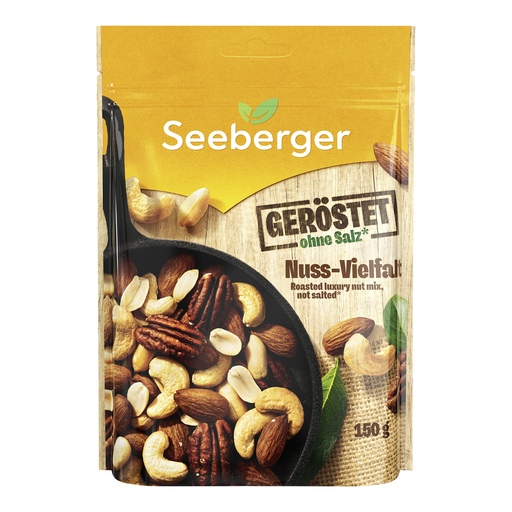
Seeberger roasted nut selection, 150 g
A roasted mix for anyone who’d like a selection of nuts rather than just one type. The pack contains 150 g; check the ingredients and allergen information before sharing with a group. Whole nuts are not a suitable snack for children under four.
View at Joybuy
Frequently asked questions
Do active children automatically need especially protein-rich nuts after exercise?
No. Exercise alone doesn’t mean children need a particularly protein-rich nut snack. The DGE says that adults who do recreational sport and exercise for 30 minutes at a moderate intensity four to five times a week do not need to increase their protein intake; children have age-specific reference values. Nuts or seeds can complement a meal, but you should consider the whole meal rather than just one ingredient.
What’s the difference between salted and unsalted peanuts for a school-holiday lunch?
If salt content matters to you, it’s worth comparing the specific varieties. EDEKA lists 0.01 g of salt per 100 g for its roasted unsalted peanuts and 1.7 g for its spicy-seasoned version. The protein figures are 26 g and 24.9 g per 100 g respectively. Check the ingredients on the pack too.
Are whole nuts suitable for children under four?
Whole nuts should not be planned as a snack for children under four. Seeberger specifically warns that children in this age group can easily choke on nuts in its Power Nut Mix.
What should I check about allergens when serving nuts at school or holiday childcare?
Before serving, check the ingredients and allergen information for the product you’ll actually be using against the children’s known allergies. The consumer advice centre explains that school kitchens and caterers must identify the 14 main allergens in their food. You should also check the rules at the relevant childcare setting.


