Parents who pay close attention to texture
You want to choose a nut ingredient for weaning and rule out whole nuts or pieces. The Gesund ins Leben network warns that these forms can pose a choking risk.


Whole nuts, pieces of nuts and dry nut flour are not suitable snacks for babies. The Gesund ins Leben network lists nut butter and finely ground nuts as possible options; ground nuts should be mixed into moist food. First check the consistency, ingredients and allergen information – ‘low calorie’ is no substitute for these checks.
You want to choose a nut ingredient for weaning and rule out whole nuts or pieces. The Gesund ins Leben network warns that these forms can pose a choking risk.
You’re looking for a nut butter with a short ingredient list, so you compare the recipe rather than relying on terms such as ‘nut butter’ or ‘nut spread’ alone.
You keep an eye on calories when choosing snacks for yourself and want to know why other criteria matter more when choosing a nut ingredient for your baby.
When choosing nut ingredients for a baby who is ready for solid foods, check the form first, followed by the ingredients and allergen information. You can also compare nutritional values using the same reference amount.
| Criteria | What to check | Who it matters to |
|---|---|---|
| Consistency | Don’t offer whole nuts, pieces or roughly chopped nuts directly. Choose a smooth nut butter; only mix ground nuts into moist food. | When my baby eats with the family, I don’t want to offer pieces of nut that could cause choking. Around 33 % of parents and carers would put a safe consistency first. |
| Ingredients | Read the ingredients list and, for this purpose, choose a nut butter made only from the nut in question. | When choosing a spread, I want to know whether sugar, salt or fat has been added as well as nuts. For around 27 % of consumers, simple ingredients would be the main priority. |
| Allergens | Check the allergens highlighted in the ingredients list, and don’t confuse ingredients in the recipe with a ‘may contain’ warning. | If I need to identify a particular type of nut, I need clear information on the specific product. Around 20 % of parents and carers would check allergen information first. |
| Calories | Compare energy values only using the same reference amount, such as per 100 g; they’re no substitute for checking the form and ingredients. | I want to put a calorie figure into context without assuming it means the product is suitable for my baby. For around 20 % of consumers, this would be their first concern. |
Unsalted nuts can still be whole. The Gesund ins Leben network warns that whole nuts and pieces of nut can pose a choking risk.
Rule out whole, chunky and roughly chopped varieties as snacks to give directly to your baby. If choosing a nut butter, check that it really is smooth.
A product category doesn’t tell you which ingredients a particular spread contains. The REWE range includes nut butters as well as nut spreads made with different recipes.
Read the ingredients list and, if you’re looking for pure nut butter, choose a product that lists only the nut in question as an ingredient.
Kindergesundheit-info.de warns against giving young children dry, unprocessed nut flour directly, as they could breathe it in.
Mix finely ground nuts thoroughly into moist food rather than offering them as a dry snack.
REWE sells own-brand nut butters, as well as nut spreads made with different recipes.
EDEKA’s GUT&GÜNSTIG range includes an unsalted, unroasted nut kernel mix.
Seeberger sells nut butters, as well as nuts, kernels and mixes in different forms.
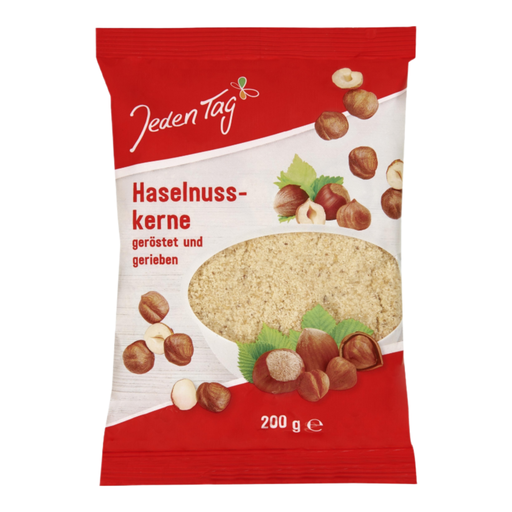
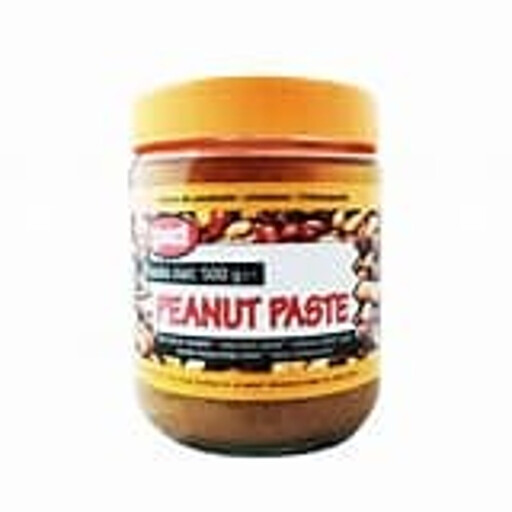
These products show two ways to prepare food with nuts: ground hazelnuts to stir into moist food, and peanut butter as a smooth spread. Check the current consistency, ingredients list and allergen information for each product.
 No image available
Finely ground hazelnuts are an option for mixing into moist food. The pack contains 200 g; don’t offer ground nuts dry as a snack, and check the allergen information.
 No image available
If you’re looking for a nut butter to use in food preparation instead of whole peanuts, check that this peanut butter is smooth and read the full ingredients list. The pack contains 500 g; check that peanuts are identified as an allergen.
Whole nuts are not suitable as a snack to give directly to a baby. The Gesund ins Leben network also warns against pieces of nut and roughly chopped nuts; it suggests nut butter and finely ground nuts as alternatives.
The ingredients list on the specific product is what matters. If you’re looking for pure nut butter, check that only the nut in question is listed; a name such as ‘nut spread’ doesn’t guarantee this.
‘Low calorie’ isn’t a useful main criterion when choosing a nut ingredient for baby-led weaning. First check the consistency, ingredients and allergens. If you compare nutritional values, use the same reference amount for each product, such as per 100 g.
For packaged foods, allergenic ingredients that must be declared are highlighted in the ingredients list. According to the Federal Office of Consumer Protection and Food Safety, these include the specified allergenic substances and products; check the information for the specific product, particularly for peanuts and tree nuts. For loose goods, ask for allergen information before buying.