Parents who want to limit fat intake
If fat content is your main concern, compare the nutritional information per 100 g. The terms ‘plain’ and ‘unsalted’ don’t tell you how much fat the nuts contain.


If you want to keep the fat content of a quick snack in check, don’t assume that plain or unsalted nuts are low in fat. The figure that matters is the fat content per 100 g on the specific pack. Small portions of nuts can be an easy snack for adults, but in a household with a baby or toddler, whole nuts need to be stored safely.
If fat content is your main concern, compare the nutritional information per 100 g. The terms ‘plain’ and ‘unsalted’ don’t tell you how much fat the nuts contain.
If you’re buying nuts for a snack and want to avoid salt, sugar or coatings, compare the ingredients lists for plain nuts and mixes. The German Nutrition Society recommends a small handful of nuts as a guide to daily consumption.
Even if the nuts are only for adults, how you store them is an important part of choosing a product. The Federal Institute for Risk Assessment warns that peanuts can easily enter a child’s airways, so whole nuts should be kept out of reach of young children.
First decide whether fat content is your priority, or whether you’re mainly looking for a snack with no added ingredients. Then consider portion sizes and how to store the pack safely at home.
| What to consider | What to check | Who it matters to |
|---|---|---|
| Fat content | Fat per 100 g in the nutritional information; don’t assume that claims on the front of the pack reflect the fat content. | If I want to limit fat intake, I need a comparable figure rather than a product name that sounds ‘lighter’. This is a priority for around 42% of consumers when buying. |
| Ingredients and type of snack | Ingredients list, and sugar and salt per 100 g; check whether the product is plain nuts or a seasoned, sweetened or coated mix. | Between looking after the baby, I want to be able to grab a snack quickly without confusing a sweet or salted mix with plain nuts. This is a priority for around 33% of consumers. |
| Child safety | Whether whole nuts can be stored in a sealed pack, out of reach of young children. | The snack is for me, but my young child could get hold of an open pack. Safe storage is therefore the top priority for around 25% of consumers. |
‘Unsalted’ doesn’t describe the natural fat content of nuts. If you’re choosing based on fat content, you can’t rely on this label alone.
Compare fat per 100 g in the nutritional information. If added salt is what you’re looking to avoid, check the ingredients list and salt content separately.
The Federal Institute for Risk Assessment highlights the risk of peanuts entering the airways of young children. Whether nuts are salted or plain, they could still be within a child’s reach.
Keep whole nuts sealed and out of reach of babies and toddlers. Don’t leave them where young children can help themselves.
Seeberger and ALDI ranges include plain nuts as well as mixes and seasoned varieties. Ingredients and nutritional information therefore vary by product.
For the specific pack, first compare the ingredients list and the fat, sugar and salt per 100 g. Then decide which mix best suits the snack you’re looking for.
These ranges offer different nuts and mixes. For fat content, ingredients and allergens, always check the label on the specific product.
According to its own range information, Seeberger offers plain, roasted, salted and sweet nut varieties, among other products.
REWE’s nut category includes own-brand and other branded products, as well as nut mixes.
GUT&GÜNSTIG is an EDEKA own brand; nuts and trail mix are among the product types available in store.
Lidl lists Alesto as its own brand for snacks. At Lidl, Solevita is a brand for fruit juices and drinks.
ALDI Nord sells nuts and dried fruit under TRADER JOE'S, including individual products and mixes.
ALDI SÜD’s range of nuts and dried fruit includes plain kernels, mixes and seasoned snacks.
If you’re considering chestnut kernels for a quick adult snack instead of a traditional nut mix, you’ll find a suitable pack here. If you’re choosing with fat content in mind, check the current fat per 100 g on the product.
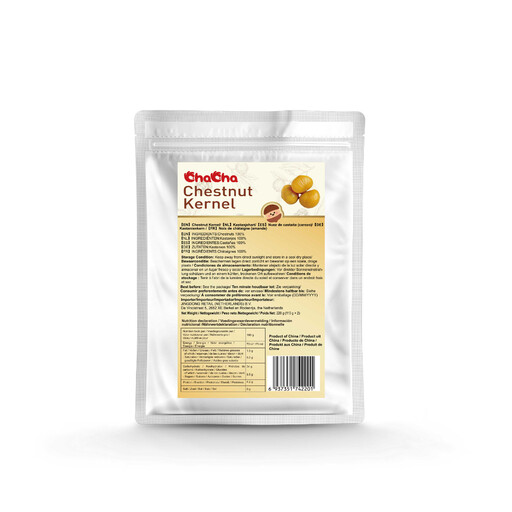 Image unavailable
Chestnut kernels could be a snack for adults if you’re looking for an alternative to a nut mix. The pack contains 220 g.
Check the latest nutritional and allergen information on the pack before buying. In households with young children, keep whole kernels out of reach.
Don’t assume that traditional nuts are low in fat just because they’re labelled as plain. If you’re choosing based on fat content, compare the nutritional information per 100 g. For an adult snack, the German Nutrition Society recommends a small handful of nuts as a guide to portion size.
No. ‘Unsalted’ doesn’t tell you anything about the fat content. Check fat per 100 g and the salt content separately if both matter to your choice.
Whole nuts shouldn’t be left out as a snack that babies or toddlers can help themselves to. The Federal Institute for Risk Assessment warns that peanuts in particular can easily enter the airways. Keep your adult snack sealed and out of reach.