Hosts comparing calories and portions
If you’re choosing nuts for a party buffet, you can compare the energy values per 100 g and plan how much to put out. Serving a smaller portion is not the same as claiming that nuts are low in calories.


Nuts are not low-calorie snacks. For a relative comparison, REWE’s overview of different varieties puts peanuts and cashews below walnuts and macadamias. For a birthday party, you’ll also need to consider how much you put out, the ingredients in the specific pack, and your guests’ allergies and ages. Serving a few varieties separately makes them easier to identify than putting out a mixed bowl.
If you’re choosing nuts for a party buffet, you can compare the energy values per 100 g and plan how much to put out. Serving a smaller portion is not the same as claiming that nuts are low in calories.
If toddlers are coming or you know that guests have allergies, check the ingredients and allergen information on every pack, and serve each variety separately. According to Germany’s Federal Institute of Public Health, toddlers can easily choke on whole nuts.
If you’d like to offer adults a nut snack without a sweet coating or strong seasoning, check the ingredients in the specific roasted variety as well as considering plain nuts. Information about additives does not automatically apply to every product from a brand.
First, check whether you need to take allergies or toddlers into account at the party. Then compare the nutritional information and ingredients of the packs you’re considering, and plan how much to leave out for guests to help themselves to.
| What matters | What to check | Who it matters to |
|---|---|---|
| Calories and portions | Compare the energy per 100 g on similar packs and plan how much to put out. | If you want to snack mindfully, you’ll want to compare the varieties without losing sight of how much is in a large bowl. Around 33% of consumers put calories and portions first. |
| Allergies and age | Read the ingredients and allergen information on every pack; keep whole nuts out of toddlers’ reach. | If you have guests with known allergies or young children, the snack needs to be suitable for the group. For around 27% of consumers, this is the main concern. |
| Choice and serving | Check the ingredients to distinguish individual varieties from mixes, and serve each variety separately with a clear label. | If you want to offer adults a few flavours without any fuss, you’ll still want to be able to identify what’s in each bowl. Around 20% of consumers place the greatest importance on how food is served. |
| Salt, sugar and additives | Compare the ingredients list and the sugar and salt values per 100 g for the specific variety. | If you prefer a simple recipe, you’ll want to know whether a variety is plain, seasoned or coated in something sweet. Around 20% of consumers make the ingredients profile their top priority. |
Even the lower values in REWE’s overview of nut varieties are high: it lists 564 kcal per 100 g for peanuts and 572 kcal per 100 g for cashews. Comparing varieties doesn’t tell you how much will be eaten from the buffet.
Use the energy value per 100 g to compare varieties, and put out a planned amount rather than continually refilling a large bowl.
Additional ingredients can change the nutritional values and ingredients profile. A claim that no salt has been added applies only to the specific variety it describes.
Before buying, read the ingredients list and compare the sugar and salt values on the specific packs.
According to Germany’s Federal Institute for Risk Assessment, peanuts can trigger allergic reactions. With a mixed bowl, it’s also harder to tell which products and allergen information relate to each variety.
Keep the packs in case anyone has questions, and label separate bowls clearly. If you know a guest has an allergy, check your selection with them in advance.
Germany’s Federal Institute of Public Health points out that toddlers can easily choke on nuts and other small, hard foods.
Keep whole nuts out of their reach and plan a suitable alternative snack for toddlers.
REWE publishes an overview of the energy values of different types of nuts.
In its nutrition guide, EDEKA ranks cashews, almonds and peanuts towards the lower end of the calorie and fat scale when comparing varieties.
ALDI SÜD lists nutritional information for the specific product BACK FAMILY Mandeln 200 g, natur.
Seeberger describes individual roasted cashew varieties and nut mixes with different ingredients and nutritional values.
This Joybuy selection includes peanuts, roasted cashews and plain almonds. For your party, compare the information on each pack and serve your chosen varieties in a way that suits your guests.
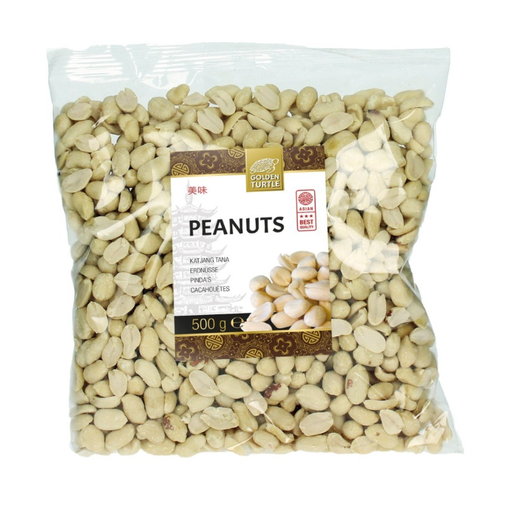 Image unavailable
A separately served peanut option for a party where the guest list is suitable. The pack contains 500 g; before serving, check the ingredients, allergen and consumption information, and keep whole peanuts away from toddlers.
 Image unavailable
For guests who prefer roasted cashews. The pack contains 150 g; check the ‘unsalted’ description against the salt value and ingredients on the specific pack. Keep whole cashews out of toddlers’ reach.
 Image unavailable
For hosts who want to offer a single almond variety rather than a nut mix. The pack contains 500 g; check the ingredients and allergen information, and put out only the amount you’ve planned. Keep whole almonds out of toddlers’ reach.
No, nuts aren’t low in calories in absolute terms. For a relative comparison between varieties, REWE lists 564 kcal per 100 g for peanuts and 572 kcal for cashews, compared with 662 kcal for walnuts and 703 kcal for macadamias. The amount you serve also matters at a party.
When you serve a single variety separately, it’s easier to match it to its pack and the ingredients and allergen information on it. Still, check the details for the specific product: plain almonds, roasted cashews and nut mixes can have different nutritional values and ingredients.
Whole nuts should not be left where toddlers can reach them. Germany’s Federal Institute of Public Health warns that young children can easily choke on small, hard foods such as nuts; plan a suitable alternative snack for these guests.
Check with the guests concerned in advance to find out which foods are suitable for them, rather than relying on a general label on a bowl. Check the ingredients and allergen information for every product you use; a ‘may contain traces’ warning is not a guarantee that another product is allergen-free.
REWE recommends storing nuts in a cool, dark, dry and well-ventilated place. According to REWE, shelled, chopped or ground nuts keep for less time than nuts in their shells. If they smell or taste off, don’t serve them.