Which option suits your household?

Families focused on texture

If you’re buying nuts for baby-led weaning, you’ll need an option with no whole pieces. Smooth nut butter or finely ground nuts, stirred into moist food, are suitable options. The Federal Institute of Public Health advises against giving young children whole nuts.

Households that regularly use nuts

If you also use nuts in other meals or for baking, a larger pack may suit your needs. Make sure you can fully process the nuts before serving them to your child, and store any supplies correctly. The Consumer Advice Centre recommends keeping nuts in a cool, dark place.

Households starting with small amounts

If you’re only planning to use small amounts at first, a smaller pack is more likely to get used up. A jar of nut butter is another option, provided its texture and ingredients are suitable for how you intend to use it.

What to look for when buying

First, decide how you want to add nuts to the meal. Then compare pack size, storage requirements and ingredient information with what you actually need.

Criterion What to check when buying Who should pay particular attention
Texture Choose smooth nut butter with no pieces, or finely grind the nuts and stir them into moist food before serving. If I want to add nuts to a BLW meal, I don’t want to serve whole nuts or dry nut flour. Around 42% of consumers put suitable texture first.
Pack size Choose a pack size that suits your usage and storage options; keep nuts in a cool, dark place. If I use nuts regularly for the whole family, I want to finish a large pack before its quality deteriorates. For around 25% of consumers, having the right amount in stock is the main priority.
Ingredients and allergens Check the current ingredient list and allergen information on the specific pack. If I’m buying a nut mix or nut butter, I want to know what it contains. Around 17% of consumers prioritise this information.
Preparation time Choose smooth nut butter if you want to stir it in without grinding the nuts yourself; check for any oil separation before portioning. If I have little time to grind nuts as part of my daily routine, I want an option I can stir straight into moist food. Around 16% of consumers prioritise convenience.

Common buying mistakes

  • Assuming a large pack is ready to serve as a snack

    Whole almonds are still whole almonds, even if you’ve bought them for the family store cupboard. The Federal Institute of Public Health warns against giving young children whole nuts.

    Only buy whole nuts for this purpose if you can reliably blend them into a smooth butter or finely grind them and stir them into moist food.

  • Overlooking storage when choosing a pack size

    A large supply isn’t right for every household. According to the Consumer Advice Centre, chopped nuts are more sensitive to light, heat and oxygen than whole nuts. Nuts that smell musty or taste rancid or bitter should no longer be used.

    Choose an amount you can use up. Store nuts in a cool, dark place, and keep opened chopped nuts in a sealed container in the fridge.

  • Confusing ‘natural’ with ready to serve

    A short ingredient list doesn’t change the fact that whole nuts are still whole. Nut butter with pieces and seasoned snack varieties are also not the same as smooth nut butter for stirring into food.

    As well as checking the ingredients, look at the actual texture and check the pack for any added ingredients.

  • Checking allergen information just once

    Ingredient and ‘may contain’ information applies to the specific product. Don’t assume the details on a pack you bought previously also apply to another variety.

    Check the current packaging before you buy. If you have a known or suspected allergy, a short ingredient list is no substitute for individual medical advice.

Brands to consider

Seeberger

REWE stocks a 500-g pack of Seeberger almonds.

  • The pack size may suit a household that would find 1 kg too much to store.
  • The whole almonds aren’t suitable for serving directly to young children; follow the warning on the pack.

Alesto

Lidl describes its Alesto almonds as natural and also stocks other nut and snack varieties under the brand.

  • Natural almonds can be used as a starting point if you plan to prepare them yourself.
  • Check each variety individually for ingredients, salt and texture; whole nuts aren’t ready to serve to young children.

Gut & Günstig

EDEKA24 stocks a 200-g pack of whole, natural almonds from this own-label brand.

  • The smaller pack can be a good match if you’re starting with low usage.
  • The nuts need to be processed before you serve them to your child. Check the ‘may contain’ information on the specific pack too.

KoRo

REWE lists KoRo almonds in a 1-kg pack and white organic almond butter in a 500-g jar.

  • The two product formats let you choose between nuts to prepare yourself and butter to stir into food.
  • As always, check the actual texture and current ingredient list, and make sure whole nuts are fully processed before serving.

Related products from Joybuy

This peanut butter is an option if you want to use nut butter rather than whole nuts in a moist BLW meal. Before using it, check that the specific pack contains smooth nut butter with no pieces, and read the ingredient and allergen information.
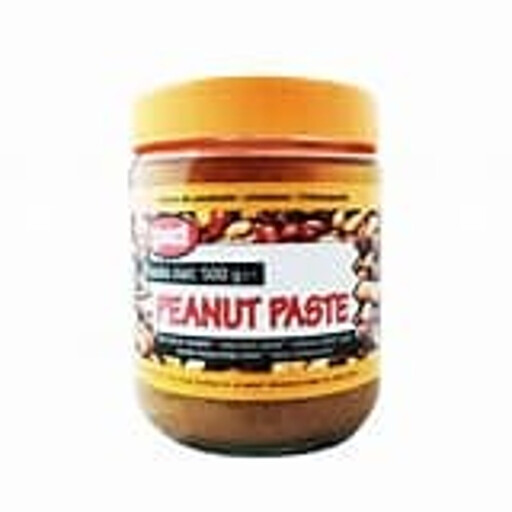
PCD Peanut Butter, 500-g pack

PCD Peanut Butter, 500 g

A peanut butter option for moist foods, provided it has a smooth texture with no pieces. The pack contains 500 g; check the current ingredient and allergen information before buying.

View on Joybuy

Frequently asked questions

Can I offer whole nuts during baby-led weaning?

No. Whole nuts shouldn’t be given to young children because of the risk of choking, as explained by the Federal Institute of Public Health. Instead, smooth nut butter or finely ground nuts can be stirred into moist food; dry nut flour shouldn’t be offered without first being mixed into food.

When can babies generally start eating solid food?

The Healthy Start Network gives the recommended window for introducing solid food as between the start of the fifth month and the start of the seventh month. Individual signs of readiness also matter, such as being able to control their head, sit upright with support and bring food to their mouth by themselves. Being ready for solid food doesn’t make whole nuts a suitable option.

When is a large pack of nuts too much for my household?

A large pack isn’t a good choice if you can’t store the nuts correctly or are unlikely to use them in time. The Consumer Advice Centre points out that whole nuts keep for longer than chopped nuts; opened chopped nuts should be kept in a sealed container in the fridge.

Which ingredient and allergen details should I check?

Check the ingredient list and the specific allergen and ‘may contain’ information on every pack. For nut butter, also check for pieces and any other ingredients. The information for almond butter won’t necessarily apply to peanut butter or another variety.