What matters when buying nuts?
First, work out how much you plan to have as a snack. Then compare the nutritional information per 100 g on the packs you’re considering, and check the ingredients and allergen information.
| Criterion |
What to check when buying |
Who it matters to |
| Energy per snack portion |
Compare kcal per 100 g and take account of the amount you actually plan to eat. |
When I take nuts with me for a snack, I don’t want to eat a large pack without realising it. For around 40% of consumers, keeping an eye on snack portions is a priority. |
| Simple ingredients |
Check the ingredients list to see whether it contains only the type of nut you want or includes other ingredients too. |
I’m specifically looking for nuts with a short ingredients list, so I’m more likely to skip a flavoured mix. Around 30% of consumers care most about the ingredients when choosing. |
| Salt and sugar |
Check the salt and sugar per 100 g, as well as the ingredients list for added sugar or syrup. |
I don’t want to mistake a seasoned or sweet variety for unsalted nuts. For around 20% of consumers, added salt and sugar are the main consideration. |
| Allergens and traces |
Read the information about allergens and possible traces on the specific pack. |
If we need to be mindful of allergens at home, the type of nut shown on the front isn’t enough for me. For around 10% of consumers, allergen and cross-contamination information is the main buying criterion. |
Nutritional information per 100 g gives you a consistent way to compare packs of different sizes. A suggested portion can help you plan how much to snack on, but it doesn’t replace this comparison. ‘Unsalted’ and ‘plain’ also describe different qualities from the energy content.
Brands and own-label options to consider
These examples show why the specific type of nut matters more than the brand name alone when you’re buying.
REWE / ja! / REWE Beste Wahl
REWE stocks almonds in different varieties; the information for each individual product is what matters when comparing them.
- According to REWE, the REWE Beste Wahl and ja! almonds checked each contain almonds. They are listed at 596 and 619 kcal per 100 g respectively.
- The values for one variety won’t necessarily apply to roasted, salted or sweet almonds. Check the pack you’ve chosen and what’s available in your area.
EDEKA / GUT&GÜNSTIG
The products considered highlight the difference between plain walnut kernels and seasoned peanuts.
- EDEKA lists walnut kernels as the only ingredient in the GUT&GÜNSTIG walnut kernels checked.
- These walnut kernels are listed at 716 kcal per 100 g. The spicy seasoned peanuts checked contain additional ingredients and 1.7 g of salt per 100 g; always check the specific pack.
ALDI SÜD / FARMER NATURALS
It’s worth comparing the individual varieties of almonds and nut mixes in the product range considered.
- For the FARMER NATURALS almonds checked, ALDI SÜD lists 620 kcal and 0.03 g of salt per 100 g.
- For some products, ALDI SÜD notes that nutritional values may vary between suppliers. So, check the information on the pack you choose.
Seeberger
The roasted almonds and Power Nuss-Mix considered differ in product type and ingredients.
- Seeberger describes its roasted almonds as 100% almonds, roasted without oil and with no added salt.
- Seeberger lists 638 kcal per 100 g for its Power Nuss-Mix. A simple recipe or no added salt doesn’t, on its own, mean a product is low in calories.
Nut products at Joybuy
These products offer different types of nuts, preparations and pack sizes to choose from when you’re buying. For a snack with calories in mind, compare the nutritional information on the specific pack and plan your portion independently of the pack’s overall size.
 Image unavailable
Jeden Tag Organic pine nuts, 50 g
This 50 g pack could be a good choice if you want to buy a smaller amount of pine nuts. To see how it fits with your snack goals, check the energy and salt information on the pack; if you have allergies, also look for any precautionary ‘may contain’ statements.
View at Joybuy
 Image unavailable
Seeberger unsalted roasted cashew kernels, 150 g
This variety is a good option if you’re looking for roasted cashews with no added salt. The pack contains 150 g; decide how much you’d like to have as a snack, and if you have allergies, check the labelling on the specific pack.
View at Joybuy
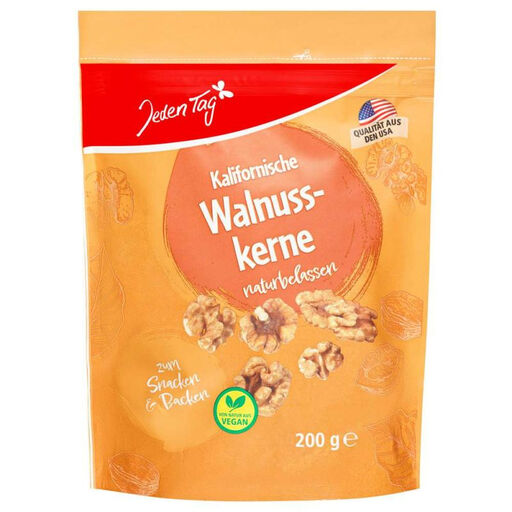 Image unavailable
Jeden Tag California walnut kernels, 200 g
This 200 g pack is an option if you’re looking for walnut kernels rather than a seasoned nut mix. The pack size isn’t a snack portion, so use the label when deciding how much to eat and comparing it with other nuts.
View at Joybuy
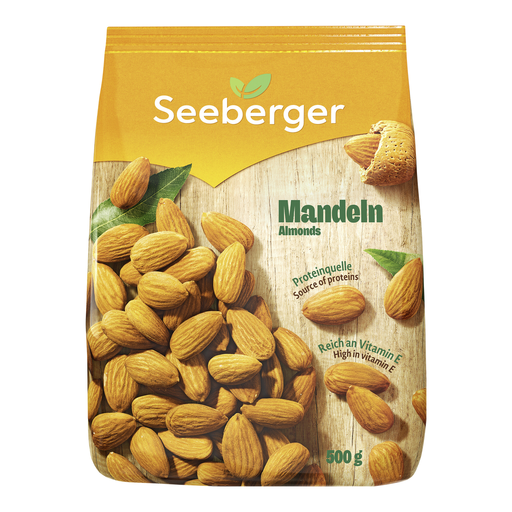 Image unavailable
Seeberger whole plain almonds Extra, 500 g
These whole almonds are a good option if you’re looking for a plain variety in a larger pack. With 500 g in the pack, it’s a good idea to measure out the amount you want before snacking; ‘plain’ doesn’t mean ‘low-calorie’.
View at Joybuy
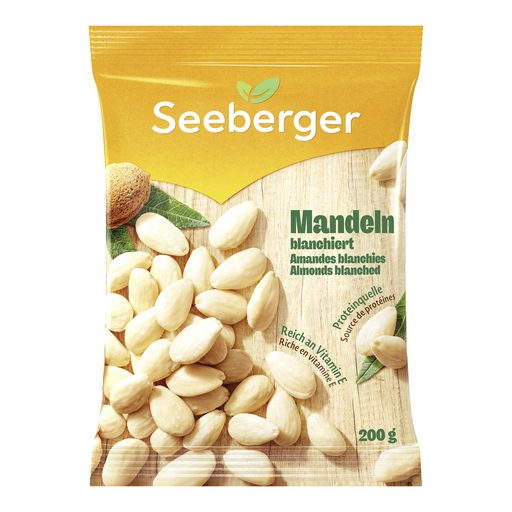 Image unavailable
Seeberger whole blanched almonds, 200 g
This 200 g pack is worth considering if you specifically want whole blanched almonds. ‘Blanched’ describes how they’re prepared, not their energy content; check the nutritional information and take account of the portion you plan to have.
View at Joybuy
Frequently asked questions
Are nuts a low-calorie snack?
No. Nuts aren’t low in calories just because they have simple ingredients. The German Nutrition Society describes them as relatively high in calories because they contain little water and a lot of fat. If you want to keep an eye on how much you snack on, compare the kcal per 100 g and measure out your planned portion.
Which nutritional values should I compare between two nut products?
Compare the information per 100 g, particularly energy, sugar and salt, and also check the ingredients list. This gives you a consistent basis for comparing packs of different sizes; the energy in your snack portion will then depend on the amount you actually eat.
Are unsalted roasted almonds automatically low in calories?
No. ‘Unsalted’ refers to added salt, not energy content. If you prefer roasted almonds, check the ingredients list for other additions, and also compare the kcal per 100 g and the portion you plan to have.
What should I look out for with nut allergens?
Read the ingredients list and any precautionary ‘may contain’ statements on every pack you buy. According to the German Food Federation, peanuts and tree nuts are among the allergens that must be identified when included as ingredients. A precautionary statement, on the other hand, refers to possible accidental presence and doesn’t confirm that traces are actually present.
What should I bear in mind if young children want to eat whole nuts?
Follow the guidance on the specific pack and consider whether the way the product is presented is suitable for your child. Seeberger specifically warns that its Power Nuss-Mix poses a choking risk, particularly for children under four; this doesn’t mean the same applies to every type of nut.


