Campers with a set calorie budget
If you want to plan the energy content of your snack, compare the calories per 100 g and portion it out before setting off. A large pack doesn’t tell you how much a portion should be.


Nuts aren’t a low-calorie camping snack simply because of the type you choose: the German Nutrition Society describes them as relatively high in energy. Compare the calories per 100 g and portion out the amount you want before setting off. Whether plain nuts or a mix is better suited to your provisions also depends on the ingredients, salt and allergens.
If you want to plan the energy content of your snack, compare the calories per 100 g and portion it out before setting off. A large pack doesn’t tell you how much a portion should be.
Whether you’re in a tent, campervan or taking a break on a hike, you may want to keep ingredients and added salt to a minimum. Check the details on the specific pack, whether you’re choosing plain nuts or a mix.
If you’re shopping for several people or need to account for a known allergy, check which nuts and peanuts are included, as well as any precautionary allergen information, before packing.
First decide how much you want to take as a snack. Then compare the nutrition information on the same basis and check the ingredients and allergens in the product you’re considering.
| What matters | What to check | Who it matters to |
|---|---|---|
| Calories per portion | Compare the calories per 100 g and portion out the amount you want. | If I want a snack with a predictable energy content while camping, I’d rather decide on my portion beforehand than eat straight from the pack. Portion planning is a priority for around 42% of consumers. |
| Salt and other ingredients | Check the ingredients list and the salt and sugar information for the specific variety. | For my trip, I want to pack nuts without extra seasoning and distinguish them from sweet mixes. Around 33% of consumers prioritise a simple ingredients list. |
| Allergens in the group | Check the pack for tree nuts and peanuts, as well as any precautionary allergen information if needed. | If I’m buying provisions for fellow travellers, I need to take any known allergies into account before choosing. This is the main concern for around 25% of consumers. |
EDEKA lists its GUT&GÜNSTIG snack almonds as containing 619 kcal per 100 g. A 25 g portion therefore works out at around 155 kcal; this shouldn’t be taken as a general portion recommendation for other products.
The German Nutrition Society describes nuts as relatively high in energy. So, when planning your snack, consider not only the calories but also how much you’ll actually eat.
Compare the kcal per 100 g and portion out your snack before setting off.
Extra ingredients change the make-up of a product. A nut and fruit mix, for example, is different from a mix made entirely of nuts.
Read the ingredients list and nutrition information for the specific variety rather than relying on the name on the front of the pack.
A mix may contain several types of tree nut or peanuts. The German Federal Office of Consumer Protection and Food Safety explains how allergenic ingredients are labelled in the ingredients list.
Check the highlighted allergens before packing. If someone has a known severe allergy, also take any precautionary allergen information and their individual medical advice into account.
According to the Rhineland-Palatinate Consumer Advice Centre, walnuts are susceptible to mould. This is especially important when camping if a pack will be open for several days.
Keep nuts away from heat and moisture, and don’t eat any that are mouldy or spoiled.
Any spoiled leftovers must be thrown away.
Seeberger offers individual nut products as well as nut mixes. The details on each specific variety are what matter when choosing.
According to Lidl, the range includes plain nuts as well as seasoned snack varieties.
EDEKA’s own-brand snack almonds are a specific example you can use to compare ingredients and calories.
ALDI SÜD’s nut range includes plain almonds from the FARMER NATURALS brand.
This selection includes individual nuts, peanuts, a nut mix and trail mix. Compare them based on your preferred portion size and the ingredients; before your trip, check whether the TRS Peanuts need to be prepared.
 Image unavailable
An option for your trip if you’re looking for cashews without added salt. To keep track of your calorie budget, check the calories on the pack and portion out the amount you want.
 Image unavailable
A small pack if you’re planning to take pine nuts on your trip. The pack size isn’t necessarily the same as your snack portion; check the calories and, if relevant, the salt content on the current pack to make a comparison.
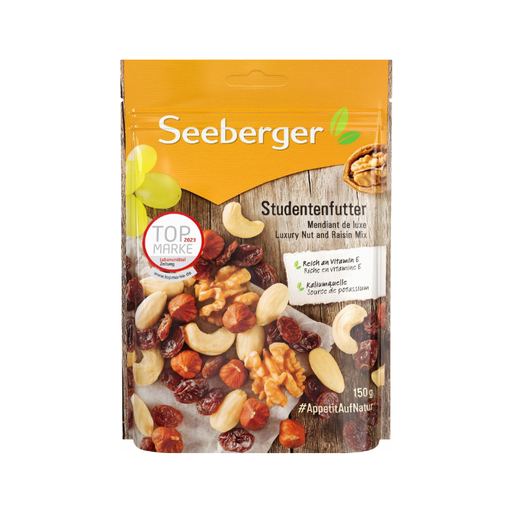 Image unavailable
An option if you’d prefer trail mix with dried fruit rather than plain nuts. Compare the ingredients, sugar and calories with plain nut products, all per 100 g, and check the pack’s allergen information if you have allergies.
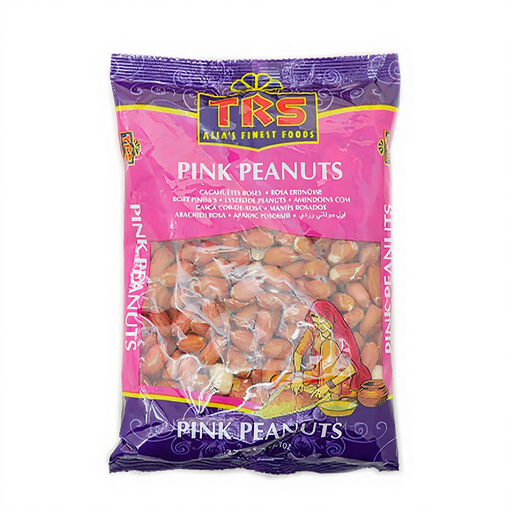 Image unavailable
If you want to portion out the peanuts yourself, bear in mind that the pack contains 375 g. Before packing, check the product and pack information to see whether the kernels can be eaten without preparation; this product isn’t suitable if you have a peanut allergy.
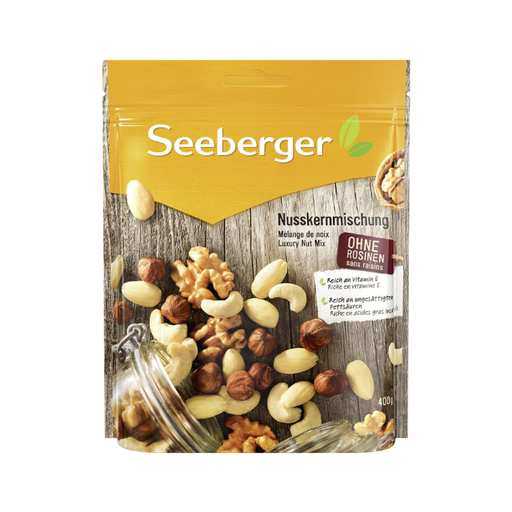 Image unavailable
A mix for anyone who wants to pack a nut mix without raisins. Portion out the amount you need from the 400 g pack and check the ingredients, salt and types of tree nut listed on the current packaging.
According to the German Nutrition Society, nuts are generally relatively high in energy, so choosing a particular type won’t solve the portion-size question on its own. Compare the calories per 100 g and plan how much you’ll eat. EDEKA lists its GUT&GÜNSTIG snack almonds as containing 619 kcal per 100 g; 25 g works out at around 155 kcal.
With a product containing just one type of nut, it’s easier to check the ingredients; a mix, on the other hand, gives you different nuts in one pack. If salt, sweet ingredients or allergens matter to you, check the specific ingredients list and compare the nutrition information per 100 g.
Check the highlighted allergens in the ingredients list on every pack, particularly the specific tree nuts and peanuts it contains. If someone has a known severe allergy, also assess any precautionary allergen information in line with their individual medical advice.
Keep nuts away from heat and moisture, and follow the storage instructions on the pack. The Rhineland-Palatinate Consumer Advice Centre highlights the risk of mould, particularly with walnuts. If you don’t have suitable refrigeration, only open an amount you can store safely, and throw away any spoiled nuts.